Key Takeaways
- October delivers the clearest skies, driest trails, and most reliable Lukla flights of the year, making it the single strongest month for the best time to trek Everest Base Camp.
- April offers warmer daytime temperatures by 3 to 5°C over autumn, full rhododendron blooms, and Everest expedition energy at Base Camp.
- Monsoon months (June through August) carry the highest Lukla cancellation rates, the worst trail conditions, and zero reliable mountain views.
- Building 2 buffer days between your return Lukla flight and international departure from Kathmandu prevents more trip disasters than any other single planning decision.
Table of Contents
October and November offer the best time to trek Everest Base Camp, with the clearest skies, driest trails, and most reliable Lukla flights of the entire year. April ranks as the strongest spring alternative, delivering warmer daytime temperatures and full rhododendron blooms across the Khumbu Valley trail. Monsoon months from June through August carry the highest risk and deserve avoidance by all but the most experienced trekkers.
What Is the Best Time to Trek Everest Base Camp?
Everest Base Camp sits at 5,364 metres in the Khumbu region of northeastern Nepal. Trekkers from 80+ countries walk this route every year, making it one of the most popular hikes on the planet. Weather windows in the Himalaya are narrow. Lukla flights cancel without warning. Trail conditions shift dramatically between months.
Choosing the wrong month turns a bucket-list trek into a foggy, dangerous, or overcrowded ordeal. Choosing the right month puts crisp Himalayan panoramas in front of you every single morning.
Nepal has 4 distinct trekking seasons. Only 2 of those seasons are genuinely recommended for the best time to trek Everest Base Camp. The sections below break down every season, every month, and every factor that matters for your decision.
The Two Best Seasons for the Everest Base Camp Trek
Autumn and spring dominate the EBC trekking calendar. Each season attracts a different type of trekker with different priorities.
| Factor | Spring (Mar–May) | Autumn (Sep–Nov) |
| Sky Clarity | Good mornings, afternoon clouds possible | Excellent all day |
| Mountain Views | Strong | Best of the year |
| Daytime Temperature | Warmer by 3–5°C | Cooler across all altitudes |
| Night Temperature | -10 to -15°C at EBC | -15 to -20°C at EBC |
| Crowd Level | Moderate | High, peaking in October |
| Rhododendron Bloom | Full bloom in April | None |
| Expedition Activity at EBC | Active late April–May | None |
| Lukla Flight Reliability | Good (delays increase late May) | Best in October |
| Rain/Snow Risk | Low to moderate | Lowest of the year |
| Overall Rating | 4/5 | 5/5 |
Autumn wins on weather reliability and views. Spring wins on comfort, scenery variety, and expedition-season energy.
Spring (March to May): Rhododendrons, Expeditions, and Warming Trails
Spring is the second-most popular season for the EBC trek. Daytime temperatures run 3 to 5°C warmer than autumn at every altitude. Forests between Lukla and Namche Bazaar fill with rhododendron blooms in pink, red, and white. Late April brings Everest expedition teams to Base Camp, adding a unique atmosphere no other season offers.
March: Trail Opens with Low Crowds and Cold Nights
Namche Bazaar records daytime temperatures around 10 to 15°C in March. Nights above 4,000 metres drop well below freezing. Snow still covers trail sections near Gorak Shep (5,164m).
Crowd density in March is low. Teahouse beds are easy to find at every stop. Rhododendron blooms begin at lower altitudes between Lukla (2,860m) and Tengboche (3,867m).
March works best for experienced trekkers comfortable with cold nights who want fewer people on the trail.
April: Peak Spring with the Best Balance of Weather and Scenery
April is the sweet spot of spring trekking. Temperatures are warmer across all altitudes. Morning skies are generally clear. Rhododendron blooms reach their peak across every elevation band from Lukla to Dingboche.
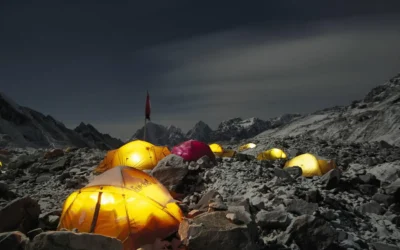
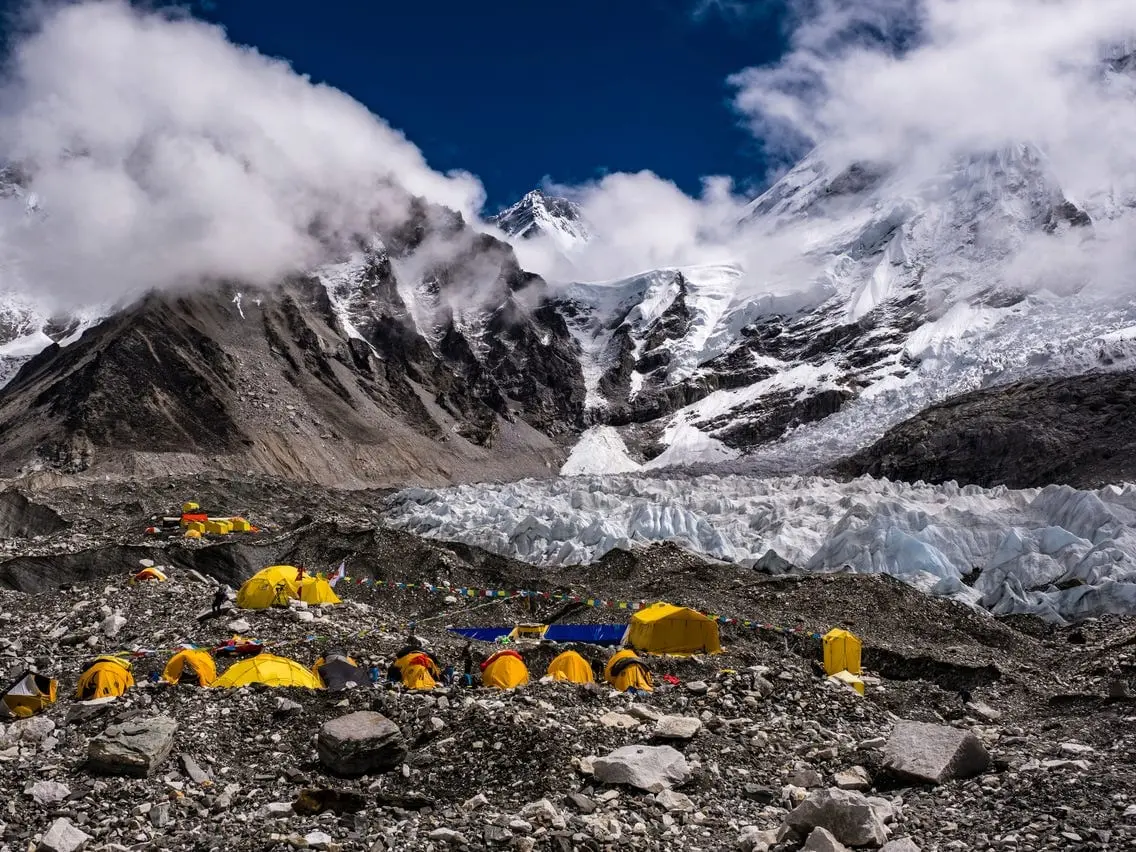
Everest expeditions set up camp at EBC in late April. Trekkers arriving at Base Camp during this window see a colourful tent city and feel the buzz of summit preparation. Why is Everest Base Camp famous? This energy is a big part of the answer. No other month offers this experience.
Crowd density in April is moderate. Teahouse beds require an early start each morning but remain available without advance booking at most stops.
April suits first-time trekkers who want warm days, vibrant scenery, and expedition-season energy.
May: Expedition Peak with Pre-Monsoon Risk
Early May still delivers decent weather. Base Camp reaches its busiest point with expedition teams. From mid-May onward, pre-monsoon moisture arrives. Afternoon cloud cover thickens. Rain hits lower altitudes. Snowfall strikes above 5,000 metres without warning.
Lukla flights face more delays in May than in any other spring month. Late May crowds thin out, but weather reliability drops in parallel.
May works best for trekkers who specifically want expedition activity and accept weather delays.
Spring Temperature Table by Altitude
Averages for April. March runs 3 to 5°C colder. May runs 2 to 3°C warmer with increased cloud cover.
| Altitude | Location | Day Temp (°C) | Night Temp (°C) |
| 2,860m | Lukla | 12 to 17 | 2 to 5 |
| 3,440m | Namche Bazaar | 8 to 14 | -2 to 3 |
| 3,867m | Tengboche | 6 to 12 | -5 to 0 |
| 4,410m | Dingboche | 4 to 10 | -8 to -3 |
| 5,164m | Gorak Shep | 0 to 6 | -15 to -8 |
| 5,364m | EBC | -2 to 5 | -17 to -10 |
Who Matches Best with Spring?
Spring fits trekkers who want warmer daytime temperatures, rhododendron blooms, Everest expedition energy, moderate crowd levels, and slightly lower peak-season costs.
Autumn (September to November): The Most Reliable Season for EBC
Autumn earns its reputation as the gold standard for the best time to trek Everest Base Camp. Monsoon retreats by late September. Skies clear. Trails dry out. Visibility reaches its annual peak.
September: Post-Monsoon Clearing with a Quiet Trail
Monsoon officially ends in mid to late September. The first 2 weeks bring lingering rain at lower altitudes and cloud cover higher up. Late September marks the true start of autumn trekking. Air clears. Trails dry. Mountain views open up.
Muddy sections persist below Namche Bazaar. Leeches remain present in forested areas during early September.
Crowd density in September is low. Teahouse bookings are easy at every stop.
September fits flexible trekkers who want to beat October crowds and accept a few transitional-weather days.
October: Peak Season with the Best Weather of the Year
October delivers the clearest skies of any month on the EBC trail. Visibility stays outstanding from morning to evening. Humidity drops to its lowest point. Rain above Namche Bazaar is extremely rare.
Every major Himalayan peak is visible on a clear October day. Panoramic views from Kala Patthar (5,644m) reach their annual best during this 4-week window.
Crowd density in October is the highest of the year. Teahouses fill up fast. The trail between Lukla and Namche feels like a busy highway. Popular viewpoints get congested around mid-October during the Dashain and Tihar festival period.
Teahouse strategy*: start walking by 6:30 AM each day and reach your next stop by early afternoon to secure a room.
October suits any trekker who prioritises perfect weather and views above all other factors.
November: Cold, Clear, and the Last Reliable Window
November offers a quieter version of October. Crowds thin significantly after the first week. Views remain excellent, often rivalling October clarity.
Night temperatures at Gorak Shep and EBC drop to -20°C. Underprepared trekkers find this cold catches them off guard.
Lukla flights remain reliable in November. Delays increase slightly compared to October due to morning fog becoming more frequent. Some teahouses above Dingboche begin closing by late November.
November suits experienced trekkers who want clear views, fewer crowds, and have proper cold-weather gear rated to -20°C.
Autumn Temperature Table by Altitude
Averages for October. September runs 3 to 4°C warmer. November runs 3 to 5°C colder.
| Altitude | Location | Day Temp (°C) | Night Temp (°C) |
| 2,860m | Lukla | 10 to 14 | 0 to 3 |
| 3,440m | Namche Bazaar | 6 to 11 | -5 to 0 |
| 3,867m | Tengboche | 4 to 9 | -8 to -2 |
| 4,410m | Dingboche | 2 to 7 | -12 to -5 |
| 5,164m | Gorak Shep | -3 to 4 | -18 to -12 |
| 5,364m | EBC | -5 to 2 | -20 to -14 |
Who Matches Best with Autumn?
Autumn fits trekkers who want the most reliable weather, clearest views, safest conditions for first-time high-altitude trekking, and the most predictable Lukla flight schedule.
Monsoon Season (June to August): Avoid Unless Experienced
Khumbu region receives heavy rainfall from June through August. Trails below 4,000 metres become slippery and dangerous. Landslides block paths. Leeches cover forested sections below Namche Bazaar. Cloud cover hides mountain views for days at a stretch.
Risks: Landslides, Leeches, and Lukla Closures
Lukla’s Tenzing-Hillary Airport depends on visual flight conditions. Monsoon brings the highest cancellation rate of any season. Flights cancel for 2 to 3 consecutive days regularly. Trekkers get stranded in Lukla, sometimes missing international departures from Kathmandu.
Trail sections between Lukla and Phakding cross river areas that swell during monsoon. Fixed bridges handle main crossings. Smaller trail sections flood without warning.
The One Case for Monsoon Trekking
Experienced trekkers choose monsoon for 3 reasons: the trail is virtually empty, teahouse prices drop as demand disappears, and occasional clear windows open above 5,000 metres. However, you will also see the infamous Rainbow Valley above 8,000m, which serves as a stark reminder of the risks.
Monsoon trekking requires extra buffer days, acceptance of zero-visibility days, and comfort in wet, cold, isolated conditions.
Season rating: 2/5 for all but the most experienced trekkers.
Winter (December to February): Cold, Quiet, and Demanding
Winter trekking on the EBC route is possible. The trail does not close. Teahouses at lower altitudes remain open. Conditions above 4,000 metres are harsh.
What Winter Trekking Involves
Gorak Shep records night temperatures of -25°C or below. Water bottles freeze solid inside sleeping bags. Daylight hours run from roughly 6:30 AM to 5:00 PM. Snow blocks trail sections above Dingboche after storms. Trail breaking through fresh snow at 5,000 metres is exhausting.
Teahouses above Tengboche close from late December through February. Trekkers need to confirm availability before departure. Lukla flights face morning fog delays, but cancellation rates stay lower than monsoon season.
Who Matches Best with Winter?
Winter fits trekkers who have previous high-altitude cold-weather experience, own a -20°C rated sleeping bag, want solitude above all else, carry flexible schedules with buffer days, and accept the possibility of turning back.
Season rating: 3/5 for experienced trekkers. Not recommended for first-timers.
Month-by-Month Quick Guide
| Month | Rating | Season | Key Highlight |
| January | 2/5 | Winter | Extreme cold, empty trail |
| February | 2/5 | Winter | Coldest month, stunning clear-sky days |
| March | 3/5 | Early Spring | Low crowds, early rhododendrons |
| April | 4/5 | Peak Spring | Warmest days, full bloom, expedition buzz |
| May | 3/5 | Late Spring | Pre-monsoon risk, expedition peak |
| June | 1/5 | Monsoon | Heavy rain, flight cancellations |
| July | 1/5 | Monsoon | Heaviest rainfall, landslide risk |
| August | 1/5 | Monsoon | Trail flooding, leeches |
| September | 3/5 | Early Autumn | Monsoon clearing, quiet trail |
| October | 5/5 | Peak Autumn | Best weather, best views, peak crowds |
| November | 4/5 | Late Autumn | Clear and cold, crowds thinning |
| December | 2/5 | Early Winter | Teahouses closing above Tengboche |
Lukla Flight Reliability by Season
Lukla’s Tenzing-Hillary Airport ranks among the most challenging airports in the world. Flights operate only under visual conditions. No instrument landing system exists. One cancelled day creates a 2 to 3 day passenger backlog. This is why knowing how do you get to Lukla is vital for planning.
| Season | Cancellation Risk | Average Delay | Notes |
| Spring (Mar–Apr) | Low | 1–2 hours fog | Generally reliable |
| Late Spring (May) | Moderate | 2–4 hours | Pre-monsoon clouds build |
| Monsoon (Jun–Aug) | Highest | Full-day cancellations | Worst season for flights |
| Early Autumn (Sep) | Moderate | 1–3 hours | Improving weekly |
| Peak Autumn (Oct) | Lowest | 30–60 minutes | Most reliable month |
| Late Autumn (Nov) | Low–Moderate | 1–2 hours fog | Fog frequency increasing |
| Winter (Dec–Feb) | Moderate | 2–3 hours fog | Fog is primary delay cause |
Buffer day rule: build at least 2 extra days between your return Lukla flight and your international departure from Kathmandu. Nepal’s Department of Civil Aviation publishes weather-related flight updates during peak seasons.
Expert Tips for Timing Your EBC Trek
- Book October dates 3 to 4 months in advance. Trekking agencies, guides, porters, and Lukla flight seats fill early during peak season. April bookings are slightly more flexible.
- Start your trek on a weekday. Lukla flights carry fewer passengers on Tuesday, Wednesday, and Thursday. Weekend departures face higher overbooking risk.
- Target shoulder weeks within peak months. Early October, late November, and the first week of April deliver peak-season conditions with noticeably fewer trekkers.
- Follow acclimatisation protocols regardless of season. No season reduces altitude sickness risk. Spend 2 nights in Namche Bazaar. Take an acclimatisation day in Dingboche. Check the Everest Base Camp trek fitness requirements before you go.
- Pack for 30°C temperature swings within a single day. Gorak Shep in October reaches 4°C at noon and -18°C by nightfall. Layer systems outperform heavy single-layer gear at every altitude.
- Confirm helicopter evacuation coverage above 5,000 metres. Standard travel insurance policies often exclude altitudes above 3,000 or 4,000 metres. Check your policy limits before departure.
Conclusion
Picking the best time to trek Everest Base Camp comes down to matching your priorities with the right weather window. October and November deliver the most reliable conditions for views, trail safety, and Lukla flights. April offers warmth, colour, and expedition energy that no autumn month matches.
Everest Base Camp is a 5,364-metre walk through one of the most dramatic landscapes on Earth. Give yourself the right month, pack for extreme temperature swings, build buffer days into your schedule, and the Khumbu Valley delivers an experience no photo or video captures fully. The trail waits for you in the right season.
Frequently Asked Questions
Does the EBC trek require a guide in 2026?
Nepal’s government mandated licensed guides for all trekkers in national parks starting late 2023. Solo trekking without a guide is no longer permitted inside Sagarmatha National Park boundaries. Permits require guide registration at the entry checkpoint. This is part of How to get to Everest Base Camp: A Complete Guide.
How much does trekking cost variation differ between spring and autumn?
Autumn peak season (October) runs approximately 10 to 15% higher than spring for teahouse rates, porter fees, and Lukla flight prices. April offers standard-season pricing at most stops along the trail. See our full cost breakdown here: Everest Base Camp trek cost.
What happens if Lukla flights cancel for multiple days?
Trekkers have 2 options during extended cancellations. Helicopter charters from Lukla to Kathmandu cost approximately $400 to $600 per person. Overland travel via jeep to Phaplu or Salleri adds 1 to 2 extra travel days but avoids flight dependency entirely.
Are permits available on arrival or do they need advance booking?
Sagarmatha National Park entry permits and TIMS cards are available in Kathmandu at the Nepal Tourism Board office or at the Monjo checkpoint on the trail. No advance booking is required for permits, but Lukla flights need advance reservation during October and April.
What altitude sickness rate do trekkers experience on the EBC route?
About 50% of trekkers on the Everest Base Camp route experience mild altitude sickness above 4,000 meters. With proper acclimatization (including 2 rest days), severe cases drop to below 5%.