Key Takeaways
- Green Boots was a real person: The climber known as “Green Boots” is widely believed to be Tsewang Paljor, a 28-year-old ITBP constable who died during the 1996 Mount Everest North Side disaster.
- A deadly chain of events led to his death: A late summit attempt, a sudden blizzard, and separation from teammates in the Death Zone resulted in Paljor taking shelter in a limestone cave, where he died from hypothermia and oxygen deprivation.
- His body became a landmark: Lying at 8,500 meters, “Green Boots Cave” served for years as a grim but crucial rest point for climbers on the Northeast Ridge, symbolizing the extreme risks of high-altitude mountaineering.
- He remains on Everest today: As of 2025, Paljor’s body is believed to still be in the cave, now respectfully covered, as recovery from the Death Zone is extremely dangerous, costly, and often considered against climbers’ final wishes.
Table of Contents
The Silent Sentinel (The Mount Everest Green Boots)
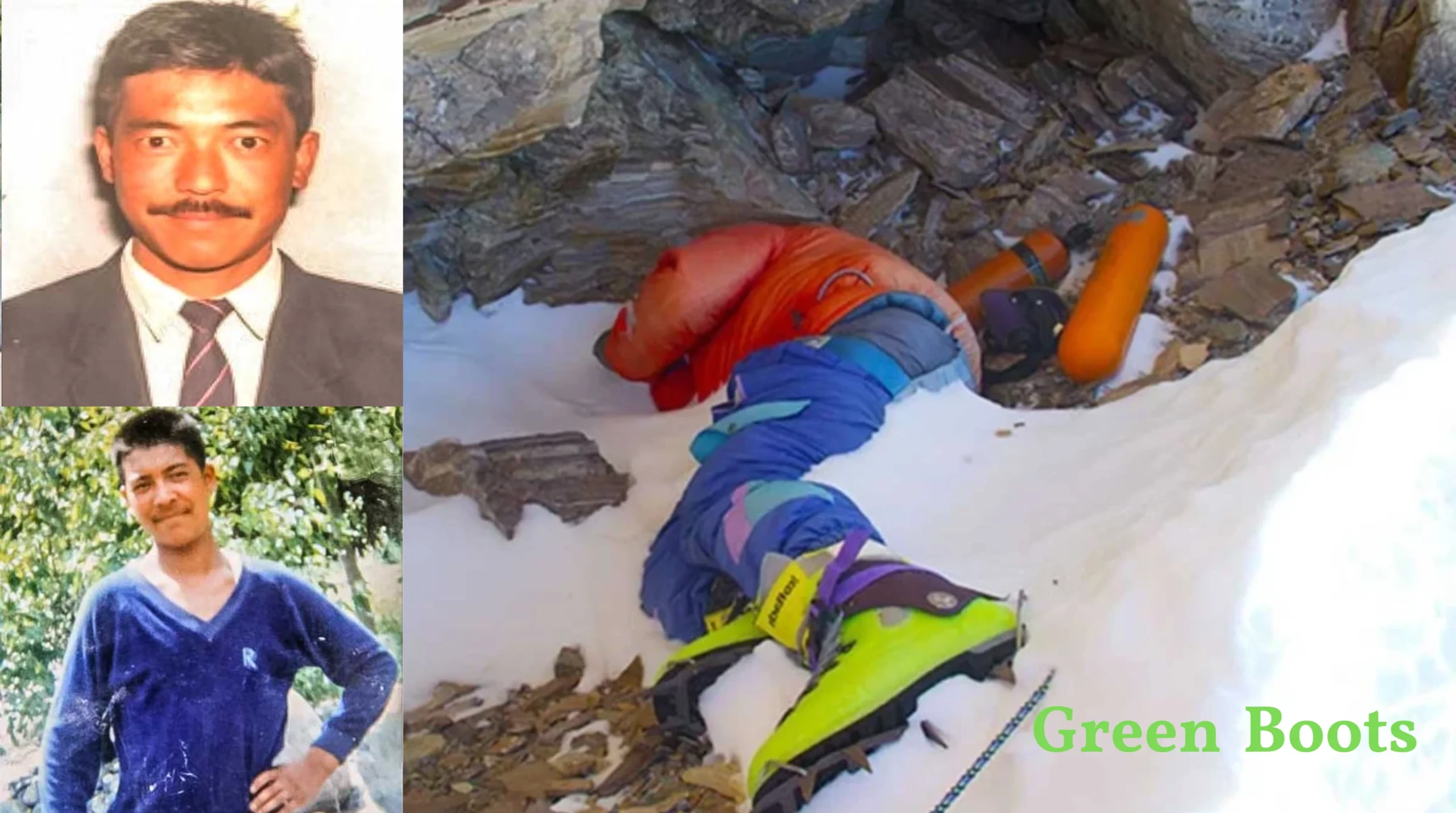
For nearly twenty years, every climber attempting Mount Everest from the North Side had to pass a grim milestone at 8,500 meters (27,890 ft). Curled in a small limestone cave, wearing a red fleece and neon green mountaineering boots, lay the frozen body of a fallen climber.
Known to the world simply as “Green Boots,” he became the most famous resident of the Death Zone, a haunting reminder of the mountain’s cruelty. But behind the macabre nickname was a real person: Tsewang Paljor, a head constable of the Indo-Tibetan Border Police (ITBP).
This is the complete story of who he was, how he died during the disastrous 1996 storm, and the mystery surrounding his body today.
Who Was Green Boots?
Before he was a landmark, Tsewang Paljor was a 28-year-old from Sakti, a village in the Ladakh region of India. Growing up in the shadow of the Himalayas, Paljor was naturally acclimatized to high altitudes.
He joined the Indo-Tibetan Border Police (ITBP), an elite force patrolling the high-altitude China-India border. In 1996, he was selected for the ITBP’s first attempt to summit Everest from the North Col route. He was strong, disciplined, and driven, but the mountain doesn’t discriminate based on skill.
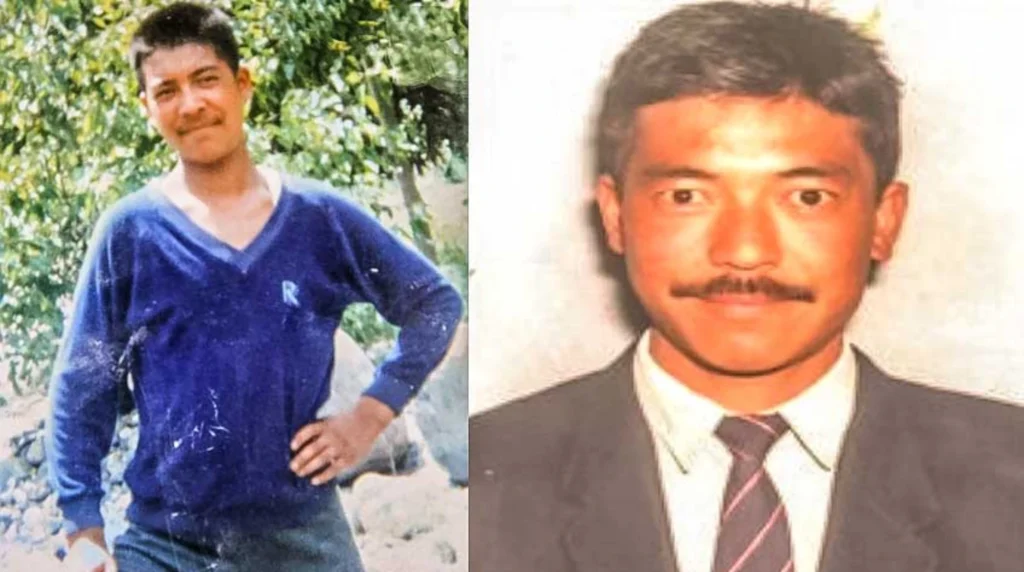
Mount Everest Green Boots
Quick Facts Profile
| Metric | Detail |
| Real Name | Tsewang Paljor (widely accepted) |
| Date of Death | May 10, 1996 |
| Location | Northeast Ridge, 8,500m (27,890 ft) |
| Expedition | Indo-Tibetan Border Police (ITBP) |
| Cause of Death | Hypothermia / Exposure |
| Famous Feature | Neon Green Koflach Plastic Boots |
The 1996 Disaster: What Went Wrong?
While the world focused on the South Side disaster (popularized by Jon Krakauer’s book Into Thin Air), an equally tragic event was unfolding on the North Side.
On May 10, 1996, Paljor and two teammates, Dorje Morup and Tsewang Samanla, pushed for the summit. They were strong climbers, but three critical errors sealed their fate:
- Late Summit Time: The team radioed that they had summited at 15:45 (3:45 PM). This is dangerously late; most teams turn around by 1:00 PM to avoid afternoon storms.
- The Storm: As they celebrated (perhaps prematurely, as evidence suggests they may have stopped 150m short due to poor visibility), a massive blizzard engulfed the mountain. Temperatures plummeted to -40°C with near-zero visibility.
- Separation: In the chaos of the descent, the team separated. Samanla is believed to have died near the Second Step. Morup was seen struggling later but perished. Paljor, alone and exhausted, sought shelter in a small limestone alcove near the First Step.
Timeline of the Tragedy
| Time (May 10) | Event |
| 08:00 AM | The team starts their summit push late due to the wind. |
| 03:45 PM | Paljor and team radio Base Camp, claiming a successful summit. |
| 04:00 PM | The notorious 1996 blizzard hits the mountain. |
| 05:30 PM | Radio contact is lost. The climbers are separated in the “Death Zone.” |
| Post-Sunset | Paljor crawls into the limestone cave to escape the wind. He never wakes up. |
The “Green Boots” Cave: A Grim Landmark
Paljor’s resting place, known as “Green Boots Cave,” is located at 8,500 meters. This spot is strategically critical because the limestone overhang offers the only break from the wind on that section of the ridge.
For two decades, climbers were forced to step over Paljor’s outstretched green boots to catch their breath.
- Why didn’t he keep moving? Evidence suggests Paljor suffered from hypothermia and hypoxia (oxygen deprivation).
- Paradoxical Undressing: While Paljor remained clothed, many climbers in this state feel a false sensation of burning heat. He likely sat down to rest, fell into a hypoxic sleep, and his body shut down.
Is It Definitely Tsewang Paljor? (The Controversy)
While 90% of the mountaineering community accepts the body is Paljor, a counter-theory exists. P.M. Das, the deputy leader of the 1996 expedition, argued in a 1997 report that the body might actually be Dorje Morup.
The Arguments:
- For Paljor: He was the only member confirmed to be wearing the distinct green Koflach boots on summit day. His slight build also matches the body in the cave.
- For Morup, Das argued that a Japanese team met Morup descending above the First Step. However, this relies on confusion during a storm, where identification was nearly impossible.
Verdict: The consensus remains that “Green Boots” is Tsewang Paljor.
Is Green Boots Still There in 2025?
Yes, “Green Boots” (the body of climber Tsewang Paljor) is likely still on Mount Everest, remaining a grim landmark in the limestone cave on the Northeast Ridge. However, reports vary on whether he’s fully visible or partially covered, with efforts to move or cover him being complicated by the extreme conditions. Still, he’s generally considered present as of 2025.
- Before 2014: The body was fully visible, lying on its side.
- 2014: Reports surfaced that the body was “gone.” It was believed that the Chinese Tibet Mountaineering Association (CTMA) had moved or covered the body.
- 2017 Present: Climbers confirmed that the body is still in the cave, but it has been respectfully covered with rocks and snow. It is no longer the glaring landmark it once was, though the location still bears his name.
Why Not Bring Him Down?
Readers often ask: Why do they leave bodies there?
Recovering a body from the Death Zone is a logistical nightmare.
- Extreme Weight: A frozen body can weigh over 300 lbs (136 kg) due to ice accumulation.
- Risk to Rescuers: It takes 6–10 Sherpas to carry one body down. In the Death Zone, every second spent carrying a heavy weight increases the risk of the rescuers dying.
- Cost: A recovery mission can cost upwards of $70,000.
- Tradition: Many climbers believe the mountain is the most respectful graveyard for those who died pursuing their passion.
Conclusion
Green Boots is more than just a marker on a map. He represents the thin line between triumph and tragedy in high-altitude mountaineering. While his neon boots once served as a warning to those passing by, his story is a testament to the bravery of the ITBP team, who pushed the limits of human endurance in 1996.
Today, he rests in peace, partially shielded from the world, eternally part of the mountain he sought to conquer.
Frequently Asked Questions
Who was Green Boots on Mount Everest?
Green Boots refers to the frozen body of Tsewang Paljor, a 28-year-old head constable with India’s Indo-Tibetan Border Police (ITBP). He died during a 1996 summit attempt and became a landmark due to his neon green Koflach boots.
How did Green Boots die?
Tsewang Paljor likely succumbed to hypothermia, hypoxia, and exposure during a blizzard on May 10, 1996. His team summited late (around 3:45 PM), got caught in the storm, separated, and he sought shelter in a limestone cave at 8,500 meters, where he fell into a fatal sleep.
Where exactly is Green Boots located on Everest?
The body rests in “Green Boots Cave,” a small limestone alcove on the Northeast Ridge at 8,500 meters (27,890 feet), between Camp VI and the First Step. Climbers passed it for nearly 20 years on the North.
Why was he called “Green Boots”?
The nickname came from his distinctive bright green Koflach plastic mountaineering boots, visible against the snow. They stood out in photos and became the easiest identifier in the Death Zone.
Could Green Boots be someone else, like Dorje Morup?
Most experts say no, it’s Tsewang Paljor based on boot color and build. A minority theory, proposed by expedition deputy P.M. Das, claims it might be teammate Dorje Morup, citing sightings of Japanese climbers, but consensus favors Paljor.
Why don’t they remove Green Boots’ body?
Recovery from 8,500 meters costs $40,000–$80,000, weighs 300+ lbs due to ice, requires 6–10 Sherpas risking their lives, and faces extreme weather. Many view the mountain as a fitting resting place.
Was Green Boots part of the famous 1996 Everest disaster?
Yes, but on the lesser-known North Side. The media focused on the South Col commercial teams (Into Thin Air), yet the ITBP expedition suffered a parallel tragedy.