Key Takeaways: Mount Everest’s Rainbow Valley
- Mount Everest Rainbow Valley is exclusively for summit climbers, not base camp trekkers: Located at around 8,400 meters in the Death Zone (above 8,000 m), this infamous area contains the preserved bodies of climbers who died during summit attempts. Everest Base Camp trekkers, who reach only 5,364 meters, will never see Mount Everest Rainbow Valley. This critical distinction helps prevent confusion between two completely different Everest experiences: high-risk summit expeditions versus trekking to base camp.
- The Death Zone is physiologically incompatible with human survival: Above 8,000 meters, oxygen levels drop to 30-33% of sea level, and the body enters permanent oxygen debt. Hypoxia destroys decision-making ability before climbers recognize they’re dying, explaining why 95% of summit climbers use supplemental oxygen, and survival without it is limited to 16-20 hours maximum.
- Approximately 240 bodies remain unrecovered on Everest due to impossible logistics: Body recovery costs $70,000+, helicopters cannot operate above 8,000m, and multiple rescuers have died attempting recovery. Despite periodic cleanup campaigns (2014, 2020, 2022, 2024), the rate of new deaths (6-20 annually) means unrecovered bodies continue accumulating, with Rainbow Valley containing a significant portion.
- The death rate has improved dramatically, but absolute risks remain significant: Modern death rates are 0.9-1% per climber (down from 3% in the 1950s) due to better equipment and guided expeditions. However, summit attempts still carry real fatality risk, with most deaths occurring during descent when climbers lack cognitive capacity and physical reserves to navigate safely back to camp.
Table of Contents
Rainbow Valley Everest: The Death Zone and Its Dangers
The Grim Reality Behind the Name
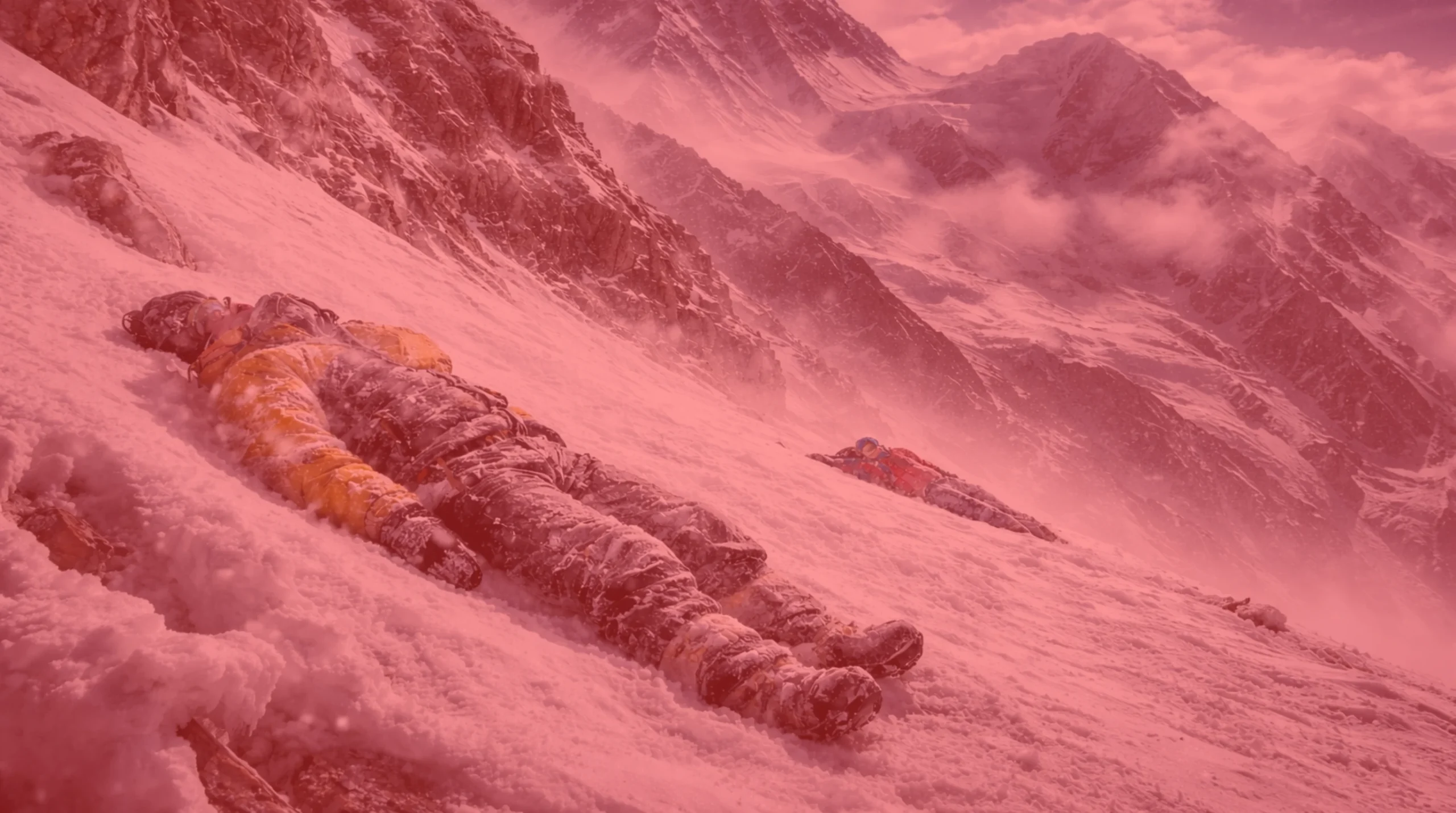
Mount Everest’s “Rainbow Valley” isn’t a picturesque destination; it’s a natural graveyard situated in the mountain’s most lethal region. Located at approximately 8,400 meters (27,560 feet) on the southeast ridge near the Hillary Step, Rainbow Valley earns its haunting name from a tragic source: the brightly colored jackets, boots, and climbing equipment worn by climbers who died in the Death Zone.
Unlike a true valley, this is a steep, narrow stretch of mountainside accessible only to those attempting the summit. It has never appeared on official maps, instead, it exists as an informal landmark recognized exclusively among mountaineers and Sherpas who encounter it during their final push to the peak.
The critical distinction: Trekkers visiting Everest Base Camp will never see Rainbow Valley. This area lies far beyond the trekking routes, reserved only for the climbers who brave the world’s highest peak.
What is the Death Zone and Why Does It Exist?
The Science of Extreme Altitude
The Death Zone begins at 8,000 meters (26,247 feet), an altitude where the human body enters a state of acute oxygen deprivation from which recovery is not guaranteed. At the summit of Everest, each breath contains only 30-33% of the oxygen available at sea level.
To understand this viscerally: if a sea-level breath contains enough oxygen to sustain normal function, an Everest breath contains barely one-third of that amount. Your blood oxygen saturation can drop below 60%, a level at which the body struggles to maintain critical functions.
Why “Death Zone”? (Mount Everest Rainbow Valley)
The zone earned its name because human physiology cannot acclimate to these conditions, no matter how much time is spent acclimatizing at lower altitudes. The body exists in a permanent state of oxygen debt, with vital organs, especially the brain and heart, functioning far below their optimal capacity.
The timeline is brutal: Without supplemental oxygen, climbers can survive 16-20 hours maximum in the Death Zone. Approximately 95% of climbers who reach the summit use supplemental oxygen to extend their survival window and maintain cognitive function for descent.
The Physiological Crisis: What Happens Above 8,000 Meters
Hypoxia: The Silent Killer
Hypoxia, critically low oxygen in the bloodstream, is the primary threat in the Death Zone. Its effects compound rapidly:
Immediate effects (first few hours):
- Severe headaches and dizziness
- Nausea and vomiting
- Rapid heart rate (tachycardia)
- Shortness of breath despite supplemental oxygen
Progressive effects (12+ hours):
- Confusion and impaired judgment
- Memory loss and difficulty concentrating
- Hallucinations and irrational behavior
- Poor decision-making that becomes dangerous
Critical stage (16+ hours):
- Loss of consciousness
- Slow heart rate (paradoxical bradycardia)
- Coma
- Death
The cruelest aspect of hypoxia is that it destroys decision-making ability before climbers recognize they’re dying. Climbers have reported removing their oxygen masks, taking off protective gear, and making other fatal decisions while hypoxic, all while believing they were making rational choices.
Additional Hazards Compounding the Risk
Extreme Cold: Temperatures plunge below -40°C (-40°F). At this temperature, exposed skin begins to freeze within minutes. Frostbite can occur on extremities, even inside insulated gloves.
Altitude Sickness (HACE & HAPE):
- High-Altitude Cerebral Edema (HACE): Swelling of the brain from lack of oxygen
- High-Altitude Pulmonary Edema (HAPE): Fluid accumulation in the lungs
- Both are rapidly fatal without immediate descent to a lower altitude.
Terrain and Avalanche Risk: The narrow, icy ridges offer minimal margin for error. A single slip means falling thousands of feet. Additionally, avalanches and collapsing ice formations claim lives without warning.
Physical Exhaustion: Even basic movement, walking a few meters, exhausts climbers to critical levels. Combined with hypoxia, this exhaustion becomes a death sentence if coupled with bad weather or mechanical failure.
Death Statistics: By The Numbers
Overall Everest Fatalities
Since recordkeeping began on Mount Everest, over 340 climbers have died, a figure that increases nearly every climbing season. However, the death rate per climber has actually improved significantly:
- 1950s death rate: 3% of climbers
- Current death rate (2010-present): 0.9-1% of climbers above base camp
This improvement reflects advances in:
- Climbing technology and equipment
- Weather forecasting
- Organized commercial expeditions with experienced guides
- Better medical protocols
Recent Seasons: A Concerning Trend
2023: The deadliest recent season with 17-20 confirmed deaths. The Nepalese government issued 478 permits to 47 different teams, resulting in nearly 600 summits. Overcrowding, poor weather, and potentially climate-influenced conditions contributed to the spike.
2024: Deaths declined to 6-9 (as of final reports), with 421 permits issued and approximately 600 summits. Stricter permit controls and improved coordination appear to have helped.
The Unrecovered Dead
Approximately 70% of those who die on Everest remain on the mountain. Of the 340+ deaths, only about 100 bodies have been officially recovered. This means roughly 240 bodies remain frozen in place, many in Rainbow Valley and surrounding areas of the Death Zone.
Why Can’t Bodies Be Recovered from Rainbow Valley?
The Economics and Logistics of Death
Recovering a single body from the Death Zone costs upward of $70,000 USD, more than many climbers paid for their entire expedition. The financial burden falls to families, governments, or mountaineering organizations, making recovery a rare event.
The Physical Realities
Helicopter Rescue is Impossible: Helicopters cannot safely operate above 8,000 meters. The thin air provides insufficient lift for rotors to function, and winds in the Death Zone would destroy an aircraft. Bodies cannot be extracted via helicopter.
Human-Powered Extraction is Agonizingly Slow: Removing a body requires:
- Multiple Sherpas or climbers (typically 4-6 people minimum)
- Specialized roping and harness systems
- Time measured in hours per body
- Enormous expenditure of oxygen and energy
Risk to Rescuers: During a 1984 recovery attempt, two Nepalese mountaineers died trying to retrieve a single body. This tragic paradox, people dying to recover, discourages recovery attempts. The mountain exacts a price even from those trying to help.
Why Bodies Remain Visible for Decades
Unlike burials at sea level, bodies in the Death Zone don’t decompose. Temperatures remain permanently below freezing, preserving bodies in near-lifelike states for years or decades. A body discovered today may remain frozen in place, visible to future climbers, for 20+ years.
Famous Deaths in Rainbow Valley: Lessons from Tragedy
Green Boots: The Landmark That Shouldn’t Exist
In the 1996 Everest disaster, climbers were caught in a catastrophic storm near the summit. Eight climbers died across different expeditions that day alone, one of the deadliest 24-hour periods in Everest history.
Tsewang Paljor, a 28-year-old Indian climber from the Indo-Tibetan Border Police (ITBP) expedition, died during the descent. His body came to rest in a limestone alcove at 8,500 meters, still wearing bright green Koflach mountaineering boots.
The landmark birth: Over the following years, every climber ascending the Northeast Ridge encountered Paljor’s preserved body, curled in the alcove, still wearing those distinctive boots. British filmmaker Matt Dickinson captured the first video footage in May 1996. The body became so recognizable that mountaineers nicknamed it “Green Boots” and used it as a wayfinding marker.
The identity debate: While most evidence points to Tsewang Paljor, some debate persists about whether the body might be his teammate Dorje Morup. The mystery remains unresolved.
The 2014 removal: During a 2014 Chinese cleanup expedition, Green Boots was moved to a less conspicuous location, ending its use as a landmark but also removing a visible reminder of Everest’s dangers.
Sleeping Beauty: Francys Arsentiev’s Final Hours (1998)
Francys Arsentiev was pursuing a record that would define her life: becoming the first American woman to summit Everest without supplemental oxygen. At 40 years old, she arrived at Everest with her husband, Sergei Arsentiev, in May 1998.
The summit and the catastrophe: After two failed attempts (including a failed summit push on May 20 when their headlamps failed), Francys and Sergei summited on May 22. But they reached the top dangerously late in the day, a critical error at extreme altitude.
The descent into tragedy: Without supplemental oxygen, their descent was agonizingly slow. They couldn’t make it back to camp before nightfall. During the descent, Sergei and Francys became separated in the darkness.
Hours of suffering: An Uzbek climbing team found Francys on May 22, unconscious but still alive after 48+ hours without oxygen at 8,650 meters. They tied her harness to a fixed rope, knowing they couldn’t save her. Her last coherent words were desperate pleas: “Don’t leave me. Don’t leave me alone, please.”
Sergei, attempting to return to help his wife, also died on May 24. No rescue was possible, no one could descend quickly enough to help, and no helicopter could operate at that altitude.
The haunting legacy: Francys’s body remained visible on the mountainside for years, leading climbers to give her the grim nickname “Sleeping Beauty”, a reference to how peacefully she appeared to rest. In 2007, almost a decade after her death, climbers finally moved her body to a less prominent location.
The human cost: The tragedy illustrates a hard truth about the Death Zone, even with the best equipment, the best partner, and the best intentions, the mountain offers no mercy. Francys’s determination to prove herself without oxygen, her husband’s love and bravery, and their physical fitness meant nothing against the Death Zone.
The Causes of Death in Rainbow Valley
Death in the Death Zone rarely results from a single cause. Instead, climbers typically face a cascade of failures:
Altitude Sickness (40-45% of deaths): HACE and HAPE progress rapidly and are fatal without immediate descent.
Hypoxia-Related Collapse (30-35% of deaths): Organ failure from oxygen deprivation, often accompanied by the mental incapacity to descend.
Accidents and Falls (15-20% of deaths): Steep terrain offers no forgiveness. A slip, a momentary lapse in focus, an equipment failure, any can be fatal.
Hypothermia and Frostbite (10-15% of deaths): Extreme cold combined with exhaustion leads to the inability to descend or seek shelter.
Avalanches (5-10% of deaths): The mountain can move at will, sweeping away anyone in its path.
Most deaths occur during descent, not ascent. After expending enormous energy to reach the summit, climbers often lack the cognitive capacity and physical reserves to descend safely.
Body Recovery Campaigns: Nepal’s Effort to Reclaim the Dead
Recognizing the environmental and moral crisis, Nepal’s government has launched periodic cleanup campaigns to recover bodies and remove waste from the Death Zone.
2014 Cleanup Campaign
The Nepalese government initiated one of the first major efforts to recover bodies and remove trash. Experienced Sherpas ventured into the Death Zone, successfully retrieving several bodies and hauling them down to base camp. This campaign established that recovery, while difficult and dangerous, was possible.
2020 Cleanup Campaign
During the COVID-19 pandemic, when fewer climbers were permitted, Nepal capitalized on the lower traffic. The Nepalese Army collaborated with mountaineering organizations to remove over 10 tons of trash and recover multiple bodies from heavily used areas, including the summit and South Col.
2022 Cleanup Campaign
The Nepalese Army removed 33,877 kilos of garbage from four mountains, including Everest, recovering 2 bodies in a coordinated effort.
2024 Cleanup Campaign
In one of the most significant recent efforts, the Nepali Army conducted a 54-day cleanup operation specifically targeting the Death Zone. The team recovered 4 bodies using innovative roping systems to lower bodies safely down the steep terrain. The operation cost substantial resources, including oxygen cylinders, specialized equipment, and the physical toll on team members, but resulted in meaningful recovery of fallen climbers.
The Ongoing Challenge
Despite these campaigns, the rate of new deaths (currently 6-20 annually, depending on the season) means that the number of unrecovered bodies continues to accumulate. Full recovery of all bodies would be logistically impossible and prohibitively expensive. Instead, cleanup efforts remain periodic, tactical, and focused on the most accessible bodies and the highest-traffic areas.
Preparation and Realistic Assessment: Can You Survive Rainbow Valley?
Training Can’t Overcome Physics
No amount of training can enable your body to acclimate to the Death Zone. The human body will always be in oxygen debt above 8,000 meters.
However, preparation dramatically improves survival odds:
- Supplemental oxygen: Essential. Nearly all survivors use it.
- Acclimatization process: Spending days at progressively higher altitudes (Base Camp → Camp 2 → Camp 3 → Camp 4) allows your body to produce more red blood cells and adapt somewhat, though the Death Zone remains toxic.
- Physical fitness: Strong legs, cardiovascular endurance, and altitude-specific training (climbing at high altitude, not just running) matter significantly.
- Experience: Summiting 20,000+ meter peaks before Everest reduces risk by a factor of 3-4.
- Decision-making clarity: Knowing beforehand that hypoxia will cloud judgment helps climbers rely on pre-established turnaround times and stick to them even when the summit seems close.
The Honest Assessment
Of the 600+ climbers who attempt Everest annually:
- ~50% summit successfully
- ~20% reach high camps but don’t summit
- ~30% turn back at lower altitudes or experience major difficulties
Of those who reach the Death Zone:
- ~0.9-1% die
This makes Everest less deadly than climbing K2 (25% fatality rate) or Annapurna (32% fatality rate), but far more deadly than trekking to Base Camp (essentially 0% fatality rate if proper precautions are taken).
The Broader Context: Should You Trek to Everest Base Camp?
The Safe Alternative
Everest Base Camp Trek: A moderate-difficulty trek that reaches the base of Mount Everest without summiting.
Duration: typically 12-14 days.
Difficulty: manageable for anyone with reasonable fitness.
Risk: essentially zero with standard precautions.
Base camp trekkers witness the majesty of Everest, see the expedition camps, interact with Sherpas and mountaineers, and gain profound respect for the mountain, all without entering the Death Zone.
The Dangerous Path
Everest Summit Climb: A 43-day expedition, with 26 days of actual climbing.
Cost: $45,000-$100,000+.
Physical demand: extreme.
Risk: 0.9-1% fatality rate plus risks from HACE, HAPE, and other altitude illnesses.
Rainbow Valley only matters if you attempt the summit. Base camp trekkers never see it and shouldn’t worry about it.
Conclusion: Respecting the Mountain
Rainbow Valley exists as a stark reminder that Mount Everest, despite its beauty, is one of Earth’s most hostile environments. It is not a destination to conquer casually. Every climber who enters the Death Zone does so with the knowledge that recovery of their body, if they die there, is unlikely.
The fallen climbers of Rainbow Valley, from Green Boots to Sleeping Beauty to the dozens of others, serve as teachers to those who come after. Their stories convey a simple truth that transcends mountaineering: some challenges demand respect greater than ambition. Some mountains demand humility.
Those who trek to Everest Base Camp witness these lessons from a safe distance. Those who attempt the summit enter into a pact with the mountain, accepting its risks in pursuit of an achievement few humans ever accomplish. Either path is valid. Neither should be undertaken lightly.
FAQ: Critical Questions About Rainbow Valley
Can Base Camp trekkers see Rainbow Valley?
No. Rainbow Valley lies at 8,400 meters on the summit route. Base Camp is at 5,364 meters. Only climbers attempting the summit pass through Rainbow Valley, and only if they’re on the South Col route.
Why are bodies left on the mountain?
Recovery cost ($70,000+), extreme danger to rescuers, helicopter impossibility above 8,000m, and logistical complexity make recovery rare. Most bodies are left where they fall.
How many bodies are in Rainbow Valley specifically?
No exact count exists. Rainbow Valley contains an unknown but significant portion of the 240+ unrecovered bodies on Everest. New bodies may be added annually when climbers die in the Death Zone.
Is the mountain getting safer?
The death rate per climber has declined from 3% (1950s) to 0.9-1% (2010s-present), thanks to better equipment, forecasting, and guided expeditions. However, absolute death numbers increase with more permits issued annually.
What happens to bodies over time?
Bodies don’t decompose in the Death Zone. They remain preserved by freezing, becoming part of the permanent landscape. Some are eventually recovered in cleanup campaigns; others remain for decades.
Should fear of Rainbow Valley prevent summit attempts?
Fear should inform respect, not prevent determined attempts. Climbers know the risks. Proper preparation, supplemental oxygen, experienced guides, and realistic turnaround times dramatically improve survival odds.