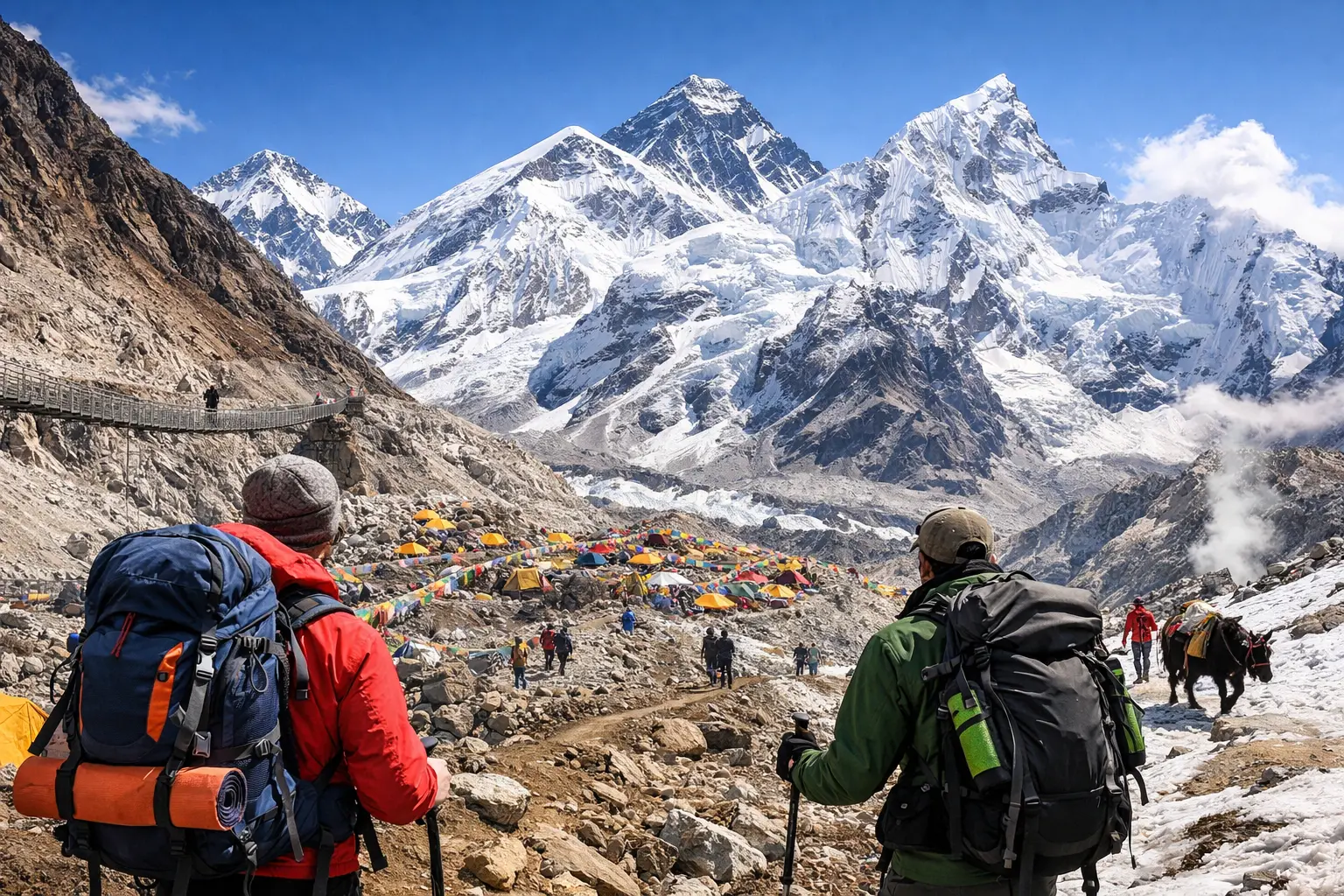
Key Takeaways
- Moderate but manageable difficulty: The Everest Base Camp trek is a moderate to moderately challenging trek in Nepal, requiring endurance rather than technical climbing skills, making it achievable for well-prepared trekkers.
- Altitude is the main challenge: High elevation and reduced oxygen levels significantly impact the Everest Base Camp trek difficulty, so proper acclimatization and a slow trekking pace are essential.
- Fitness and mindset matter most: A good fitness level, basic physical preparation, and strong mental endurance greatly reduce fatigue and help trekkers handle long walking days and simple facilities.
- Right preparation ensures success: Following a well-planned itinerary, choosing the best trekking season, and using guides or porters can make the EBC trek safer, easier, and more enjoyable.
Table of Contents
The Everest Base Camp trek difficulty is one of the most common concerns among trekkers planning a journey to the Khumbu region. While the trek does not require technical climbing skills, it still presents physical, mental, and altitude-related challenges. Understanding these factors helps trekkers prepare properly and decide whether this iconic Himalayan adventure suits them.
Overall Difficulty Level of the Everest Base Camp Trek
So, how difficult is the Everest Base Camp trek overall? Most trekking experts classify it as a moderate to moderately challenging trek in Nepal. The trail does not involve mountaineering or rope work, but the long walking days, high altitude, and changing weather conditions make it more demanding than low-altitude hikes.
Compared to treks like Annapurna Base Camp vs EBC or Langtang Valley, the EBC trek is slightly more challenging due to altitude gain and duration. However, with proper preparation, the Everest Base Camp trek for beginners is absolutely achievable.
Physical Fitness Required for Everest Base Camp Trek
The Everest Base Camp fitness level plays a major role in determining how hard the trek feels. Trekkers usually walk 5–7 hours per day for nearly two weeks, often on uneven terrain.
You need:
- Good cardiovascular endurance
- Strong legs and core stability
- Ability to walk uphill and downhill for long hours
You do not need to be an athlete, but regular hiking, stair climbing, cycling, or jogging before the trek significantly improves your experience. Proper physical preparation for the EBC trek reduces fatigue and helps with acclimatization.
Altitude and Acclimatization Challenges
Altitude is the biggest factor influencing Everest Base Camp trek difficulty. The trek reaches 5,364 meters at Everest Base Camp, with the highest point at Kala Patthar (5,545m).
As altitude increases, oxygen levels drop, which can cause altitude sickness on the Everest Base Camp trek. Common symptoms include headache, nausea, and shortness of breath.
A well-planned itinerary includes acclimatization days in Namche Bazaar and Dingboche, allowing the body to adjust. Proper hydration, slow pacing, and rest are essential for safe acclimatization on the EBC trek.
Read More: How high is Everest Base Camp?
Terrain and Trail Conditions
The Everest Base Camp trail conditions vary throughout the journey. The route includes:
- Rocky Mountain paths
- Stone staircases, especially around Namche
- Suspension bridges over deep gorges
- Glacier moraines near EBC
While the trail is well-marked, constant ascents and descents increase physical strain. The EBC trek terrain is not technically difficult, but it demands endurance and balance.
Weather and Seasonal Difficulty
Weather significantly affects EBC trek difficulty. The best time for the Everest Base Camp trek is spring (March–May) and autumn (September–November), when conditions are stable.
During winter, cold temperatures, snow, and icy trails make the trek harder. Monsoon season brings rain, clouds, and flight delays. Strong winds and freezing nights at higher elevations also add to the EBC trek weather difficulty.
Mental Challenges During the Trek
The mental challenge of the EBC trek often surprises trekkers more than the physical aspect. Walking for days in thin air requires patience and determination.
Basic teahouse accommodation, limited food options, cold showers, and occasional power shortages test mental endurance. Staying motivated and maintaining a positive mindset are key elements of successful endurance trekking in Nepal.
Age and Experience: Who Can Do the Everest Base Camp Trek?
Many people wonder about the age limit for the EBC trek. There is no strict age restriction. Trekkers in their teens to their 60s and even 70s have completed the trek successfully.
The Everest Base Camp trek for beginners is realistic if they are physically fit and follow a proper acclimatization plan. Prior high-altitude experience helps, but it is not mandatory.
Common Difficulties and Risks on the EBC Trek
Some common EBC trek risks include:
- Altitude sickness
- Fatigue and dehydration
- Cold-related discomfort
- Weather-related flight cancellations at Lukla
These Everest Base Camp trek problems are manageable with preparation, flexibility, and guidance.
How to Make the Everest Base Camp Trek Easier
You can reduce the Everest Base Camp trek difficulty by:
- Following a gradual itinerary
- Taking acclimatization days seriously
- Hiring a professional guide or porter
- Packing proper gear and layered clothing
- Maintaining a slow and steady pace
These practical tips for the Everest Base Camp trek help improve safety and enjoyment while enhancing overall EBC trek preparation.
Everest Base Camp Trek Difficulty: Final Verdict
So, is the Everest Base Camp trek hard? The trek is challenging but achievable. It tests endurance, mental strength, and altitude tolerance rather than technical skills.
With good fitness, proper acclimatization, and realistic expectations, the EBC trek difficulty becomes manageable for most trekkers. For those seeking a rewarding Himalayan adventure without technical climbing, the Everest Base Camp trek remains one of the most fulfilling journeys in the world.
Frequently Asked Questions (FAQs)
How difficult is the Everest Base Camp trek for beginners?
The Everest Base Camp trek for beginners is considered moderate. Beginners with good fitness, proper training, and enough acclimatization days can complete the trek successfully without technical climbing experience.
Do I need prior trekking or mountaineering experience for EBC?
No prior mountaineering experience is required. The Everest Base Camp trek is a hiking journey on well-marked trails, but previous trekking experience helps in handling long walking days.
What is the biggest challenge of the Everest Base Camp trek?
Altitude is the biggest challenge. The high elevation and low oxygen levels make acclimatization essential to avoid altitude sickness and reduce overall EBC trek difficulty.
How fit do I need to be for the Everest Base Camp trek?
You should have a moderate to good fitness level. Being able to walk 5–7 hours daily with gradual elevation gain is important for completing the trek comfortably.
Is the Everest Base Camp trek dangerous?
The trek is generally safe when properly planned. Risks such as altitude sickness, weather changes, and fatigue exist, but they are manageable with guides, acclimatization, and preparation.
What is the best time to do the Everest Base Camp trek?
Spring (March–May) and autumn (September–November) are the best times, offering stable weather, clear mountain views, and more comfortable trekking conditions.
How long does the Everest Base Camp trek take?
The standard Everest Base Camp trek takes around 12–14 days from Lukla to Lukla, including acclimatization days.
Can older trekkers do the Everest Base Camp trek?
Yes, there is no strict age limit. Older trekkers with good health, fitness, and proper acclimatization can complete the trek safely.