Key Takeaways
- Everest Base Camp is challenging but beginner-friendly: The trek does not involve technical climbing, but it requires steady walking, endurance, and the ability to trek for multiple days at high altitude.
- Altitude is the main difficulty, not the trail: Proper acclimatization, slow pacing, and hydration are essential to reduce the risk of altitude sickness and complete the trek safely.
- Basic fitness and preparation are enough: Beginners with moderate fitness, simple endurance training, and the right mindset can successfully handle the Everest Base Camp trek.
- Good planning makes a big difference: Trekking in the best seasons, following a guided itinerary, and using smart trekking habits greatly increase comfort, safety, and success.
Table of Contents
Many first-time trekkers ask a common question: Is trekking to Everest Base Camp challenging for beginners? The short answer is yes, the trek is challenging, but it is not impossible. With the right preparation, realistic expectations, and a steady pace, beginners can complete the Everest Base Camp trek. This journey tests your endurance, especially at high altitude, but it does not require technical climbing skills.
This guide explains the Everest Base Camp trek difficulty, highlights the main challenges beginners face, and helps you decide whether EBC is the right trek for you.
Understanding the Everest Base Camp Trek
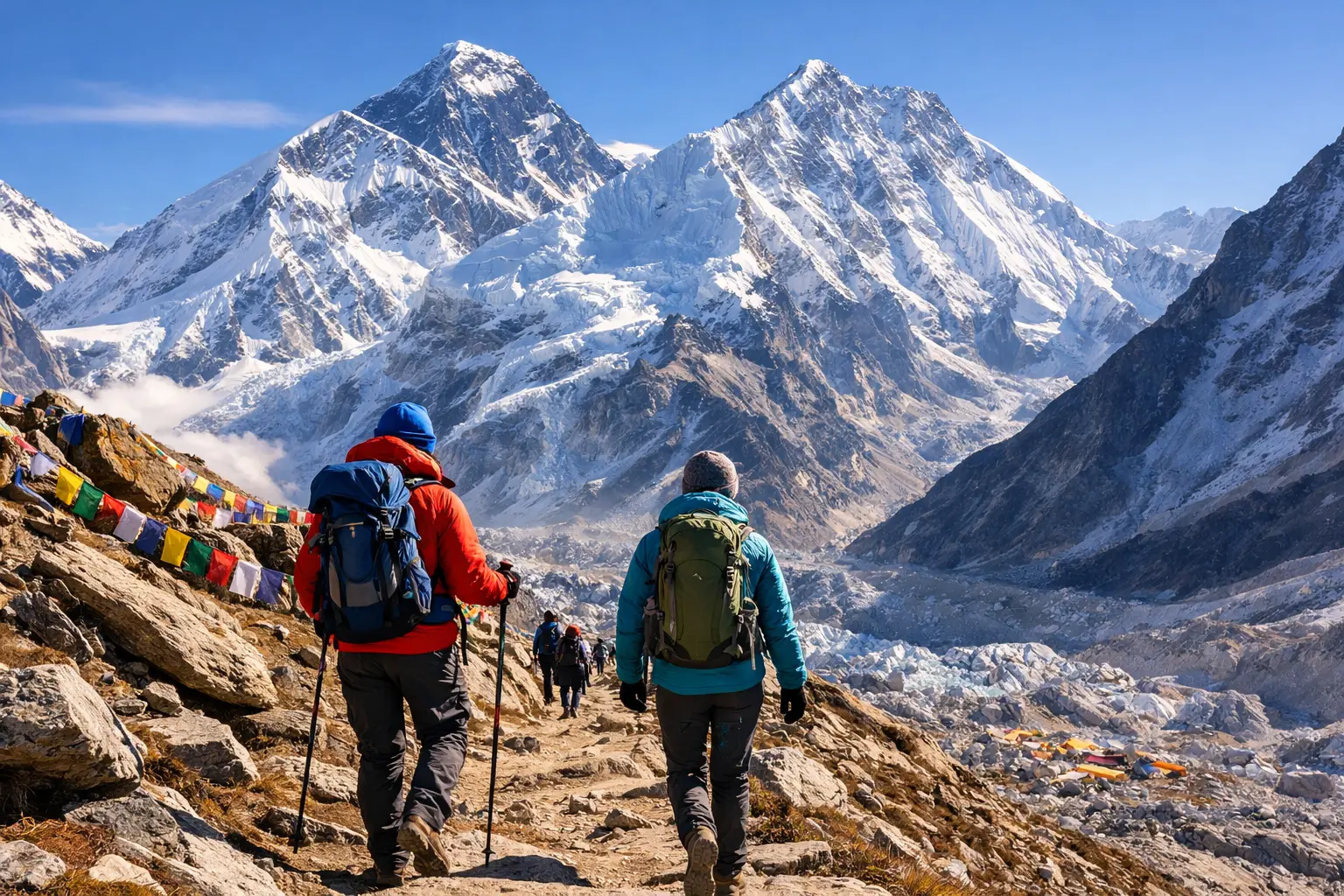
The Everest Base Camp trek takes you through the heart of the Khumbu region in Nepal. The standard EBC trekking route starts with a flight to Lukla and passes through famous villages like Namche Bazaar, Tengboche, Dingboche, and Gorak Shep.
- Total distance: Around 130 km (round trip)
- Duration: 12–14 days on average
- Daily walking time: 5–7 hours
- Maximum altitude: 5,364 m at Kala Patthar
Although the Everest Base Camp altitude is high, the trail itself is well-maintained and clearly marked. This makes the trek suitable for determined beginners who prepare properly.
Why Beginners Think Everest Base Camp Is Hard
Many beginners feel nervous about the EBC trek due to its reputation. The biggest concerns usually include altitude, long trekking days, and cold weather.
The risk of altitude sickness at Everest Base Camp worries most first-time trekkers. As you climb higher, oxygen levels drop, and your body needs time to adapt. In addition, walking for several days in a row can feel physically demanding. Simple teahouse accommodation and basic facilities also add to the perceived difficulty.
These factors combine to create the main EBC trek challenges, especially for those new to high-altitude trekking.
Actual Difficulty Level of Everest Base Camp for Beginners
The real Everest Base Camp difficulty level is moderate to challenging, but not technical. You do not need ropes, climbing equipment, or mountaineering experience. The trail involves gradual ascents, descents, and regular walking on mountain paths.
If you wonder, “Is the EBC trek technical?” the answer is no. The challenge comes from endurance, altitude, and consistency rather than skill or strength. Beginners who can walk for several hours a day at a steady pace usually manage the trek well.
Altitude: The Biggest Challenge for First-Time Trekkers
For beginners, altitude is the most demanding part of the journey. The Everest Base Camp altitude rises slowly, but oxygen levels drop significantly above 3,000 meters.
To reduce risk:
- The itinerary includes Everest Base Camp acclimatization days, especially in Namche Bazaar and Dingboche
- Trekkers follow the “climb high, sleep low” principle
- Walking slowly helps the body adjust naturally
Beginners should learn early symptoms of altitude sickness, such as headache, loss of appetite, dizziness, and fatigue. Proper acclimatization makes high-altitude trekking for beginners much safer.
Physical Fitness Requirements for Beginners
You do not need to be an athlete, but a decent fitness level makes the trek more enjoyable. The recommended Everest Base Camp fitness level includes good cardiovascular endurance and strong legs.
Simple activities like walking, hiking, cycling, and stair climbing help prepare your body. Most experts suggest following an EBC training plan for beginners for 4–8 weeks before the trek. Regular training builds stamina and confidence for long trekking days.
Mental Challenges Beginners May Face
The mental aspect of trekking often surprises beginners more than the physical side. Walking for many days, limited comfort, and unpredictable weather can feel overwhelming.
Mental challenges include:
- Cold mornings and windy afternoons
- Limited hot showers and electricity
- Slow progress at high altitude
Staying patient, positive, and flexible helps overcome the mental challenge of the Everest Base Camp trek.
Can Beginners Successfully Complete Everest Base Camp?
Yes, many first-time trekkers complete the trek every year. The Everest Base Camp trek success rate is high for those who follow a proper itinerary and respect acclimatization rules.
Choosing a guided EBC trek for beginners increases safety and comfort. Experienced guides monitor your health, manage the pace, and handle logistics, allowing you to focus on walking and enjoying the journey.
Tips to Make Everest Base Camp Easier for Beginners
Following proven Everest Base Camp tips for beginners can significantly improve your experience:
- Walk slowly and maintain a steady pace
- Drink plenty of fluids and eat well.
- Take acclimatization days seriously.
- Use proper trekking gear and layered clothing.g
- Follow practical EBC trekking tips from an experienced guide.s
These simple habits reduce fatigue and help prevent altitude-related problems.
Best Time for Beginners to Trek to Everest Base Camp
The best time to trek Everest Base Camp is during stable weather seasons.
- Spring (March–May): Warmer temperatures, blooming rhododendrons
- Autumn (September–November): Clear skies, excellent mountain views
These are the most beginner-friendly EBC trekking seasons, offering safer conditions and better visibility.
Everest Base Camp vs Other Beginner Treks
When comparing Everest Base Camp vs Annapurna Base Camp, EBC is longer and higher in altitude. Annapurna Base Camp is often shorter and slightly easier, making it popular among first-time trekkers.
However, Everest Base Camp remains one of the best treks for beginners in Nepal who want a classic high-altitude adventure and are willing to prepare properly.
Conclusion: Is Everest Base Camp Hard for Beginners?
So, is Everest Base Camp hard for beginners? Yes, it is challenging, mainly due to altitude and endurance requirements. However, it is not overly difficult or technical. With good preparation, proper acclimatization, and the right mindset, beginners can complete the Everest Base Camp trek successfully.
If you train well, choose the right season, and trek at a steady pace, Everest Base Camp becomes an achievable and rewarding goal, even for first-time trekkers.
Frequently Asked Questions (FAQ)
Is Everest Base Camp suitable for beginners with no trekking experience?
Yes, Everest Base Camp is suitable for beginners who have no prior trekking experience. The trail is well-marked and non-technical. However, beginners should prepare physically and follow a proper acclimatization schedule to handle the altitude.
How fit do I need to be for the Everest Base Camp trek?
You need a moderate fitness level. You should be comfortable walking 5–7 hours a day on mountain trails. Regular walking, hiking, or cardio training before the trek is usually enough for beginners.
Is altitude sickness common on the Everest Base Camp trek?
Mild altitude symptoms are common, but serious altitude sickness is rare if you acclimatize properly. Walking slowly, taking rest days, and staying hydrated greatly reduce the risk.
Do I need technical climbing skills for Everest Base Camp?
No, the Everest Base Camp trek does not require any technical climbing or mountaineering skills. It is a walking trek, not a climbing expedition.
How long does it take to complete the Everest Base Camp trek?
Most trekkers complete the trek in 12 to 14 days, including acclimatization days. Beginners should avoid shorter itineraries to reduce altitude risks.
What is the best time for beginners to trek to Everest Base Camp?
Spring (March to May) and autumn (September to November) are the best seasons for beginners due to stable weather, clear views, and safer trail conditions.
Can I do the Everest Base Camp trek without a guide as a beginner?
While it is possible, beginners are strongly advised to choose a guided trek. A guide helps manage pace, health, logistics, and safety, especially at high altitude.
Is the Everest Base Camp trek harder than the Annapurna Base Camp?
Yes, Everest Base Camp is generally harder than Annapurna Base Camp because it is longer and reaches a higher altitude. However, it is still achievable for beginners with proper preparation.
What is the biggest mistake beginners make on the EBC trek?
The biggest mistake is walking too fast and ignoring acclimatization. Slow pacing and rest days are crucial for a safe and successful trek.
What makes Everest Base Camp worth it for beginners?
The iconic Himalayan scenery, cultural experience, and sense of achievement make Everest Base Camp one of the most rewarding treks, even for first-time trekkers.