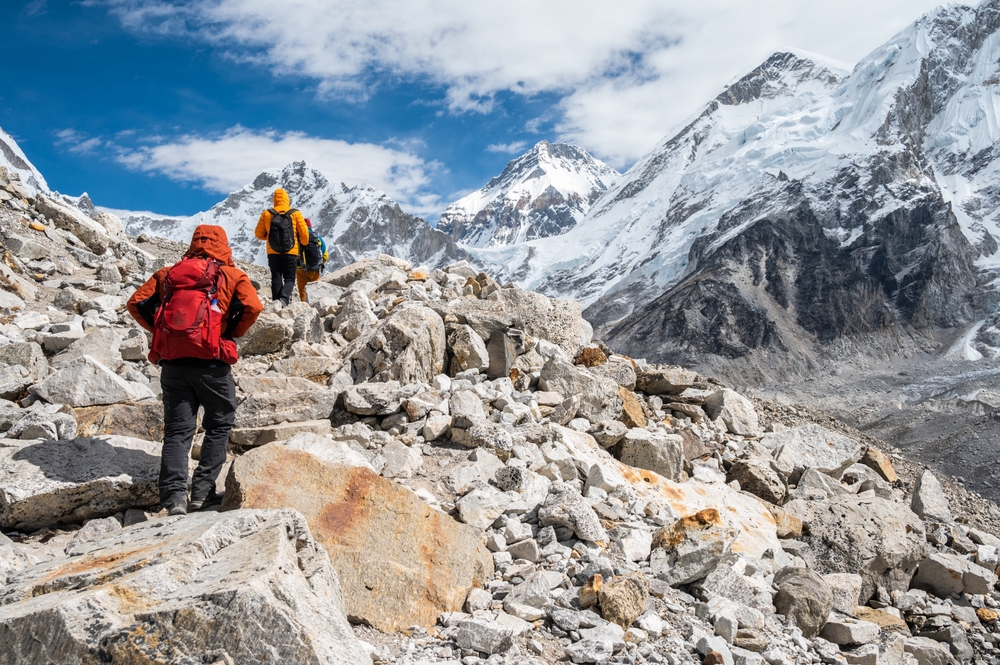
Everest Base Camp Trek covers a 130 km round trip through the Khumbu region of Nepal, starting at Lukla (2,860m) and finishing at Everest Base Camp (5,364m).
The trek requires moderate cardiovascular fitness rather than athletic ability. 95% of trekkers who complete proper 8–12 week training reach Everest Base Camp successfully, regardless of prior Himalayan experience.
The challenge is not speed or raw strength – it is altitude, endurance, and daily walking for 12–14 consecutive days across the Sagarmatha National Park trail.
This guide covers exact fitness levels, a week-by-week training plan, route-specific demands, permits, costs, and everything you need to know before booking your Everest Base Camp trek in 2026.
Table of Contents
What Fitness Level Does Everest Base Camp Trek Require?
Everest Base Camp Trek requires a moderate fitness level, defined as the ability to walk 5-8 hours daily on uneven mountain terrain for 12-14 consecutive days while carrying a 5-7 kg daypack.
Fitness for EBC is divided into three categories. Each category determines the ideal training timeline and itinerary choice.
Beginner Fitness Level – Can You Still Trek to Everest Base Camp?
Beginners complete Everest Base Camp Trek with structured preparation. 65% of annual EBC trekkers are first-time Himalayan trekkers. The trek requires no technical climbing skills, ropes, or ice equipment.
Beginner trekkers achieve the best results with a 14-day itinerary that includes 2 acclimatization nights in Namche Bazaar (3,440m) and an extra rest day in Dingboche (4,410m). Tea house lodges provide accommodation and meals at every stop, removing camping logistics entirely.
Minimum benchmark for beginners: Walk continuously for 4-5 hours on hilly terrain before departure.
Moderate Fitness Level – The Ideal Starting Point
Moderate fitness trekkers – those who walk 4-5 hours weekly and hike on weekends – form the largest successful group on the Khumbu trail. Sherpa guides report an 85% completion rate among moderate fitness trekkers who follow an 8-week training plan.
Moderate trekkers reach Everest Base Camp (5,364m) comfortably with proper acclimatization stops at Namche Bazaar, Tengboche (3,860m), Dingboche, and Lobuche (4,940m).
High Fitness Level – Do Athletes Have an Advantage?
Athletic trekkers move faster on Days 1–7 of the Everest Base Camp Trek. The advantage reduces significantly above Dingboche (4,410m) because altitude sickness (AMS) affects all fitness levels equally.
Oxygen at Everest Base Camp measures 50% of sea level concentration. No level of cardiovascular fitness eliminates the need for acclimatization. A pulse oximeter reading below 75% at any altitude signals mandatory rest, regardless of athletic ability.
The Everest Base Camp Trek Route – Why Fitness Matters at Each Stage
Everest Base Camp Trek follows the Khumbu Valley route from Lukla (2,860m) to Everest Base Camp (5,364m) over 12–15 days, with elevation gain averaging 300–600m per day. Each section tests a different physical system.
Lukla to Namche Bazaar – The First Fitness Test (Days 1–3)
Tenzing-Hillary Airport in Lukla (2,860m) marks the start of the Everest Base Camp Trek. Day 1 follows the Dudh Kosi River valley to Phakding (2,610m) – a gentle 3-hour walk.
Day 2 delivers the first real fitness test: the climb from Monjo (2,840m) through Jorsalle to Namche Bazaar (3,440m). The final 2-hour ascent gains 600m of elevation and takes moderate trekkers 3.5–4 hours total. Leg strength and cardiovascular endurance determine pace on this section.
Fitness demand: Cardiovascular endurance + leg strength. Daily trekking time: 5–7 hours.
Namche Bazaar to Tengboche – Altitude Enters the Picture (Days 4–5)
Namche Bazaar (3,440m) serves as the acclimatization capital of the Khumbu region. Trekkers spend 2 nights here to let the body adjust to reduced oxygen. Oxygen at Namche measures 68% of sea level concentration.
The acclimatization hike above Namche to the Everest View Hotel (3,880m) tests aerobic capacity for the first time. Tengboche Monastery (3,860m) sits on a ridge with Ama Dablam and Everest in direct view – one of the most photographed moments on the entire trek.
Dingboche to Lobuche – The High Altitude Zone (Days 7–9)
Dingboche (4,410m) and Lobuche (4,940m) represent the high-altitude zone where oxygen drops to 52% of sea level. Cold temperatures at night reach -15°C.
70% of altitude sickness (AMS) cases on the Everest Base Camp Trek occur above Dingboche. Symptoms include headache, nausea, and reduced oxygen saturation on pulse oximeter readings. The acclimatization hike to Nangkartshang Peak (5,083m) above Dingboche prepares the body for the final push.
Fitness demand: Mental endurance + breathing efficiency. Physical fitness matters less than altitude adaptation at this stage.
Gorak Shep to Everest Base Camp – The Final Push (Days 10–11)
Gorak Shep (5,164m) serves as the final tea house stop before Everest Base Camp (5,364m). The 3-hour walk to EBC crosses the Khumbu Glacier on rocky glacial moraine terrain – the most physically demanding surface of the entire trek.
Kala Patthar (5,545m) stands 200m above EBC and delivers the best Everest panorama on the route. Most trekkers summit Kala Patthar at pre-dawn for clear views of Mount Everest (8,849m). The 1.5-hour ascent from Gorak Shep in -20°C temperatures demands total mental and physical commitment.
8-Week Everest Base Camp Fitness Training Plan
An 8-week training plan for Everest Base Camp Trek builds cardiovascular endurance, leg strength, and hiking stamina through progressive weekly targets. Beginners extend this to 12 weeks by repeating Weeks 1–4 before moving to the advanced phase.
Weeks 1–2 Build Your Base Cardio
Weeks 1 and 2 establish a cardiovascular base through consistent low-intensity sessions. The goal is habit formation and heart rate adaptation, not peak performance.
| Activity | Duration | Frequency | Target HR |
| Brisk walking / flat hike | 30 min | 4x per week | 65–70% max HR |
| Cycling (steady) | 30 min | 2x per week | 65% max HR |
| Stretching / yoga | 20 min | Daily | Recovery |
Weeks 3–4 Introduce Elevation and Load
Weeks 3 and 4 add gradient and pack weight to simulate the Namche Bazaar climb – the steepest single ascent on the Everest Base Camp Trek route.
| Activity | Duration | Load | Target |
| Stair climbing | 45 min | No pack | Continuous pace |
| Incline treadmill (10–12%) | 30 min | 5 kg pack | Simulate Namche climb |
| Weekend hike (hills) | 2.5–3 hrs | 5–7 kg pack | Uneven terrain |
| Leg strength training | 40 min | Bodyweight | Squats, lunges, step-ups |
Weeks (5–6) – Hiking-Specific Training
Weeks 5 and 6 replicate the actual daily trekking experience on the Khumbu Valley trail. Sessions extend to 4-6 hours to build multi-hour endurance.
- 4-6 hour trail hikes on consecutive days (Saturday + Sunday)
- 7 kg daypack – matching actual EBC daypack weight
- Trekking poles introduced to reduce knee stress on descents
- Focus on rocky, uneven terrain rather than smooth paths
Evidence: Trekking poles reduce knee joint stress by 25% on descents, critical for protecting knees across 130 km of cumulative distance.
Weeks (7-8 ) – Peak Training and Taper
Weeks 7 and 8 deliver peak training load followed by a 10-day taper before departure. Back-to-back hiking days simulate the multi-day fatigue of the actual trek.
- Back-to-back 5–6 hour hikes (Day 1: uphill focus, Day 2: downhill focus)
- Full 7 kg pack throughout all sessions
- Taper begins 10 days before departure: reduce volume by 50%, maintain intensity
- Final week: 30-minute daily walks only – protect muscles and joints
Sherpa Tip: Start training at sea level but include at least one multi-day trek at 2,000m+ altitude before departure. A weekend in a mountain region confirms your body’s altitude response before committing to the Khumbu Valley.
Specific Exercises for Everest Base Camp Trek Preparation
Everest Base Camp Trek preparation targets three physical systems: cardiovascular endurance, lower body strength, and core stability. All three systems engage simultaneously on the Khumbu trail.
Cardio Exercises – The Most Important Category
Cardiovascular endurance determines performance above 4,000m where oxygen drops below 60% of sea level. Aerobic capacity – not muscle mass – drives success on the high sections of the Everest Base Camp route.
| Exercise | Duration | Frequency | EBC Relevance |
| Stair climbing | 30–45 min | 4x/week | Namche Bazaar + Lobuche climbs |
| Incline treadmill (10–15%) | 30 min | 3x/week | Khumbu Valley gradient |
| Cycling (steady state) | 45 min | 3x/week | Aerobic base building |
| Swimming | 30 min | 2x/week | Lung capacity + breathing control |
| Running (easy pace) | 30 min | 2x/week | General cardiovascular base |
Strength Exercises – Lower Body Priority
Lower body strength protects knees on the 65 km descent section of the trek and powers the steep ascents to Namche Bazaar, Lobuche, and Kala Patthar.
| Exercise | Sets x Reps | EBC Relevance |
| Squats (bodyweight → weighted) | 3 x 15 | Descent protection – knee stability |
| Reverse lunges (weighted) | 3 x 12 each leg | Uphill climbing power |
| Step-ups (45cm box) | 3 x 15 | Rocky terrain simulation |
| Calf raises (single leg) | 3 x 20 | Kala Patthar final ascent |
| Deadlifts (moderate weight) | 3 x 10 | Backpack posture + hamstring strength |
| Wall sit (60 sec holds) | 3 x 60 sec | Static quad endurance for steep descents |
Core and Flexibility – Often Overlooked, Always Critical
Core stability reduces lower back pain across 12-14 days of continuous trekking with a daypack. Sherpa guides recommend daily stretching from Day 4 of the trek onward to prevent stiffness at altitude.
- Plank (front + side): 3 x 60 seconds – stabilises torso on uneven terrain
- Mountain climbers: 3 x 30 reps – combines cardio and core in one movement
- Hip flexor stretch: 2 x 60 seconds each side – reduces Lukla stiffness on Day 1
- Hamstring stretch: 2 x 45 seconds each side – protects knees on descents
- Ankle mobility circles: 2 x 20 reps – prevents ankle rolls on rocky Khumbu paths
Everest Base Camp Trek Difficulty – Honest Assessment
Everest Base Camp Trek rates as a Grade 3 moderate-to-strenuous trek. The classification places it harder than Annapurna Base Camp (4,130m) but below technical mountaineering routes. Zero climbing skills, ropes, or crampons are required.
How Difficult Is EBC Compared to Other Treks?
| Trek | Difficulty | Max Altitude | Fitness Required |
| Everest Base Camp Trek | Moderate–Strenuous | 5,545m (Kala Patthar) | Moderate–High |
| Annapurna Base Camp | Moderate | 4,130m | Moderate |
| Langtang Valley Trek | Easy–Moderate | 3,870m | Low–Moderate |
| Three Passes Trek (EBC+) | Strenuous | 5,535m (Kongma La) | High |
| Kilimanjaro (Tanzania) | Moderate | 5,895m | Moderate |
| Manaslu Circuit Trek | Strenuous | 5,160m (Larkya Pass) | High |
What Makes EBC Hard – It Is Not Distance, It Is Altitude
Acute Mountain Sickness (AMS) affects 50% of trekkers above 3,500m who ascend without proper acclimatization. Symptoms include persistent headache, nausea, dizziness, and oxygen saturation below 75% on a pulse oximeter.
A 14-day itinerary with structured acclimatization days in Namche Bazaar and Dingboche reduces AMS risk to 15%. Diamox (acetazolamide) at 125–250mg twice daily provides additional altitude protection for high-risk trekkers – consult a doctor before departure.
Key fact: 80% of Everest Base Camp trek failures result from moving too fast through altitude zones, not from inadequate fitness levels. This is the number one cause reported by Sherpa guides on the Khumbu trail.
Best Time to Trek Everest Base Camp – Fitness Planning by Season
Everest Base Camp Trek operates in two optimal seasons: pre-monsoon (March–May) and post-monsoon (September–November). October delivers the best trail conditions, stable weather, and Himalayan visibility.
Spring Season (March–May) – Best for Fitness Training Window
Spring trekking season opens in March with temperatures of 10°C at Namche Bazaar and -10°C at Everest Base Camp. Rhododendron forests between Lukla and Namche bloom in April, creating the most visually dramatic trekking conditions of the year.
Spring coincides with Everest climbing season – mountaineering expeditions pass through Namche Bazaar and Lobuche, adding atmosphere to the trek. For a March departure, begin the 8-week training plan in January.
Autumn Season (September–November) – Most Popular Season
October represents the peak month for Everest Base Camp trekking. 60% of annual EBC trekkers travel in October. Temperatures reach 15°C at Namche Bazaar. Clear post-monsoon skies deliver Himalayan views unobstructed by cloud cover.
November extends the season with colder temperatures (-15°C at EBC) but fewer trekkers on the trail. For an October departure, begin the 8-week training plan in August.
Permits Required for Everest Base Camp Trek
Everest Base Camp Trek requires two mandatory permits: Sagarmatha National Park Entry Permit and Khumbu Pasang Lhamu Rural Municipality Permit. Both permits are mandatory for all foreign nationals trekking in the Khumbu region.
Sagarmatha National Park Permit
Sagarmatha National Park – a UNESCO World Heritage Site established in 1976 – covers the entire Khumbu trekking region including the Everest Base Camp route. The permit costs NPR 3,000 (approximately USD 22) per person.
- Obtained at: Nepal Tourism Board office in Kathmandu or Monjo checkpoint on the trail
- Documents required: Passport copy, passport photograph, trekking permit application form
- Processing time: 30 minutes at Kathmandu office
Khumbu Pasang Lhamu Rural Municipality Permit
Khumbu Pasang Lhamu Rural Municipality Permit covers the Khumbu region local governance fee. The permit costs NPR 2,000 (approximately USD 15) per person.
- Obtained at: Lukla airport arrival or Namche Bazaar permit checkpoint
- Documents required: Passport, TIMS card (Trekkers’ Information Management System)
Everest Base Camp Trek Cost – Full 2026 Budget Breakdown
Everest Base Camp Trek costs USD 1,200–2,500 for a guided package from Kathmandu, covering permits, tea house accommodation, meals, Sherpa guide, and porter. International flights and personal fitness gear are additional costs.
| Cost Item | Budget | Mid-Range |
| Guided Trek Package (12–14 days, Kathmandu–Kathmandu) | USD 1,200 | USD 2,000 |
| Sagarmatha National Park Permit | USD 22 | USD 22 |
| Khumbu Rural Municipality Permit | USD 15 | USD 15 |
| Kathmandu–Lukla Return Flights | USD 350 | USD 420 |
| Travel Insurance (mandatory, high altitude cover) | USD 80 | USD 150 |
| Trekking Gear (boots, poles, pack, layers) | USD 200 | USD 500 |
| Porter / Sherpa Guide Tip (standard) | USD 80 | USD 150 |
| Extra Meals / Drinks / Hot Showers | USD 50 | USD 100 |
| TOTAL ESTIMATED COST | USD 1,997 | USD 3,357 |
Fitness Tips From Sherpa Guides on the Khumbu Trail
Sherpa guides on the Khumbu trail report three non-negotiable fitness principles that determine trek success: slow pace, consistent hydration, and mandatory rest days.
BISTARI BISTARI: Sherpa guides use the Nepali phrase “bistari bistari” – meaning “slowly, slowly” – as the defining philosophy of Everest Base Camp trekking. 80% of trek failures come from moving too fast through altitude zones, not from inadequate fitness.
- Slow pace above 3,500m – target 2-3 km/hour regardless of fitness level
- 4-5 litres of water daily – dehydration accelerates AMS symptoms by 40%
- 2 full rest days in Namche Bazaar (3,440m) -mandatory for acclimatization
- Acclimatization hike in Dingboche (4,410m) – ascend high, sleep low principle
- No alcohol above 3,000m – alcohol impairs oxygen uptake and disrupts sleep quality
- 9-10 hours sleep per night in tea houses – altitude increases recovery time by 30%
Conclusion
A well-planned Everest Base Camp trek combines smart acclimatization, experienced Sherpa guides, and full logistical support from Kathmandu. Both 12-day and 14-day itineraries include permits for Sagarmatha National Park, flights to Tenzing-Hillary Airport, tea house stays across the Khumbu Valley, and porter service to Everest Base Camp.
Frequently Asked Questions
Can beginners do the Everest Base Camp Trek?
Beginners complete Everest Base Camp Trek with 8–12 weeks of structured training. The trek requires no technical climbing skills. Namche Bazaar acclimatization stops on Days 3–4 allow the body to adjust to altitude. 65% of annual EBC trekkers are first-time Himalayan trekkers. A 14-day itinerary with extra acclimatization days delivers the highest completion rate for beginner trekkers.
What is the minimum fitness level for Everest Base Camp Trek?
Minimum fitness for Everest Base Camp Trek means walking 5–6 hours continuously on hilly terrain without stopping. Trekkers carry a 5–7 kg daypack. Porters carry main luggage up to 15 kg. Cardiovascular endurance matters more than strength above 4,000m. The ability to maintain a steady pace for 6 hours without rest represents the baseline fitness benchmark.
Can overweight people trek to Everest Base Camp?
Overweight trekkers complete EBC with extended preparation. A 12–16 week training program focusing on cardio and knee-strengthening exercises produces the necessary fitness. A 14-day itinerary with extra acclimatization days reduces physical stress. Knee braces and trekking poles provide joint support on steep descents. Porter support removes all heavy load from trekker backpacks throughout the trek.
What age is too old for Everest Base Camp Trek?
No official maximum age exists for Everest Base Camp Trek. The oldest verified trekker completed EBC at age 76. Medical clearance from a doctor and a 14-day itinerary with rest days supports safe trekking for people over 60. Trekkers over 60 achieve the same completion rates as younger trekkers when using properly acclimatised itineraries with experienced Sherpa guide support.
Is Everest Base Camp Trek harder than Kilimanjaro?
Everest Base Camp Trek covers 130 km over 12–14 days versus Kilimanjaro’s 7-day summit push. Both reach similar altitudes (5,364m vs 5,895m). EBC is longer and more endurance-based with tea house accommodation each night. Kilimanjaro involves a steeper single-summit push with camping. Both treks require equivalent 8-week fitness preparation. EBC provides more acclimatization time due to its longer duration.
How long before departure should I start training for EBC?
Start Everest Base Camp Trek training 8–12 weeks before departure. Beginners need 12 weeks. Moderate fitness trekkers need 8 weeks. The plan covers cardiovascular endurance in Weeks 1–4, elevation and load training in Weeks 3–6, and hiking-specific sessions in Weeks 5–8. A 10-day taper before departure preserves muscle recovery and joint health.
Do you need supplemental oxygen at Everest Base Camp?
Trekkers do not use supplemental oxygen at Everest Base Camp (5,364m). Oxygen at EBC measures 50% of sea level concentration. Structured acclimatization days in Namche Bazaar and Dingboche allow the body to increase red blood cell production naturally. Supplemental oxygen begins at Camp 1 (6,065m) for Everest summit climbers above the trekking route entirely.
How many hours a day do you walk on the Everest Base Camp Trek?
Everest Base Camp Trek involves 5–8 hours of walking per day. Day 2 (Phakding to Namche Bazaar) and Day 10 (Lobuche to Gorak Shep to EBC) are the longest days at 7–8 hours. Acclimatization days in Namche and Dingboche involve 2–3 hour hikes only. Average daily walking time across the full 12-day itinerary is 5.5 hours.