Most trekkers spend weeks preparing for the Everest Base Camp trek. They train, they pack, they plan every detail of the route. But one of the most important moments of the entire journey – the sunrise – often catches people off guard.
Here is something many trekkers do not realize until they arrive: the best sunrise view from Everest Base Camp does not actually come from Base Camp itself. It comes from a rocky ridge above it, called Kala Patthar, at 5,545 meters above sea level.
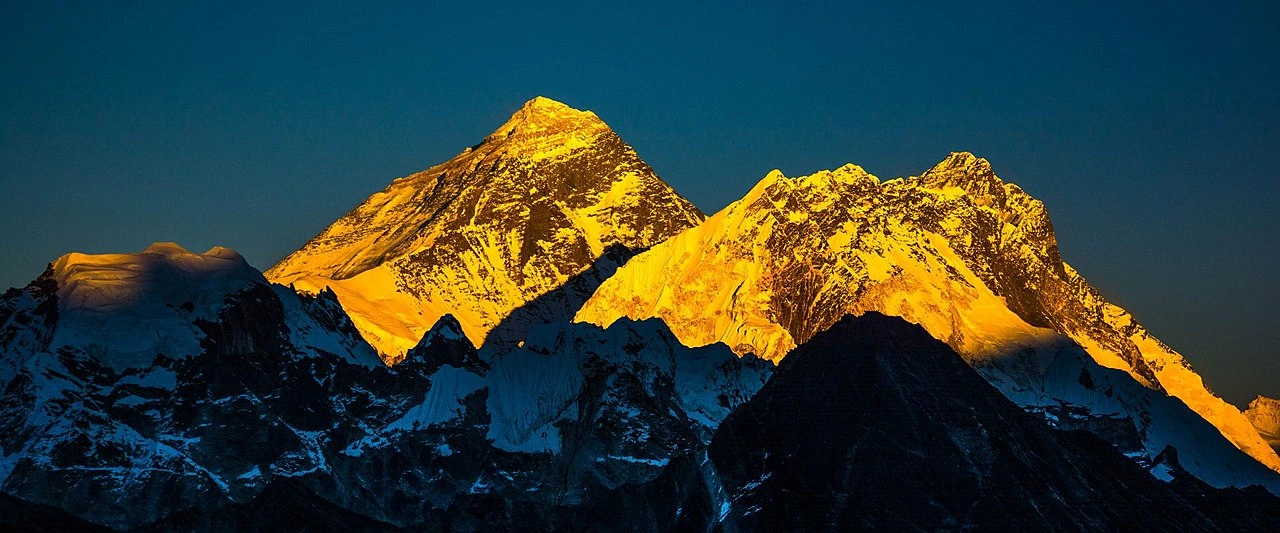
From Kala Patthar, you watch the first light of the day hit the summit of Mount Everest at 8,848m. The peak turns from grey to pink to gold in less than twenty minutes. The Khumbu Glacier glows below you. Lhotse, Nuptse, and Pumori catch the light one by one. There is nothing else in the world quite like it.
This guide tells you exactly where to stand, what time to leave, which season gives you the clearest sky, and what to expect when you get there.
Table of Contents
Why Kala Patthar || Not Everest Base Camp || Is the Real Sunrise Viewpoint
This surprises almost every first-time trekker: you cannot clearly see Mount Everest from Everest Base Camp.
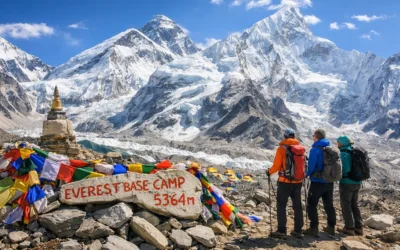
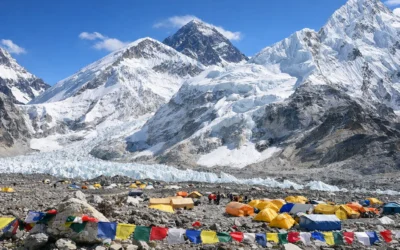
What is Everest Base Camp? – the camp sits in the Khumbu Valley at 5,364m, surrounded by the moraine of the Khumbu Glacier. The massive shoulder of Nuptse blocks the view of Everest’s summit from this position. Many trekkers arrive at Base Camp expecting a dramatic view of the world’s highest peak – and find that the mountain is hidden.
How high is Everest Base Camp? – at 5,364m, Base Camp is already extraordinarily high. But Kala Patthar at 5,545m sits on an exposed ridge directly to the west, offering an unobstructed, close-up view of Everest’s summit that Base Camp simply cannot provide.
From Kala Patthar, you can see:
- Mount Everest (8,848.86m) – the southeast face and summit pyramid, fully visible and unobstructed
- Lhotse (8,516m) – the world’s fourth-highest mountain, directly adjacent to Everest
- Nuptse (7,861m) – prominent on the left side of Everest
- Pumori (7,161m) – directly beside Kala Patthar, dominating the skyline
- Changtse (7,543m) – visible across the border in Tibet
- Khumbu Glacier and Khumbu Icefall – directly below, stretching toward Base Camp
This 360-degree panorama at sunrise is why Kala Patthar is considered the crown jewel of the entire Everest Base Camp trek – and the most photographed moment of the journey.
What Time to Leave for the Best Sunrise View from Everest Base Camp
Timing is everything at Kala Patthar. Get it wrong and you arrive at the summit to find cloud already building across the peaks. Get it right and you stand in full clear air as Everest’s summit turns gold.
The correct schedule:
| Time | Action |
| 4:00–4:30 AM | Wake up at Gorak Shep. Dress in full cold-weather layers. Eat a light snack. |
| 4:30–5:00 AM | Depart Gorak Shep for Kala Patthar. |
| 6:00–6:30 AM | Reach Kala Patthar summit. Sunrise typically occurs between 6:00 and 6:30 AM depending on season. |
| 6:00–7:00 AM | Golden hour – the 15 to 20 minute window when Everest glows pink, orange, and gold. |
| 7:30–9:00 AM | Descend back to Gorak Shep before cloud builds and winds increase. |
The hike from Gorak Shep to Kala Patthar summit is a 400m elevation gain over approximately 1.5 to 2km of steep, rocky terrain. At this altitude – already above 5,100m – the thin air makes every step harder than it looks on paper. Allow 1.5 to 2 hours for the ascent. Do not rush.
Cloud buildup in the Khumbu Valley typically begins between 9:00 and 11:00 AM. Trekkers who leave Gorak Shep after 6:00 AM regularly arrive at Kala Patthar summit to find visibility already deteriorating. An early start – even in freezing darkness – is what separates a life-changing sunrise from a cloudy disappointment.
Best Season for Sunrise at Kala Patthar
The season you choose has a bigger impact on your sunrise experience than almost any other factor. Clear skies are not guaranteed at 5,545m – and some months are dramatically better than others.
Autumn: October and November (Best Overall)
Post-monsoon skies are clear, mountain visibility is at its best, and weather conditions are the most stable of the year. October and November are the peak months for the best sunrise view from Everest Base Camp. The air is clear, the mountain is fully visible, and temperatures – while cold – are manageable with proper gear.
October is widely considered the single best month. Sunrise light in October hits Everest’s southeast face at an angle that produces extraordinary colour – deep gold transitioning to orange across the snowfields. Visibility on clear October mornings extends across multiple 8,000m peaks simultaneously.
November remains excellent but brings colder temperatures, especially before dawn at Kala Patthar. Wind increases through November and into December.
Spring: March and April (Excellent, Especially for Colour)
Best sunrise months are October, November, March, and April – spring offers warmer temperatures above 3,000m compared to autumn and can produce exceptional sunrise colour, particularly in late March and April when rhododendron blooms lower on the trail add visual context to the journey.
Spring mornings at Kala Patthar can be slightly more atmospheric than autumn – pre-monsoon haze occasionally softens the light in a way that produces deep orange and pink tones across Everest’s snowfields. For photographers, March and April can produce the most dramatic single frames of the trek.
Winter: December and February (Possible but Difficult)
Winter brings some of the clearest skies of the year – cold, dry air with very low humidity – but temperatures at Kala Patthar before dawn in December and January regularly fall below -20°C. Wind chill makes exposed positions dangerous. Only experienced cold-weather trekkers should attempt the best sunrise view from Everest Base Camp in winter months.
Monsoon: June to September (Avoid)
Cloud cover during monsoon season makes sunrise views at Kala Patthar almost impossible. Visibility above 4,000m drops to near zero on many mornings. This season is not recommended for anyone prioritizing mountain views.
What You Actually See: The Sunrise from Kala Patthar Moment by Moment
Understanding what happens during sunrise helps you plan your time on the summit and set the right expectations.
Before dawn – the waiting: You arrive in darkness, sometimes in freezing wind. The sky is a deep indigo. Headlamps dot the trail below. The silhouette of Everest is visible against the stars – massive and close in a way that feels surreal at ground level.
First light – alpenglow: Roughly 20 to 30 minutes before sunrise, the highest peaks catch the first scatter of light. Everest’s summit glows faintly pink while the valley below remains dark. This alpenglow moment – the mountain lit while everything around it is still in shadow – is one of the most photographed scenes in Himalayan trekking.
Sunrise – the golden window: The sun clears the eastern ridgeline. Direct light hits Everest’s summit. The mountain turns from pale pink to deep gold in seconds. Lhotse and Nuptse catch the same light moments later. The Khumbu Glacier below reflects white and silver. The entire Himalayan range glows simultaneously. This peak moment lasts 15 to 20 minutes before the light normalises and the colours soften.
After sunrise – the view remains: The colour fades but the view does not. On a clear morning, you can stand on Kala Patthar for an hour or more watching the mountains in full daylight before clouds begin to build across the lower valleys. Use this time. The views do not diminish – they simply change character as the light shifts.
How to Get to Kala Patthar: Practical Trail Information
Kala Patthar is reached via the standard Everest Base Camp trek route. Where does the Everest Base Camp trek start? – the trek begins in Lukla after a short flight from Kathmandu. From Lukla, the trail follows the Khumbu Valley through Namche Bazaar, Tengboche, Dingboche, and Lobuche before reaching Gorak Shep, the final settlement before the Kala Patthar ascent.
How long is the hike to Everest Base Camp? – reaching Gorak Shep from Lukla takes approximately 8 days of trekking on the standard itinerary. This includes mandatory acclimatization stops at Namche Bazaar and Dingboche. How long does it take to walk Everest Base Camp? – the full round trip from Lukla to Base Camp and back is typically completed in 12 to 15 days.
From Gorak Shep, the Kala Patthar ascent:
- Distance: 1.5 to 2km one way
- Elevation gain: 400m (from 5,140m at Gorak Shep to 5,545m at Kala Patthar summit)
- Ascent time: 1.5 to 2 hours depending on pace and acclimatization
- Descent time: 1 to 1.5 hours
- Trail surface: Steep rocky path, loose scree, no technical climbing required
- Equipment needed: Trekking poles strongly recommended, headlamp for pre-dawn departure, full cold-weather layers
No technical climbing skills are required for Kala Patthar. The challenge is entirely physiological – altitude, thin air, and cold, not technical terrain.
What to Wear for a Pre-Dawn Kala Patthar Sunrise Hike
Temperatures at Kala Patthar before dawn range from -10°C to -25°C depending on season and wind. This is not a morning for light layers. Every item matters.
Essential clothing for the sunrise hike:
- Thermal base layer (merino wool or synthetic – never cotton)
- Fleece mid-layer or down sweater
- Down jacket rated to at least -15°C – your most important item
- Waterproof and windproof outer shell
- Insulated waterproof gloves – thin gloves are not enough at 5,545m before dawn
- Balaclava or neck gaiter – wind on the Kala Patthar ridge can be brutal
- Thermal hat covering ears fully
- Waterproof insulated boots
- UV-blocking glacier sunglasses – essential after sunrise when snow reflection is intense
Equipment:
- Trekking poles – critical for the steep rocky ascent in the dark
- Headlamp with fresh batteries – cold drains battery life faster than expected
- Power bank – cameras and phones lose battery fast in pre-dawn temperatures
- Water bottle in an insulated sleeve – liquids freeze quickly before dawn at this altitude
- High-energy snacks – nuts, energy bars, chocolate
How to train for Everest Base Camp – physical preparation before the trek is what determines how hard the pre-dawn Kala Patthar push actually feels. Trekkers who arrive well-trained find the ascent hard but manageable. Those who arrive undertrained find the combination of altitude, cold, and dark genuinely dangerous.
Kala Patthar vs Everest Base Camp: Which Gives the Better Sunrise?
This is one of the most common questions trekkers ask in Gorak Shep the evening before their summit day.
The answer is clear: Kala Patthar gives the dramatically better sunrise view.
Base Camp sits too low and too surrounded by moraine to offer a clear Everest view. The sunrise at Base Camp is atmospheric – you are standing in the historic heart of Himalayan mountaineering, surrounded by the Khumbu Icefall – but Mount Everest itself is largely hidden.
From Kala Patthar, Everest’s summit is fully visible, close, and unobstructed. The sunrise light hits the peak directly from this position. There is simply no comparison for the sunrise experience.
Is Everest Base Camp worth visiting? – yes, absolutely, for its historical and emotional significance. But for the best sunrise view from Everest Base Camp, Kala Patthar is the answer every time.
Most itineraries visit both – Base Camp on the afternoon of the main summit day, then Kala Patthar the following morning for sunrise. This sequencing is the standard approach and the one that gives trekkers the complete experience.
Photography Tips for Sunrise at Kala Patthar
The sunrise from Kala Patthar is one of the most photographed moments in all of Himalayan trekking. Here is how to capture it well:
- Arrive early. The alpenglow before direct sunrise is often the most dramatic light of the morning. If you arrive only in time for sunrise itself, you miss the build-up.
- Protect your battery. Keep your camera or phone inside your jacket until the moment you shoot. Cold kills batteries at altitude. A power bank in a warm pocket gives you backup.
- Shoot in RAW if your camera allows. The dynamic range between dark valley and bright peak is extreme at golden hour. RAW files handle this better than JPEG.
- Use the foreground. Prayer flags at the Kala Patthar summit with Everest behind them are one of the classic Himalayan photography compositions. Position yourself before the light hits.
- Bring lens cloth. Breath condenses on cold glass instantly at 5,545m. Microfiber cloths kept warm in a pocket prevent fogged shots.
- Do not only look through the viewfinder. The sunrise at Kala Patthar is one of those experiences you need to stop and watch with your own eyes – not just document.
Conclusion
The best sunrise view from Everest Base Camp is not the view you imagined when you first booked the trek. It is better.
Standing on Kala Patthar at 5,545m in freezing pre-dawn darkness, watching Everest’s summit catch the first light of the day while the entire Himalayan range glows around you – this is the moment that justifies every hard training session, every difficult altitude day, and every early morning start on the trail.
Go in October or November for the clearest skies. Go in March or April for the warmest pre-dawn temperatures and the most vivid spring colour. Leave Gorak Shep by 4:30 AM. Wear every warm layer you own. And stop, at least once, to put the camera down and watch what is happening with your own eyes.
Why is Everest Base Camp famous? – partly for its history, partly for its altitude, and partly for mornings exactly like this one.
Planning your Everest Base Camp Trek with Helicopter Return?
Frequently Asked Questions
Can you see the sunrise from Everest Base Camp itself?
You can see daylight from Base Camp, but not the full sunrise over Everest’s summit. The Nuptse ridge blocks the view of Everest’s peak from Base Camp’s position. The best sunrise view from Everest Base Camp – meaning the clearest, highest, and most complete – is from Kala Patthar, a 1.5 to 2 hour hike above Gorak Shep.
How cold is it at Kala Patthar at sunrise?
Before dawn in October and November, temperatures at Kala Patthar range from -10°C to -18°C. Wind chill can push the felt temperature well below -20°C. In December and January, temperatures regularly fall below -25°C before dawn. Full cold-weather gear – down jacket, insulated gloves, balaclava, waterproof shell – is non-negotiable for the sunrise hike.
What time exactly does the sun rise at Kala Patthar?
Sunrise time at Kala Patthar varies by season. In October, sunrise occurs at approximately 6:00–6:10 AM. In November, around 6:15–6:30 AM. In March and April, between 5:45 and 6:10 AM. Depart Gorak Shep by 4:30 AM regardless of season to ensure you reach the summit with time to settle before first light.
Is it dangerous to hike Kala Patthar in the dark?
The hike is not technically dangerous if you carry a reliable headlamp, use trekking poles for stability on the rocky terrain, and are properly acclimatized. The main risk is physical – the combination of altitude, cold, and exertion before dawn pushes your body significantly. If you have shown any symptoms of altitude sickness in the days before, do not attempt the pre-dawn Kala Patthar hike without consulting your guide.
How many people are usually on Kala Patthar at sunrise?
In peak season (October and November), the Kala Patthar summit can have 50 to 100 trekkers at sunrise. It feels crowded by Himalayan standards, though the ridge is wide enough that you can always find a clear position. In March and April, crowds are smaller. In winter and monsoon, the summit is often nearly empty.
How difficult is the Everest Base Camp trek overall?
How difficult is the Everest Base Camp trek? – the trek is graded moderate to strenuous. The Kala Patthar sunrise push is the most physically demanding single moment of the entire route, combining the highest altitude with the coldest pre-dawn conditions. Is Everest Base Camp trek hard for beginners? – fit beginners with proper preparation can complete it, but the Kala Patthar pre-dawn hike requires serious cold-weather readiness. Check the Everest Base Camp trek fitness requirements before committing to the itinerary.