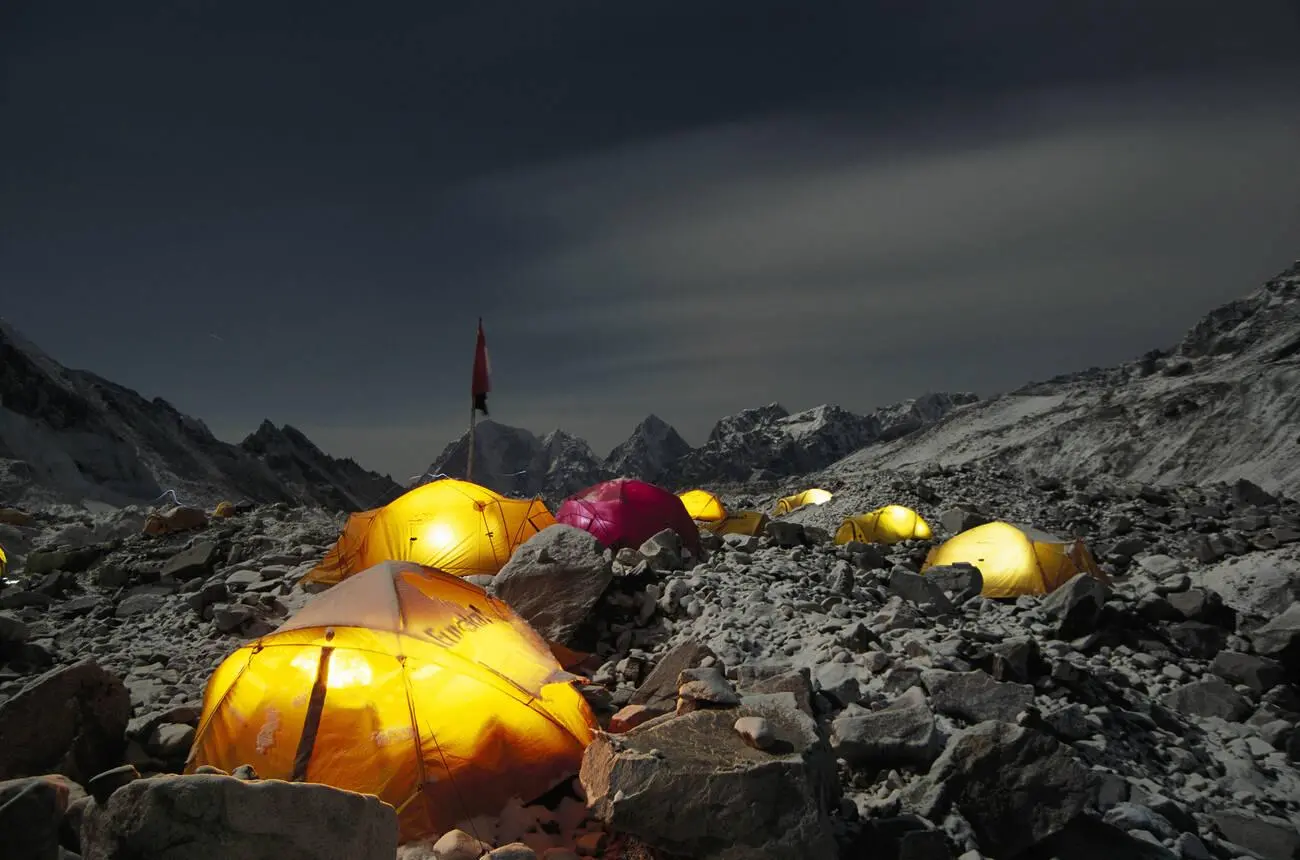
Everest Base Camp (5,364m) night temperatures range from -5°C to -30°C (23°F to -22°F) depending on season. During the best trekking months October and April nights drop to -10°C to -15°C (14°F to 5°F). Winter (December to February) is the coldest at -20°C to -30°C (-4°F to -22°F). Wind chill makes it feel significantly colder. A sleeping bag rated to -20°C is recommended for all peak-season trekking.
Most trekkers arrive at Everest Base Camp tea houses surprised by one thing: how cold the nights are. Not wear-a-fleece cold. Not chilly cold. Genuinely, throat-stinging, fingers-numb, glad you bought that sleeping bag cold. Here are the actual numbers by month, with wind chill included.
Table of Contents

 14°C
14°C
- Temperature
- Precipitation
- Rain Chance
- Wind
- Humidity
- Pressure




EBC Night Temperatures – Month by Month
| Month | Night Temp (C) | Night Temp (F) | Wind Chill Feel | Season |
| January | -20°C to -30°C | -4°F to -22°F | Extreme cold | Winter |
| February | -18°C to -25°C | -0.4°F to -13°F | Very harsh | Winter |
| March | -10°C to -15°C | 14°F to 5°F | Cold | Spring |
| April | -10°C to -12°C | 14°F to 10°F | Cold manageable | Spring |
| May | -8°C to -12°C | 18°F to 10°F | Cold | Spring |
| June | 0°C to -5°C | 32°F to 23°F | Mild but monsoon wet | Monsoon |
| July | 0°C to -3°C | 32°F to 27°F | Mild but monsoon wet | Monsoon |
| August | -2°C to -5°C | 28°F to 23°F | Cold and wet | Monsoon |
| September | -3°C to -8°C | 27°F to 18°F | Cold | Autumn |
| October | -8°C to -15°C | 18°F to 5°F | Cold manageable | Autumn |
| November | -12°C to -18°C | 10°F to -0.4°F | Very cold | Autumn |
| December | -18°C to -25°C | -0.4°F to -13°F | Extreme cold | Winter |
The coldest nights are January and February, regularly falling below -20°C with wind chill pushing conditions to -35°C or lower. The mildest nights are June through August, but monsoon cloud cover, rain, and poor mountain visibility make these months unsuitable for most trekkers regardless of the more tolerable temperatures. The sweet spot is October and April cold but entirely manageable with proper gear, and consistently the months with the best mountain visibility on the route.
For the complete seasonal picture including daytime conditions, trail weather, and month-by-month recommendations, best time to trek Everest Base Camp covers every month in detail.
Why It Gets So Cold at Night The Simple Science
Everest Base Camp sits at 5,364m (17,598 ft), where the atmosphere holds roughly 50 percent of sea-level air density. Thinner air loses heat dramatically faster after sunset there is no dense atmospheric blanket to retain warmth the way lower altitudes experience. The Khumbu Glacier directly beside the base camp keeps ground temperatures icy even when the afternoon sun is strong. Valley winds in the Khumbu region commonly reach 40 to 60 km/h at night, and wind chill at -15°C with a 50 km/h wind produces a felt temperature of approximately -28°C to -30°C.
This is why the number in the temperature table and what your body actually experiences on a still October night versus a windy one can be separated by 10 to 15 degrees.
What EBC Nights Actually Feel Like Season by Season
October Nights Peak Autumn Season
Temperature drops sharply after 3:00pm. Most trekkers arrive at their teahouse by 4:00 to 5:00pm and move directly to the dining room, which is heated by a wood stove and becomes the social centre of the evening. Your room is a different story: cold air, thin walls, and no heating. Outside temperatures of -10°C to -15°C mean the room itself will not be far above freezing.
The consistent trekker experience: every layer worn at once, quality sleeping bag fully zipped, and mornings that feel genuinely rewarding when daylight arrives. It is cold in a way that is memorable and manageable simultaneously, the kind of cold that makes the sunrise on Kala Patthar feel earned.
For a guided October departure with gear guidance included, HimalayaHub’s Everest Base Camp Trek covers equipment briefings as part of the pre-trek preparation.
April Nights Spring Season
Similar to October in temperature range -10°C to -12°C with slightly more daylight hours and marginally warmer afternoons. Teahouses are fully operational and dining rooms remain warm until 9:00 to 10:00pm. The gear requirements are essentially identical to October. Spring trekkers benefit from slightly less wind than autumn in some sections of the upper trail, though this varies year to year.
Winter Nights December to February Reference Only
Outside temperatures of -20°C to -30°C produce room conditions that are genuinely dangerous without expedition-grade sleeping equipment. Many tea houses above Namche close in January and February. The Khumbu in deep winter is an environment for experienced cold-weather trekkers with the correct equipment, not a money-saving off-season option. If you are considering a winter EBC attempt, the physical preparation section of how difficult is the Everest Base Camp trek gives the broader context on what winter conditions demand.
Sleeping Bag Guide What Rating Do You Need?
| Season You Trek | Minimum Night Temperature | Sleeping Bag Rating Needed |
| October (peak autumn) | -15°C | -20°C rated minimum |
| April (peak spring) | -12°C | -20°C rated minimum |
| November or March | -18°C | -25°C rated |
| December or February | -25°C and below | -30°C rated expedition grade |
| Monsoon (June to August) | -5°C | -15°C minimum |
The consistent rule: always choose a bag rated 10°C colder than the minimum expected temperature. Sleeping bags lose loft over time and use, and comfort ratings assume a quality sleeping pad underneath. A bag rated to -20°C provides genuine security for October and April conditions; the same bag used without a proper sleeping pad loses significant insulation from ground cold.
Sleeping bags can be rented in Thamel, Kathmandu for USD 1 to 3 per day for quality down bags, a sensible option for trekkers who do not own cold-weather equipment and are not planning repeat high-altitude trips. The full gear list for every season is in the EBC Trek Packing Guide.
For a 12-day itinerary that includes detailed gear preparation as part of the pre-departure briefing, HimalayaHub’s EBC Trek 12 Days is worth reviewing alongside your gear planning.
Five Things That Make EBC Nights Colder Than the Number Suggests
Wind chill. At -15°C with a 50 km/h wind, the felt temperature is approximately -28°C to -30°C. Wind is not a variable you can control, and it is the most underestimated factor in EBC night temperature planning.
Unheated rooms. The dining room stove creates a false sense of warmth each evening. The moment you walk to your room, the actual temperature asserts itself. Most teahouse rooms at altitude have no heating whatsoever.
Altitude heat loss. Thin air at 5,364m means radiated body heat escapes significantly faster during sleep than at lower elevations. The insulation demands are higher than the numbers suggest when you are accustomed to lower-altitude camping.
Moisture and dehydration. Breathing dry, cold air at altitude dehydrates you overnight at a rate higher than at sea level. Dehydration amplifies cold sensitivity. You feel colder when dehydrated, which compounds the challenge of already cold nights.
Sleeping pad quality. Cold rises through the ground more efficiently than through the air. A thin foam mat placed under an expensive -20°C sleeping bag defeats the bag’s rating. The sleeping pad is as important as the sleeping bag for genuine cold protection at EBC altitude.
Fitness preparation that addresses cold acclimatisation and the physical demands of broken sleep at altitude is covered in EBC Trek Fitness Requirements.
The Bottom Line on EBC Cold Nights
EBC nights are cold genuinely, memorably cold but entirely survivable with the right gear during the main trekking seasons. The temperature range is predictable: plan for -10°C to -15°C in October and April, and -20°C or colder from December through February.
The single most important investment is a quality -20°C sleeping bag. Everything else, layers
, down jacket, thermal base matters, but nothing compensates for an inadequate sleeping bag at 5,364m on a -15°C night. If you do not own one, rent it in Kathmandu before you fly to Lukla.
Go in October or April for the best balance of cold-but-manageable nights and outstanding mountain views. Avoid winter unless you are equipped and experienced for expedition-grade cold. The nights at EBC are part of what makes the experience cold enough to be serious, and clear enough on a still October night to see more stars than most people see in a lifetime.
For everything you need to pack for those nights, Explore HimalayaHub’s Everest Base Camp Trek packages for guided options with expert gear guidance built into the pre-departure preparation.
Frequently Asked Questions EBC Night Temperatures
How cold does it get at Everest Base Camp at night?
Night temperatures range from -8°C to -15°C in October and -10°C to -12°C in April. Winter months drop to -20°C to -30°C. Wind chill makes temperatures feel 10 to 15°C colder than the actual reading at any given time of year.
What sleeping bag do I need for Everest Base Camp?
A bag rated to at least -20°C for October and April trekking. November and March require a -25°C rated bag. Winter demands expedition-grade -30°C equipment. Rental options in Kathmandu’s Thamel area cost USD 1 to 3 per day for quality down bags.
Is it dangerously cold at Everest Base Camp at night?
With proper gear during main trekking seasons, cold but not dangerous. A quality -20°C sleeping bag, thermal base layers, and a down jacket make October and April nights manageable. Winter months require expedition-grade cold-weather equipment and are not suitable for standard trekking.
How cold is EBC compared to Annapurna Base Camp at night?
Annapurna Base Camp (4,130m) is approximately 1,234 metres lower than EBC and consistently warmer. ABC October night temperatures average -5°C to -8°C versus EBC’s -10°C to -15°C. Both require proper sleeping bags, but EBC demands a higher-rated bag for the same season.
When are EBC nights warmest?
Monsoon season (June to August) brings the warmest nights at 0°C to -5°C, but cloud cover, rain, and poor visibility make this the least suitable trekking period. October and April balance manageable cold nights with outstanding mountain views and stable trail conditions.