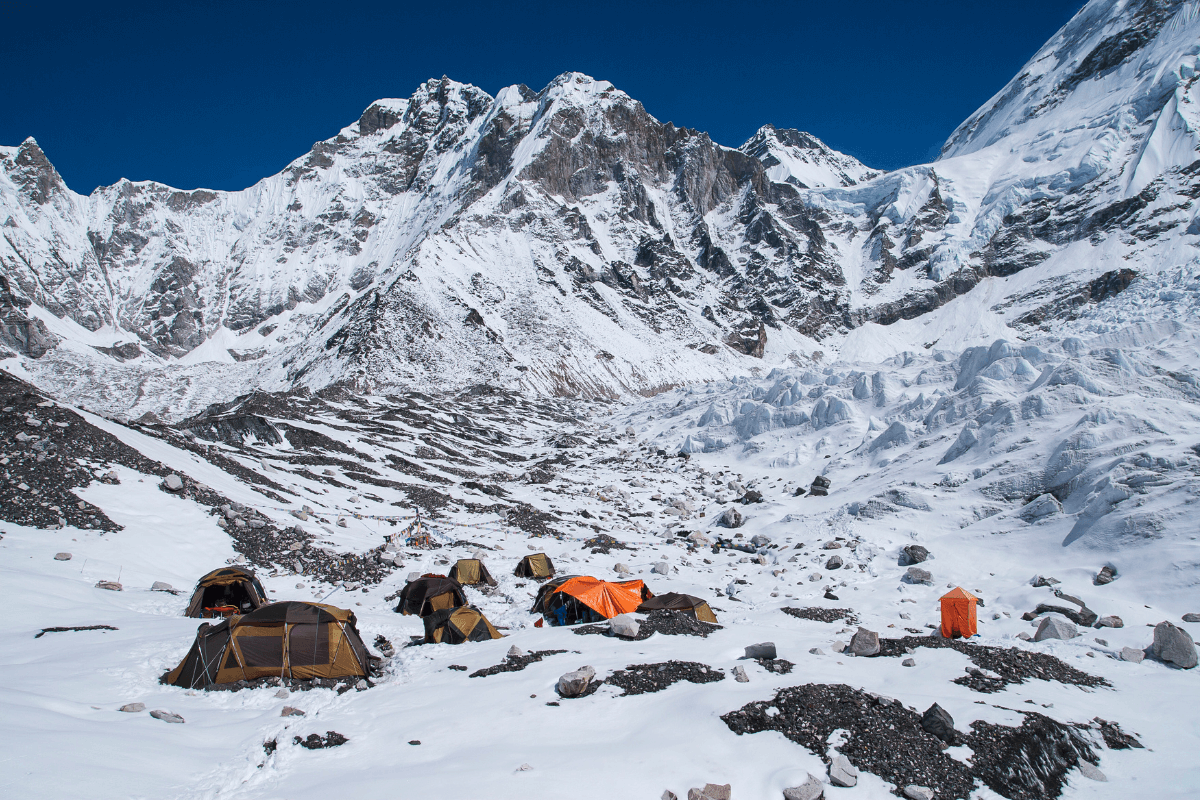
Between 50 and 85 percent of trekkers on the EBC route experience symptoms of altitude sickness without preventive measures. Yet none of them need oxygen tanks. That gap between struggling at altitude and needing supplemental oxygen is where preparation lives, and this guide closes it completely.
The confusion is understandable. Every image of Everest in popular culture shows climbers with oxygen masks and tanks. Those images are real, but they show a summit attempt, not a trekking trail. The Everest Base Camp trek and the Everest summit bid are two entirely different physiological challenges. Understanding that distinction is the most important thing you can take away from this page.
This guide covers exactly what oxygen does at 5,364 metres, what your body does in response, what altitude sickness actually looks like and how common it is, and what you genuinely need to reach EBC safely, none of which involves an oxygen tank.
For context on the altitude itself before reading further, how high Everest Base Camp covers the full elevation profile. For the broader challenge picture, how difficult is the Everest Base Camp trek gives an honest difficulty assessment.
Table of Contents
Do You Need Supplemental Oxygen for the Everest Base Camp Trek?
No. The Everest Base Camp trek does not require supplemental oxygen tanks. Supplemental oxygen is used by mountaineers attempting the Everest summit, typically above 7,000 to 8,000 metres. EBC sits at 5,364m, where oxygen levels are challenging but entirely manageable with proper acclimatisation, hydration, and pacing. Thousands of trekkers complete the EBC route every year without supplemental oxygen of any kind.
| Who Uses Supplemental Oxygen | Why | EBC Trekkers Need It? |
| Summit climbers (8,000m and above) | Death zone, survival impossible without it | No |
| Rescue situations (HAPE or HACE) | Emergency treatment only | Emergency situations only |
| Some older or medically vulnerable trekkers | Specific medical conditions, extreme distress | Only with medical advice |
| Standard healthy EBC trekkers | — | Not needed |
Oxygen Levels at Everest Base Camp, What the Science Says
The Oxygen Percentage Myth
The most common misconception about altitude is that the percentage of oxygen in the air decreases as you go higher. This is not true.
The percentage of oxygen in the atmosphere stays constant at 20.9 percent at all altitudes, from sea level to the summit of Everest. What changes with altitude is barometric pressure. As you gain elevation, the air becomes less dense, meaning there are fewer air molecules in each breath you take. Fewer molecules means less oxygen delivered to your lungs with each inhalation, even though the proportion of oxygen in the air remains the same.
At Everest Base Camp (5,364m), barometric pressure is approximately 50 percent of sea-level pressure. The practical result: your lungs receive roughly half the oxygen per breath compared to what they receive at sea level. That is a significant reduction, but it is one the human body is designed to adapt to, given adequate time.
What Your Body Does in Response
The body’s response to reduced oxygen availability is automatic and begins within hours of ascending to altitude. Breathing rate increases, you take more breaths per minute to compensate for the reduced oxygen per breath. Heart rate increases to pump oxygenated blood more efficiently through the body. Over days, the body begins producing more red blood cells to carry more oxygen in the bloodstream. Blood volume increases, and the kidneys excrete bicarbonate to maintain the chemical balance of the blood as it becomes slightly more acidic from faster breathing.
This entire process is called acclimatisation. It is entirely natural, it happens in all humans at altitude regardless of fitness, and it is the mechanism that makes the EBC trek achievable without supplemental oxygen. The critical word is time, the body needs sufficient time at each altitude stage to adapt before ascending further.
One practical nutritional note: carbohydrates are the most oxygen-efficient fuel source the body can use. When oxygen is scarce, carbohydrates are metabolised more efficiently than proteins or fats. Dal bhat, porridge, pasta, and rice are not just local trail food, they are physiologically well-suited to altitude trekking.
Altitude Zone Breakdown, What Changes at Each Stage
| Stage | Altitude | Oxygen Available vs Sea Level | Body Response |
| Lukla (trek start) | 2,860m | Approximately 73% | Mild, most trekkers feel normal |
| Namche Bazaar | 3,440m | Approximately 66% | Acclimatisation begins noticeably |
| Dingboche | 4,360m | Approximately 58% | AMS risk rises significantly |
| Gorak Shep | 5,164m | Approximately 52% | Serious altitude zone, careful pacing required |
| Everest Base Camp | 5,364m | Approximately 50% | High challenge, manageable with proper preparation |
| Kala Patthar | 5,545m | Approximately 49% | Highest point on the EBC trek |
The Kala Patthar Trek guide covers the highest point on the EBC route in full detail, including what to expect at 5,545m.
Altitude Sickness at EBC: How Common Is It and What Are the Risks?
The Statistics
Altitude mountain sickness is not a rare event on the EBC route. A study published in Wilderness and Environmental Medicine found that approximately 40 percent of EBC trekkers experience AMS symptoms during their trek. Without any preventive measures, AMS incidence on the EBC route ranges from 50 to 85 percent.
Two facts about AMS that consistently surprise trekkers: it does not discriminate based on fitness, and it does not correlate reliably with prior trekking experience. A highly fit, experienced trekker who ascends too quickly is at equal or greater risk than a moderately fit trekker who follows a proper acclimatisation schedule. The body cannot be hurried at altitude regardless of how good its cardiovascular baseline is.
The most common cause of altitude fatalities is not the altitude itself, it is continuing to ascend despite worsening symptoms. This is the behaviour that turns manageable AMS into HACE or HAPE.
The Three Altitude Conditions, AMS, HACE, and HAPE
AMS, Acute Mountain Sickness
AMS is the most common altitude condition and the one most EBC trekkers encounter in some form. It begins typically above 2,500m and is characterised by a persistent headache, often described as throbbing and located behind the eyes, combined with nausea, fatigue, loss of appetite, dizziness, and disturbed sleep.
AMS is treated by stopping ascent. If symptoms remain stable or improve with rest, many trekkers continue the following day. If symptoms worsen, descent is required. Supplemental oxygen is rarely necessary for AMS, in most cases, rest and descent resolve it effectively.
HACE, High Altitude Cerebral Edema
HACE is a serious complication that develops when AMS is not treated, it involves swelling of the brain as fluid accumulates. Symptoms include confusion, loss of coordination, an inability to walk a straight heel-to-toe line (the standard field test for neurological impairment at altitude), and severe, unrelenting headache.
HACE requires immediate descent, not rest, not waiting to see if it improves. Supplemental oxygen is appropriate as an emergency measure to stabilise the trekker during descent. Urgent medical evacuation is required.
HAPE, High Altitude Pulmonary Edema
HAPE is the most dangerous altitude condition. Fluid accumulates in the lungs rather than the brain, causing breathlessness at rest, not just during exertion, a dry cough that progresses to producing pink, frothy sputum, and extreme fatigue. HAPE can deteriorate and become fatal within hours.
HAPE requires immediate descent and supplemental oxygen. It is a medical emergency. Helicopter evacuation should be initiated as soon as HAPE is suspected.
The critical distinction for EBC planning: AMS is common and manageable without supplemental oxygen. HACE and HAPE are rare but serious, and both warrant emergency supplemental oxygen as a bridge to descent and evacuation, not as a standalone treatment.
The most honest statement in altitude medicine applies here: no drug, no amount of fitness, and no equipment compensates for ignoring symptoms, skipping rest days, or continuing to ascend when the body is signalling distress.
How to Recognise AMS vs Normal Fatigue
| Feeling | Normal Fatigue | AMS Warning Sign |
| Headache | Mild, resolves with rest and water | Persistent, throbbing, worse the following morning |
| Breathlessness | During exertion only | At rest or when waking at night |
| Nausea | Rare | Persistent, with loss of appetite |
| Dizziness | After rapid movement | Constant, regardless of activity level |
| Sleep | Normal, possibly lighter | Disturbed, with repeated waking |
For the broader safety picture of the EBC corridor, is the Everest Base Camp trek safe covers current conditions and risk assessment.
What EBC Trekkers Actually Need Instead of Oxygen Tanks
Acclimatisation Schedule, Your Most Important Tool
Your itinerary structure is more important than your fitness level for altitude safety. A fit trekker on a poorly paced schedule is at greater AMS risk than a moderately fit trekker following a proper acclimatisation programme.
The standard EBC route ascends 2,504 metres from Lukla to EBC over six to eight days. That pace is not arbitrary, it is the established rate at which the human body can adapt to altitude without accumulating dangerous physiological debt.
The two mandatory acclimatisation days on the classic route are at Namche Bazaar (Day 3 to 4) and Dingboche (Day 7 to 8). These are not rest days in the passive sense, they follow the “climb high, sleep low” principle, involving a day hike to a higher altitude point before returning to sleep at the lower village. This pattern accelerates the acclimatisation process.
The golden rule that applies throughout: never ascend with worsening AMS symptoms. No summit view, no schedule pressure, and no peer pressure from other trekkers overrides this principle.
For route structure and itinerary planning, how long is the Everest Base Camp trek covers the standard duration options. The full day-by-day route is in the Everest Base Camp route guide.
Hydration, Three to Four Litres Per Day
Altitude functions as a natural diuretic, you urinate more frequently at elevation, which accelerates fluid loss. Dehydration at altitude amplifies AMS symptoms significantly and can make a manageable headache into a disabling one.
The minimum daily water intake above 3,000m is three litres. Four litres is recommended for the higher sections of the route above Dingboche. The simplest self-monitoring tool is urine colour, pale yellow indicates adequate hydration; dark yellow indicates dehydration requiring immediate fluid intake.
Above Namche Bazaar, stream and tap water should be treated before drinking. Water purification tablets or a SteriPen are both reliable options available in Kathmandu before departure.
Diamox, Should You Take It?
Diamox (acetazolamide) is the only medication with strong clinical evidence for both preventing and treating altitude mountain sickness. It is a prescription medication originally developed for glaucoma and epilepsy, now widely used in altitude medicine as a prophylactic.
Diamox is not a cure for altitude sickness and it is not a substitute for acclimatisation. Trekkers who take Diamox and skip their rest days still develop AMS. It works by slightly acidifying the blood, achieved by causing the kidneys to excrete bicarbonate. This mild blood acidification signals the respiratory system to breathe deeper and faster, increasing oxygen intake and accelerating the natural acclimatisation process.
Standard dosage: 125mg to 250mg twice daily, starting one day before ascending to altitude, continued throughout the high-altitude section of the trek. Consult your doctor before use, individual circumstances vary.
Who should consider Diamox:
First-time Himalayan trekkers face an AMS incidence of 50 to 85 percent without prophylaxis, a compelling reason to discuss Diamox with a doctor before departure. Anyone with a prior history of AMS, and anyone on a rapid ascent schedule, should similarly consider it.
Who should not take Diamox without specialist medical advice:
People with a sulfonamide allergy should not take Diamox, it is a sulfa drug and cross-reactivity is possible. People with kidney disease and those taking certain other medications require specific medical guidance. Research has also suggested that prophylactic Diamox may increase pulmonary artery pressure in older trekkers with existing HAPE risk factors, another reason specialist advice is important for this group.
Common side effects:
Increased urination is expected and is a direct result of the drug’s mechanism. Tingling in the fingers and toes (paraesthesia) is common and harmless. Many trekkers notice that carbonated drinks taste flat or unpleasant while taking Diamox. Allergic reactions are rare but possible.
Pulse Oximeter, Recommended, Not Required
A pulse oximeter is a small clip-on device that measures blood oxygen saturation (SpO2) and heart rate. It is not essential equipment, but it is one of the most useful monitoring tools available to EBC trekkers for under USD 25.
At sea level, normal SpO2 is 95 to 99 percent. At Everest Base Camp (5,364m), a reading of 75 to 85 percent is normal and expected, this is not a medical emergency. The value of a pulse oximeter is in tracking trends rather than reacting to individual readings. A reading of 78 percent that has been stable for two days is not concerning. A reading that drops from 82 to 68 percent overnight alongside worsening symptoms warrants immediate attention.
A general threshold: SpO2 below 70 percent at rest, or any rapid unexplained drop combined with new or worsening symptoms, should prompt a conversation with your guide about whether to descend.
Pulse oximeters are widely available in Kathmandu trekking shops at approximately USD 15 to 25. The full equipment list for the EBC trek is in the Everest Base Camp Trek Packing Guide.
High-Carbohydrate Nutrition
At altitude, carbohydrates are the most oxygen-efficient fuel the body can use. Fats and proteins require more oxygen to metabolise, at 50 percent oxygen availability, this difference is physiologically meaningful. Dal bhat, pasta, porridge, rice, and potatoes are not just convenient teahouse options, they are the nutritionally correct choice for high-altitude trekking.
Alcohol accelerates dehydration and suppresses breathing rate during sleep, both of which directly worsen altitude adaptation. Avoiding alcohol above 3,000m is not overcaution; it is basic altitude physiology applied to behaviour.
Supplemental Oxygen at EBC, Is It Available If Needed?
Emergency supplemental oxygen is available at some teahouses and lodges in Namche Bazaar and Dingboche at additional cost. It is not universally available at every lodge on the route, and availability cannot be assumed, it should be confirmed at each stop if you have specific medical concerns.
Reputable trekking agencies carry emergency oxygen cylinders for their clients as standard practice. When booking a guided EBC trek, confirm explicitly that your agency carries emergency oxygen, this is a specific question worth asking before you commit.
Emergency supplemental oxygen serves one purpose in the field: to stabilise a trekker who is experiencing HACE or HAPE while they are being prepared for descent and evacuation. It buys time. It does not replace the descent that must follow. Providing oxygen to a trekker with serious altitude illness and then allowing them to remain at altitude is not a treatment, it is a delay of the only treatment that works.
Helicopter evacuation is available throughout the EBC corridor when weather permits. Without appropriate insurance, helicopter evacuation from the Khumbu region costs USD 3,000 to USD 10,000 or more. Standard travel insurance policies frequently exclude high-altitude trekking above 5,000m and emergency helicopter evacuation from Nepal, read your policy explicitly before departure rather than assuming coverage exists.
For full insurance guidance specific to EBC altitude, Everest Base Camp insurance guide covers exactly what coverage you need and what policies to avoid.
Why Climbers Use Oxygen But EBC Trekkers Do Not
The Death Zone, Where Supplemental Oxygen Becomes Necessary
The term “Death Zone” refers to altitudes above 8,000 metres. At these elevations, the atmosphere is so thin that the human body cannot acclimatise, it can only deteriorate. Even with supplemental oxygen, survival time in the Death Zone is finite. Without it, unconsciousness and death occur within hours.
Most Everest summit climbers begin using supplemental oxygen at Camp 3 at approximately 7,200m, or at Camp 4 at approximately 7,900m. The summit of Everest at 8,848m has approximately 33 percent of sea-level oxygen available, a level at which sustained human function without supplemental support is essentially impossible.
Everest Base Camp at 5,364m is 2,636 metres below the lower boundary of the Death Zone. It is in an entirely different physiological category, an altitude at which thousands of trekkers acclimatise and function effectively every trekking season.
EBC Trekking vs Everest Summit Climbing, The Comparison
| Factor | EBC Trek | Everest Summit |
| Highest point | 5,364m (EBC) or 5,545m (Kala Patthar) | 8,848m |
| Oxygen available vs sea level | Approximately 50% | Approximately 33% at summit |
| Supplemental oxygen needed | No, except in emergencies | Yes, used by almost all climbers |
| Duration at highest point | One to two hours | Many hours during the summit push |
| Accommodation and infrastructure | Full teahouse trail | Mountain camps only above EBC |
| Emergency evacuation | Helicopter available | Extremely difficult above Camp 2 |
The EBC trek ends precisely where the mountain climbing begins. The oxygen masks, fixed ropes, and extreme conditions visible in summit imagery are from a completely different endeavour, one that uses EBC as a staging point, not a destination. Understanding this distinction resolves the most common anxiety first-time EBC trekkers bring to their research.
How to Plan Your EBC Trek to Minimise Altitude Risk
Choose the Right Itinerary Length
The minimum recommended itinerary for the EBC trek is 12 to 14 days round trip, a duration that includes all necessary acclimatisation days. Itineraries of under 10 days compress the ascent schedule and statistically increase AMS risk. The 12-day classic route includes the mandatory acclimatisation days at Namche Bazaar and Dingboche that the schedule is built around.
For duration options and what each itinerary includes, the how long is the Everest Base Camp trek guide covers the trade-offs between length and altitude safety in detail.
Fitness Preparation
Cardiovascular fitness is the single most valuable physical preparation for the EBC trek. It does not prevent altitude sickness, no amount of fitness does, but it makes the daily walking distances manageable and reduces the physical stress the body is managing alongside altitude adaptation.
A practical training plan for EBC involves three to four cardiovascular sessions per week for eight to twelve weeks before departure. Effective training types include hiking with a loaded pack, stair climbing, running, and cycling. The goal is sustained aerobic endurance over one to two hour sessions, not speed or intensity.
For structured training guidance, how to train for Everest Base Camp gives a specific programme. For an assessment of how demanding the trek is physically, Everest Base Camp trek fitness requirements is the most complete guide on the site.
Season Selection
Spring (March to May) and Autumn (September to November) are the recommended seasons for altitude safety on the EBC route. Both offer stable weather windows and reliable helicopter evacuation access, the two most important practical factors from a safety perspective. Winter trekking is possible but introduces snow and cold that complicate both the trail and evacuation logistics. Monsoon trekking is generally not recommended due to cloud cover, trail conditions, and reduced visibility for helicopter operations.
For month-by-month conditions, best time to trek Everest Base Camp gives the full seasonal breakdown.
Guide and Agency, Why It Matters for Altitude Safety
Since April 2023, all foreign trekkers in Nepal’s National Parks and Conservation Areas are required by law to trek with a licensed guide. On the EBC route, which passes through Sagarmatha National Park, this requirement applies fully.
Beyond the legal requirement, a licensed, experienced guide is your most important altitude safety resource. Guides trained in altitude medicine recognise early AMS symptoms, often before the trekker does, and can adjust the daily plan before a manageable condition becomes serious. Reputable agencies carry emergency oxygen cylinders as standard equipment.
For the guide requirement in full detail, do I need a guide for Everest Base Camp covering the regulation, costs, and what a good guide actually does on the trail.
HimalayaHub’s Everest Base Camp Trek packages are structured around a 12 to 14-day itinerary with mandatory acclimatisation days at Namche and Dingboche, licensed guides trained in altitude medicine, and emergency oxygen carried throughout. For those considering a helicopter return from EBC, the EBC with Helicopter Return option combines the full trek approach with a scenic flight back to Lukla.
EBC Altitude Safety Checklist
Medical Preparation
- Consult your doctor about Diamox and obtain a prescription if appropriate
- Check for sulfonamide allergy before taking Diamox
- Declare any pre-existing cardiac, pulmonary, or neurological conditions to your doctor before booking
- Purchase travel insurance that explicitly covers trekking above 5,000m and emergency helicopter evacuation from Nepal
Gear to Pack
- Pulse oximeter (approximately USD 15 to 25, available in Kathmandu)
- Diamox (125mg to 250mg tablets) if prescribed by your doctor
- Ibuprofen for headache management
- Oral rehydration salts
- Water purification tablets or a SteriPen
- High-capacity water bottle (one to one and a half litres)
The complete gear checklist for the EBC trek is in the Everest Base Camp Trek Packing Guide.
Behavioural Rules at Altitude
- Drink three to four litres of water daily above 3,000m
- Eat regular carbohydrate-rich meals throughout the trek
- Never ascend with worsening AMS symptoms, this is the single most important rule
- Take every scheduled acclimatisation day, do not skip them regardless of how well you feel
- Monitor SpO2 daily above 4,000m using your pulse oximeter
For permit logistics before departure, Everest Base Camp Trek Permits 2026 covers the current requirements and costs.
What You Actually Need for the EBC Trek
You do not need oxygen tanks. That is the direct answer to the question this guide began with, and everything in the sections above explains why it is true and what the physiology behind it looks like.
What you do need: a well-paced 12 to 14-day itinerary that does not skip acclimatisation days, three to four litres of water per day from Dingboche upward, a pulse oximeter to track your SpO2 as a monitoring tool rather than a panic device, carbohydrate-focused nutrition throughout the high-altitude sections, and, recommended strongly for most first-time trekkers, a pre-trek conversation with your doctor about Diamox.
The attitude at EBC is real and demands respect. Hundreds of thousands of trekkers have completed this route. The ones who turned back early almost universally did so because they moved too fast, drank too little, or ignored symptoms that were telling them something clear. The ones who reached base camp successfully followed a simple set of behaviours that this guide has covered in full.
Three principles protect more trekkers than any amount of gear: know the difference between tiredness and AMS, never ascend with worsening symptoms, and treat your acclimatisation days as the most important days on the itinerary, not inconvenient gaps in the schedule.
For everything else you need before departure, Everest Base Camp hard for beginners gives an honest beginner-specific assessment. The Everest Base Camp located guide provides full geographic orientation for those still in early planning stages.
Ready to plan your EBC trek with proper altitude safety protocols built into every stage? HimalayaHub’s Everest Base Camp Trek packages include the correct acclimatisation schedule, licensed guides trained in altitude medicine, and emergency oxygen carried throughout, so your focus stays on the experience rather than the logistics.
Frequently Asked Questions, Oxygen at Everest Base Camp
Do you need oxygen at Everest Base Camp?
No. The EBC trek does not require supplemental oxygen tanks. Supplemental oxygen is used by mountaineers above 7,000 to 8,000m. EBC sits at 5,364m, challenging but manageable with proper acclimatisation, hydration, and a well-paced itinerary. Thousands of trekkers complete it every season without oxygen.
What is the oxygen level at Everest Base Camp?
The percentage of oxygen in the air remains constant at 20.9 percent at all altitudes. What changes is barometric pressure. At EBC (5,364m), pressure is approximately 50 percent of sea level, meaning your lungs receive roughly half the oxygen per breath compared to sea level.
How common is altitude sickness on the EBC trek?
A study in Wilderness and Environmental Medicine found approximately 40 percent of EBC trekkers experience AMS symptoms. Without preventive measures, incidence can reach 50 to 85 percent. Proper acclimatisation, hydration, and a minimum 12-day itinerary are the most effective prevention.
Do I need Diamox for the EBC trek?
Diamox is not mandatory but is widely recommended for first-time high-altitude trekkers. It works by stimulating deeper breathing and speeding acclimatisation. Standard dose is 125 to 250mg twice daily starting one day before ascent. Consult your doctor first, it is not suitable for everyone, particularly those with sulfonamide allergies.
Is supplemental oxygen available on the EBC trek route?
Emergency oxygen is available at some lodges in Namche Bazaar and Dingboche at extra cost. Reputable guided operators carry emergency cylinders for clients. Emergency oxygen stabilises a trekker temporarily before descent, it is not a substitute for descending when AMS worsens.
What should my pulse oximeter read at Everest Base Camp?
At EBC (5,364m), a normal SpO2 reading is approximately 75 to 85 percent. This is expected at altitude and not automatically alarming. Concern arises when SpO2 falls below 70 percent at rest, or when a rapid drop coincides with worsening symptoms.
What is the difference between AMS, HACE, and HAPE?
AMS is the most common condition, headache, nausea, fatigue, usually resolved by stopping ascent and resting. HACE involves brain swelling, causing confusion and loss of coordination, and requires immediate descent and emergency oxygen. HAPE involves fluid in the lungs and breathlessness at rest, a medical emergency requiring immediate descent and supplemental oxygen.
Is oxygen needed to reach Kala Patthar?
No. Kala Patthar at 5,545m is the highest point on the EBC trek and is reached by thousands of trekkers each season without supplemental oxygen. The same acclimatisation protocol that prepares you for EBC is sufficient for Kala Patthar. It is higher than EBC and offers the finest panoramic view of Everest available on the route.