Key Takeaways
- Everest Base Camp trek packing requires a 4-layer clothing system across a 35°C to 40°C temperature swing between Lukla (2,800m) and Gorak Shep (5,164m), with sleeping bag rated to -15°C to -20°C for peak season and -25°C to -30°C for winter treks.
- Lukla flight baggage limits cap at 15 kg checked plus 5 kg carry-on, forcing total pack weight targets of 22 kg maximum split between porter duffel (15 kg) and day pack (7 kg).
- • Renting sleeping bag, down jackets, trekking poles, duffel bags, rain jackets, and fleece in Kathmandu costs $105 to $147 for 14 days compared to $420 to $910 buying from home ; saving $315 to $763 per trekker.
- Altitude safety gear ; pulse oximeter ($15-$25), Diamox ($10-$24), and emergency headlamp ($5-$10) ; totals $30 to $59 purchased in Kathmandu and appears on fewer than 15% of competitor packing lists despite preventing life-threatening situations above 4,000 meters.
Table of Contents
Everest Base Camp trek packing guide covers gear essentials for elevations from 2,800 meters at Lukla to 5,364 meters at Everest Base Camp. Temperatures range from 15°C at lower villages to -20°C at Gorak Shep, requiring a 4-layer clothing system, sleeping bag rated to -20°C, and altitude safety gear including pulse oximeter and Diamox.
Your Everest Base Camp Packing List
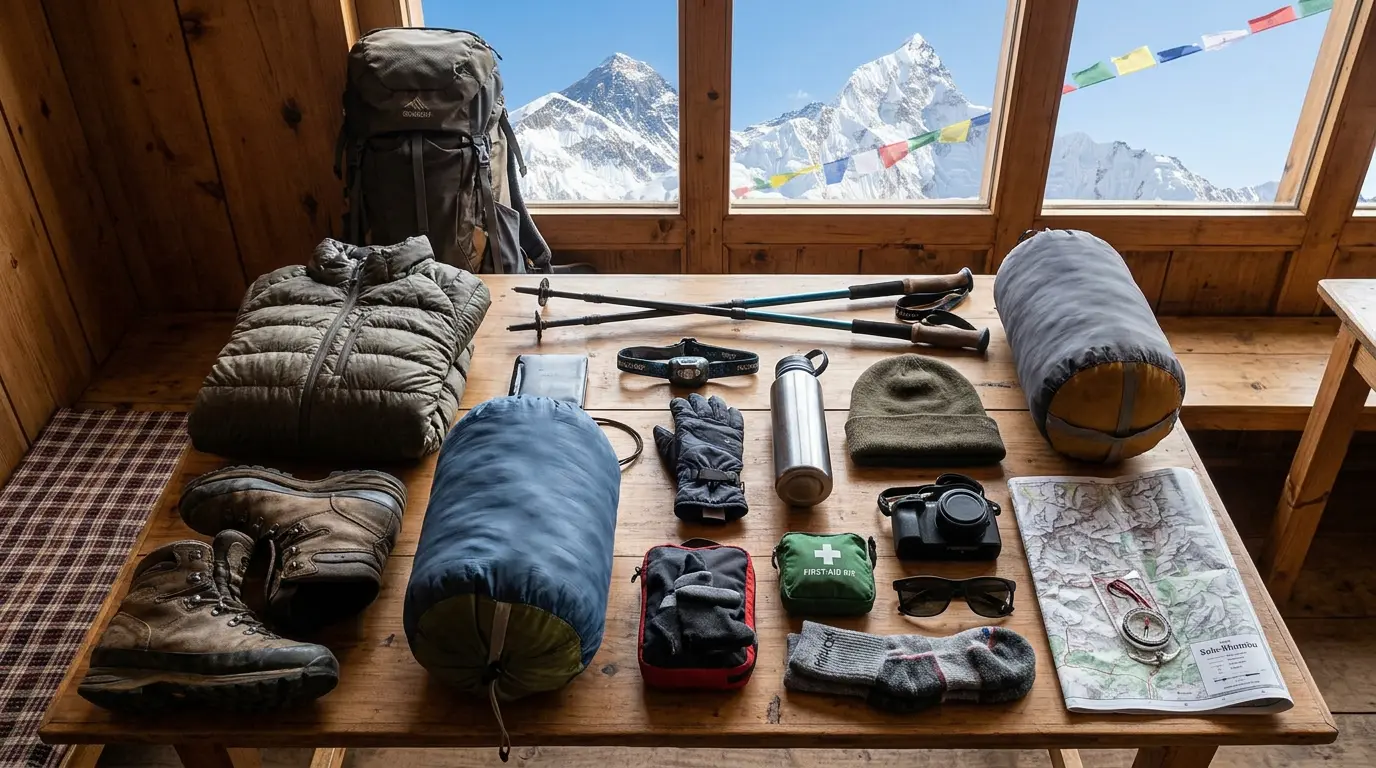
Trekking Equipment to Pack
Day Pack
Day packs of 30 to 40 liters carry essentials during 5 to 7 hours of daily hiking. The pack holds 2 liters of water, rain jacket, warm layer, snacks, camera, sunscreen, and first aid kit weighing 6 to 8 kg total. Hip belt and chest strap distribute weight across the torso instead of pulling shoulders backward.
Understanding the difficulty level that determines gear weight priorities helps trekkers decide between lightweight and heavy-duty day pack options. Packs with front-loading access allow gear retrieval without removing the pack on narrow trail sections.
Sleeping Gear
Sleeping bags rated to -15°C to -20°C handle Gorak Shep (5,164m) overnight temperatures of -15°C to -20°C during peak season. Down-filled bags (650+ fill power) compress to 7 to 9 liters, fitting inside porter duffel bags efficiently. Teahouses provide 1 to 2 basic blankets adding 3°C to 5°C supplemental warmth.
Sleeping bag liners add 3°C to 5°C extra warmth while keeping the bag interior clean across 12 to 14 nights. Silk liners weigh 120 to 150 grams and compress to fist-size. Inflatable travel pillows (80 to 100 grams) improve sleep quality ; teahouses above Namche provide no pillows.
Trekking Poles
Trekking poles reduce knee impact by 25% to 30% during the 1,500+ meters of cumulative descent on return from Base Camp. Collapsible 3-section poles pack inside duffel bags during Lukla flights. Carbon fiber poles weigh 200 to 250 grams per pole versus 300 to 350 grams for aluminum ; the lighter option saves energy across the total hiking distance your boots need to survive.
Headlamp and Emergency Essentials
LED headlamps with 200+ lumen output illuminate pre-dawn departures for the Kala Patthar sunrise hike requiring extreme cold layers. Spare batteries (AAA or rechargeable) last 40 to 60 hours on medium brightness. Cold temperatures reduce battery output by 20% to 30% ; keeping batteries inside sleeping bags overnight maintains performance.
Emergency whistle attached to backpack strap signals rescue across 1 to 2 kilometers. A lightweight emergency bivy sack (100 grams) provides wind and rain shelter between villages. These 2 items weigh 120 grams combined and occupy zero meaningful pack space.
Clothes for Everest Base Camp
Clothes in My Main Pack and to Wear
| Category | Items | Quantity |
| Base layer tops | Moisture-wicking polyester or merino | 2-3 |
| Base layer bottoms | Thermal leggings | 2 |
| Mid layer | Fleece jacket (200-300 weight) | 1-2 |
| Insulation | Down jacket (600+ fill power) | 1 |
| Outer shell | Waterproof/windproof jacket (Gore-Tex) | 1 |
| Trekking pants | Lightweight, quick-dry | 2 |
| Hardshell pants | Waterproof/windproof for summit day | 1 |
| Warm hat | Covers ears completely | 1 |
| Sun hat | Wide brim for UV protection | 1 |
| Buff/neck gaiter | Wind and cold protection | 1-2 |
| Gloves | Insulated outer + liner inner | 2 pairs |
| Underwear | Moisture-wicking synthetic | 3-4 |
| Sports bra (women) | Moisture-wicking | 2-3 |
Wearing base layer, trekking pants, mid-layer fleece, and sun hat during flight to Lukla saves 800 grams to 1 kg of pack weight. Layering up gradually through elevation zones prevents overheating during uphill sections and cold during rest stops.
Seasonal Gear Differences
October and November treks require a standard 4-layer system with sleeping bag rated to -15°C to -20°C. March and April treks run 3°C to 5°C warmer at lower elevations but identical temperatures above 5,000 meters. December through February winter treks demand sleeping bags rated to -25°C to -30°C plus chemical hand warmers and face-covering balaclavas.
Monsoon season (June-September) adds waterproof pack covers, extra rain layers, and quick-dry clothing changes. Leech socks protect ankles below 3,000 meters during active monsoon months. Understanding the total trekking duration that determines how many clothing sets you need helps prevent overpacking for any season.
Merino Wool Clothing
Merino wool base layers regulate body temperature across the 35°C temperature range between Lukla and Base Camp. The fiber absorbs 30% of its weight in moisture without feeling wet ; unlike polyester that feels clammy during heavy exertion. Merino resists odor for 3 to 5 days of continuous wear versus 1 day for synthetic fabrics.
Merino wool costs 60% to 100% more than polyester base layers but delivers superior comfort across 12 to 14 day treks. Icebreaker, Smartwool, and Minus33 produce trekking-specific merino garments in 150 to 250 gram weights. Lightweight merino (150g/m²) suits lower elevations while midweight (200-250g/m²) handles Gorak Shep nights.
Toiletries and Hygiene
Toiletries and Sun Protection
Use SPF 50+ sunscreen to protect against strong UV at high altitude. Apply every 2 hours on exposed skin. Lip balm (SPF 30+) prevents dry, cracked lips. Carry wet wipes (no showers above Namche), hand sanitizer, and small toiletries.
Laundry Options on the Trail
Laundry is available in Namche and Dingboche ($3–$6/kg). No services above Dingboche, so clothes stay unwashed for several days.
Smart Packing Tip
Carry 3 sets of base layers (wear, dry, spare). Dry clothes in the sun while hiking and use a small dry bag to separate dirty items.
Tech to Pack for Trekking
Electronics, Power Bank, Camera Gear
Carry only essential electronics. A smartphone is enough for photos, maps, and communication—even at Everest Base Camp.
- Power bank (20,000mAh): 4–5 full charges, enough for the trek
- Battery care: Cold reduces power by 20–30%, keep devices warm at night
- Charging costs: Increase with altitude ($2–$7 per charge)
- Save battery: Use airplane mode while hiking (extends life 60–70%)
- Optional camera: GoPro or action cam for better video
- Extras: 2 spare batteries + extra memory cards
Keep it light, keep it warm, and plan charging smartly.
Medications and First Aid
First Aid Kit Contents
| Item | Quantity | Purpose |
| Ibuprofen 400mg | 16 tablets | Altitude headache relief |
| Paracetamol 500mg | 12 tablets | Pain and fever management |
| Oral rehydration salts | 8 sachets | Dehydration treatment |
| Adhesive bandages | 12 pieces | Blister and cut coverage |
| Moleskin | 4 sheets | Blister prevention |
| Antiseptic wipes | 12 pieces | Wound cleaning |
| Elastic bandage | 1 roll | Ankle/knee support |
| Diarrhea medication | 8 tablets | Stomach illness treatment |
| Antihistamine | 6 tablets | Allergic reaction |
| Throat lozenges | 10 pieces | Dry altitude air irritation |
Total first aid kit weight stays under 350 grams packed in a waterproof ziplock bag.
Diamox and Altitude Safety Gear
Diamox (acetazolamide) 125mg taken twice daily reduces altitude sickness symptoms by 40% to 50%. Carrying 20 to 24 tablets covers the full EBC trek at standard dosing. Kathmandu pharmacies sell Diamox at $0.50 to $1.00 per 250mg tablet without prescription.
Fingertip pulse oximeters, costing $15 to $25 in Kathmandu, measure blood oxygen saturation at every rest stop. Readings below 80% at rest above 4,000 meters indicate inadequate acclimatization. Trekkers questioning whether beginners need extra safety gear for their first high-altitude experience can rely on pulse oximeters for objective data instead of guesswork, as explained in this guide on Everest Base Camp trek difficulty for beginners.
Miscellaneous Items to Pack
Other Essentials to Pack
| Item | Weight | Purpose |
| Trekking towel (microfiber) | 80-120g | Quick-dry, compact shower towel |
| Dry bags (2-4L) | 30-50g each | Waterproof clothing separation |
| Zip-lock bags (assorted) | 50g total | Document/phone/snack protection |
| Carabiners (2) | 40g total | Attach items to pack exterior |
| Duct tape (small roll) | 50g | Emergency gear repair |
| Sunglasses (Category 3-4) | 30-40g | UV protection above treeline |
| Earplugs | 5g | Sleep improvement in shared rooms |
| Playing cards/book | 100-200g | Evening entertainment at teahouses |
Total miscellaneous weight stays under 500 grams when packed efficiently.
Travel Insurance for the Everest Base Camp Trek
Travel insurance covering altitudes up to 6,000 meters costs $80 to $150 per person for 3-week policies. Standard travel insurance caps coverage at 2,500 to 3,000 meters ; excluding Everest Base Camp at 5,364 meters. Reading altitude limits prevents $3,000 to $5,000 surprise helicopter evacuation bills.
World Nomads, IMG Global, and Seven Corners provide trekking-specific policies covering EBC elevations. The Nepal Department of Immigration requires insurance proof when issuing trekking permits. Policy documents (printed or digital) stay in the day pack’s front pocket for checkpoint verification.
Why EBC Packing Requires Elevation-Zone Planning
Temperature Range from 2,800m to 5,364m
Lukla (2,800m) records daytime temperatures of 10°C to 18°C during October-November peak season. Namche Bazaar (3,440m) drops to 5°C to 12°C daytime and -3°C to 2°C overnight. Dingboche (4,410m) ranges from 0°C to 8°C daytime and -8°C to -12°C overnight.
Gorak Shep (5,164m) temperatures fall to -5°C to 2°C during daytime and -15°C to -20°C overnight during peak season. The exact elevation where extreme cold gear becomes essential sits at 5,364 meters where wind chill drops perceived temperature an additional 10°C to 15°C. The 35°C to 40°C temperature swing between Lukla and Base Camp demands layered packing ; not single-jacket solutions.
Lukla Flight Baggage Weight Limits
Lukla-bound domestic flights on Tara Air and Summit Air enforce 15 kg checked baggage and 5 kg carry-on limits per passenger. Exceeding the 15 kg limit costs $1.50 to $2.00 per extra kilogram. Reaching Lukla where strict airline baggage limits shape packing decisions requires weighing all gear in Kathmandu before departure.
Porter duffel bags travel as checked luggage on Lukla flights, counting toward the 15 kg limit. Day packs serve as carry-on bags containing valuables, electronics, and essential medication. Understanding the full transport guide including Lukla flight baggage rules prevents airport repacking stress.
Backpack and Duffel Bag Strategy
Day Pack Size and Weight Target
Day packs of 30 to 40 liters carry hiking essentials while porters transport the main duffel bag. Total day pack weight stays between 6 and 8 kg including water, snacks, rain layer, warm layer, and camera. Packs with side mesh pockets hold water bottles accessible without stopping.
The starting point where packing decisions become final marks the last opportunity to store unnecessary items at Lukla guesthouses. Items not needed during hiking stay in the porter duffel ; only immediate-use gear enters the day pack.
Porter Duffel Bag Rules and Weight Limits
Porter weight limits cap at 20 kg per duffel bag (2 trekkers sharing 1 porter) according to Nepal porter welfare regulations. Waterproof duffel bags of 60 to 90 liters fit sleeping bags, extra clothing, toiletries, and electronics. Porters carry duffel bags using a head strap and back support system across the complete route showing terrain changes at every stop.
Porter hire costs $20 to $28 per day in 2026 through registered trekking agencies. The investment removes 10 to 15 kg from trekker’s backs across 12 to 14 days of hiking. Labeling duffel bags with name, hotel, and guide phone number prevents loss during porter relay systems.
Smart Packing Tips
Rolling clothes instead of folding saves 20% to 30% of duffel bag space. Compression sacks reduce sleeping bag volume by 40% to 50%. Grouping items by use (sleeping gear, daily clothing, evening clothing) speeds up camp arrivals.
Waterproof dry bags separate clean clothes from dirty items and protect electronics from rain. Placing frequently needed items (rain jacket, snacks, sunscreen) in the duffel bag top compartment reduces unpacking time. Color-coded stuff sacks help identify contents without opening every bag.
What NOT to Pack ; Lukla Weight Savings
Cotton clothing absorbs sweat and rain, losing all insulation value when wet and taking 8 to 12 hours to dry. Jeans weigh 800 grams to 1 kg and restrict leg movement on steep terrain. Laptops add 1 to 2 kg without serving any trail purpose.
Full-size towels weigh 400 to 600 grams ; microfiber towels provide identical function at 80 to 120 grams. Books weigh 200 to 400 grams each ; e-readers or phone apps eliminate this weight. Teahouses provide blankets (2 per bed) and boiled water for purchase ; carrying personal blankets or large water containers wastes 2 to 4 kg.
Every 500 grams removed saves energy across 12 to 14 days of hiking and reduces Lukla flight excess baggage fees. Total pack weight target stays under 15 kg (duffel) plus 7 kg (day pack) equaling 22 kg maximum.
Clothing by Elevation Zone
Lukla to Namche Bazaar (2,800m-3,440m) ; Moderate Layers
Wear a moisture-wicking base layer and light fleece for 10°C–18°C days. Use trekking pants, sun hat, and SPF 50. Keep a rain jacket ready for afternoon showers. Evenings drop below freezing, so add a down jacket.
Namche to Dingboche (3,440m-4,410m) ; Cold Weather Transition
Switch to a 3-layer system: base, fleece, and shell. Add thermal bottoms above 3,800m. A warm hat and gloves are needed. A down jacket is essential in the evening as wind chill increases.
Dingboche to Lobuche (4,410m-4,940m) ; Full Winter Gear
Temperatures drop to -8°C to -12°C. Use full layers, including hardshell pants. Protect face with a buff or balaclava. Use double gloves and optional hand warmers.
Gorak Shep to Base Camp (5,164m-5,364m) ; Extreme Cold Kit
Wear full insulation: thermal base, fleece, down jacket, and shell. Early mornings reach -15°C to -20°C. Use UV-protection sunglasses, gaiters, and a neck cover to stay protected.
Footwear for the EBC Trail
Trekking Boot Requirements
Use mid-cut boots with strong ankle support and grippy soles (like Vibram) for rocky trails above 3,500 m. Waterproof boots (Gore-Tex or similar) keep feet dry. Break them in with 50–80 km of walking before your trek to avoid blisters start wearing them 8–12 weeks early.
Camp Shoes and Sock Layering System
Lightweight sandals or Crocs (200 to 300 grams) provide relief after 5 to 7 hours in trekking boots. Camp shoes serve dual purpose as teahouse bathroom footwear and evening comfort wear.
Merino wool hiking socks (3 pairs) maintain warmth when damp and resist odor across 12 to 14 days. Liner socks underneath hiking socks reduce friction and blister formation by 40% to 50%. Rotating 2 pairs daily (wearing 1, drying 1 on backpack) keeps feet healthy throughout the trek.
Hydration and Nutrition Kit
Water Purification Options
Water purification tablets (chlorine dioxide) treat 1 liter in 30 minutes at $0.50 per tablet. Carrying 30 to 40 tablets covers the entire trek at 3 to 4 liters daily consumption. SteriPen UV purifiers treat 1 liter in 90 seconds but require battery power.
Teahouses sell boiled water for $1 to $3 per liter depending on elevation. Purification tablets save $20 to $40 compared to buying boiled water at every stop across 12 to 14 days.
Trail Snacks and Energy Food
Energy bars, trail mix, and dried fruit purchased in Kathmandu cost 40% to 60% less than identical items at Gorak Shep. Carrying 800 grams to 1 kg of snacks provides 3,000 to 4,000 calories of between-meal energy. Chocolate, nuts, and glucose tablets maintain blood sugar during 3 to 4 hour gaps between teahouse meals.
Teahouses serve dal bhat, noodles, and rice dishes at every village from Lukla to Gorak Shep. Menu variety decreases and prices increase with elevation ; Gorak Shep charges 80% to 120% more than Lukla for identical dishes. Packing 3 to 4 instant soup packets provides warm backup meals during bad weather.
Documents, Money, and Permits
Sagarmatha National Park entry permit costs $30 per person obtained at the park entrance in Monjo. TIMS card costs $20 per person from the Nepal Tourism Board office in Kathmandu. Two passport-sized photos and passport copies complete the permit application.
Carrying $400 to $600 in Nepali rupees covers all teahouse expenses including meals ($10-$20/day), accommodation ($5-$10/night), and charging fees ($2-$7/charge). ATMs exist in Namche Bazaar but zero banking facilities operate above Namche. Credit cards receive zero acceptance at any teahouse on the EBC route.
Passport original stays locked in Kathmandu hotel safe ; photocopy plus digital photo on phone suffices for trail checkpoints. Emergency contact card with guide phone number, insurance policy number, and embassy contact stays in the day pack front pocket.
Rent vs Buy in Kathmandu and Namche ; Cost Comparison 2026
Options for Gear Rental in Kathmandu and Thamel
| Item | Rent Cost/Day | Rent 14 Days | Buy Kathmandu | Buy from Home | Best Option |
| Sleeping bag (-20°C) | $2-3 | $28-42 | $50-100 | $120-300 | Rent |
| Down jacket | $1.50-2 | $21-28 | $35-70 | $100-200 | Rent |
| Trekking poles (pair) | $1-1.50 | $14-21 | $15-35 | $40-100 | Rent |
| Duffel bag | $1 | $14 | $12-25 | $30-60 | Rent |
| Rain jacket | $1-1.50 | $14-21 | $25-50 | $80-150 | Rent |
| Fleece jacket | $1 | $14 | $18-30 | $50-100 | Rent |
Renting all 6 items costs $105 to $147 for 14 days. Buying the same items from home costs $420 to $910. Renting saves $315 to $763 for trekkers who trek once or twice per year.
Kathmandu’s Thamel district contains 60+ gear rental shops within a 1-square-kilometer area. Namche Bazaar offers 15+ rental shops with 20% to 30% higher prices than Thamel. Inspecting gear for tears, broken zippers, and insulation quality before renting prevents mid-trek equipment failures.
Trekking boots represent the single most important “buy from home” item ; breaking in rental boots proves impossible within the 1 to 2 days most trekkers spend in Kathmandu. Merino base layers, underwear, hiking socks, sunglasses, and headlamp perform best when purchased for personal fit and quality assurance. Understanding the complete cost breakdown where gear expenses fit into total budget helps trekkers allocate spending between rental and purchased items.
Final Recommendations
Renting 6 major gear items in Kathmandu saves $315 to $763 compared to buying from home while providing tested equipment suited to Himalayan conditions. Combining rented insulation layers with personally broken-in boots, merino base layers, and $30 to $59 of altitude safety gear from Kathmandu pharmacies creates the optimal EBC packing strategy for 2026.
FAQs
Do teahouses on the EBC trek provide blankets and bedding?
Teahouses between Lukla and Gorak Shep provide 2 blankets per bed and foam mattresses. Blanket warmth rates equivalent to a -5°C sleeping bag ; insufficient for Gorak Shep nights reaching -20°C. Carrying or renting a sleeping bag rated to -15°C to -20°C fills the warmth gap.
How much cash do I need for the EBC trek?
Carrying $400 to $600 in Nepali rupees covers all teahouse expenses across 12 to 14 days. Namche Bazaar has the only ATM on the trail ; zero banking facilities exist above Namche. Withdrawing sufficient cash in Kathmandu before departure prevents mid-trek money shortages.
Are trekking poles necessary for the EBC trek?
Trekking poles reduce knee impact by 25% to 30% during 1,500+ meters of cumulative descent between Base Camp and Lukla. The rocky terrain above Dingboche (4,410m) creates unstable footing where poles provide essential balance. Renting poles in Kathmandu costs $1 to $1.50 per day ; the highest-value rental item for EBC.
Do I need gaiters for the EBC trek?
Gaiters protect boots from snow and scree during the Gorak Shep to Base Camp section above 5,000 meters. October-November treks encounter minimal snow requiring gaiters on 20% to 30% of days. December-February winter treks make gaiters essential for every day above 4,500 meters.
What sunglasses category do I need for EBC?
Category 3 sunglasses work below 4,000 meters but Category 4 lenses become mandatory above 5,000 meters where UV reflection from snow causes snow blindness within 30 minutes. Wraparound frames prevent light entry from sides ; fashion sunglasses leave dangerous gaps at high altitude