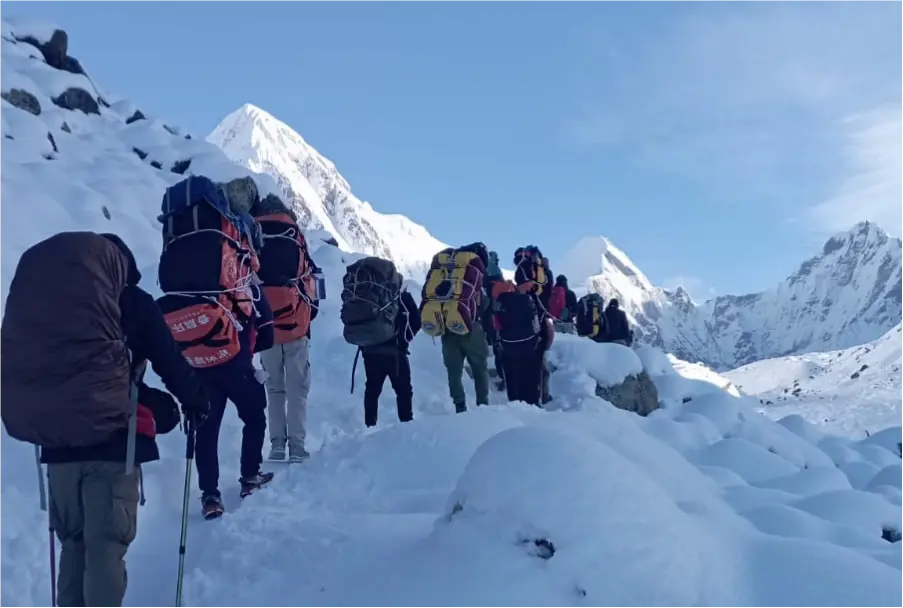
Most trekkers walk about 5 to 7 hours per day on the Everest Base Camp trek. Short acclimatization days in places like Namche Bazaar and Dingboche usually involve only 2 to 4 hours of hiking, while the longest days near Everest Base Camp can take 8 to 10 hours. The full trek normally lasts 12 to 14 days round trip from Lukla, covering around 130 km in total. Even though the daily distance is often only 10 to 15 km, high altitude and steep terrain make walking slower and more tiring than normal hiking.
Table of Contents
The honest answer is five to seven hours per day for most stages of the Everest Base Camp trek. On shorter or acclimatisation days, you will walk three to four hours. On the longest and hardest days, Lobuche to Gorak Shep to Everest Base Camp, and the early morning Kala Patthar climb expect eight to ten hours of total walking time. The variation is real and worth understanding before you plan your itinerary or assess your fitness.
What matters more than the daily hour count is understanding why those hours feel so different from walking the same duration at sea level. At 5,000 metres, five hours of trekking demands more from your body than ten hours of hiking at home. This guide covers the daily breakdown, what each stage actually involves, and what beginners specifically need to know before committing to this trek.
Why Trekking Hours Change Every Day
Altitude Slows Your Walking Speed
Above 3,500 metres, the air contains significantly less oxygen per breath than at sea level. Your body responds by slowing down breathing more deliberately, taking shorter steps, resting more frequently. This is not a weakness or a fitness failure; it is normal physiology at altitude and the correct response to the conditions.
Experienced guides consistently give the same advice: walk slower than feels necessary. Trekkers who push their pace above 4,000 metres increase their risk of altitude mountain sickness. The five to seven hour daily average already accounts for a deliberately reduced pace; it is not five to seven hours at your normal walking speed.
Trail Conditions Matter
The EBC route covers multiple terrain types within a single day. Stone-paved Sherpa paths in the lower sections give way to rocky moraine trails above Dingboche. Suspension bridges over glacial rivers require careful footing. The final section from Gorak Shep to Everest Base Camp crosses the lateral moraine of the Khumbu Glacier slow, technical walking on unstable rock. These conditions extend time on trail beyond what distance alone would suggest.
Weather Adds Unpredictability
Snow, wind, and cold temperatures at higher elevations can slow progress, close sections temporarily, or require an earlier start to avoid afternoon cloud build-up. October and April the two peak trekking seasons offer the most stable conditions, but weather at 5,000 metres is never guaranteed. Building realistic time buffers into each day is part of how experienced guides structure itineraries.
For month-by-month weather conditions on the EBC route, best time to trek Everest Base Camp gives the full seasonal breakdown.
Everest Base Camp Daily Walking Hours: Stage by Stage
Lukla to Phakding
Walking time: 3 to 4 hours. Distance: approximately 8 kilometres. The first day is intentionally short, a gentle introduction to trail conditions, suspension bridges, and the sounds and rhythm of the Khumbu valley. Lukla itself sits at 2,860 metres, and the trail descends to Phakding at 2,610 metres before the sustained climbing begins. Most trekkers arrive at Phakding with energy to spare, which is exactly the point.
Phakding to Namche Bazaar
Walking time: 6 to 7 hours. Distance: approximately 11 kilometres. This is the first genuinely demanding day. The trail climbs from 2,610 metres to 3,440 metres with an elevation gain of 830 metres. The final two hours before Namche involve a steep, sustained ascent that catches many trekkers by surprise after the relatively easy first day. The reward at Namche is the first clear view of Everest from above the town.
Namche Bazaar Acclimatisation Day
Walking time: 2 to 4 hours. Namche Bazaar at 3,440 metres is the primary acclimatisation stop on the EBC route. The rest day is not passive; the standard approach is a hike to the Everest View Hotel (3,880 metres) or the Sagarmatha National Park headquarters, reaching higher altitude before returning to sleep at 3,440 metres. This climb-high, sleep-low pattern is the most important physiological preparation for the stages ahead.
Namche Bazaar to Tengboche
Walking time: 5 to 6 hours. Distance: approximately 10 kilometres. The trail descends from Namche before climbing again to Tengboche at 3,867 metres, where one of Nepal’s most famous Buddhist monasteries sits directly against the backdrop of Ama Dablam (6,812 metres). The monastery visit at the end of the walking day is one of the cultural highlights of the entire route.
Tengboche to Dingboche
Walking time: 5 to 6 hours. Distance: approximately 10 kilometres. The trail continues through Pangboche before climbing steadily to Dingboche at 4,360 metres. Above 4,000 metres, the effects of altitude become noticeably more pronounced. Breathing requires more effort, pace slows, and appetite often begins to reduce. These are normal responses, not warning signs, provided they do not worsen with rest.
Dingboche Acclimatisation Day
Walking time: 3 to 5 hours. The second dedicated acclimatisation day involves a hike to Nangkartshang Peak (approximately 5,100 metres) or the ridgeline above Dingboche. The views from the ridge Makalu, Lhotse, Ama Dablam, and the Khumbu Glacier make this one of the most memorable short hikes on the entire trek. Returning to Dingboche to sleep lower than the high point reached is the same acclimatisation principle applied at higher altitude.
Dingboche to Lobuche
Walking time: 6 to 7 hours. Distance: approximately 10 kilometres. This section crosses the lateral moraine of the Khumbu Glacier and climbs to Lobuche at 4,940 metres. The terrain becomes more exposed and the landscape more austere. Many trekkers notice their first significant altitude-related fatigue on this day shorter steps, slower pace, longer rest stops. The memorial cairns for climbers lost on Everest at the Thukla Pass above Dingboche mark the emotional as much as the physical midpoint of the upper section.
Lobuche to Gorak Shep to Everest Base Camp
Walking time: 7 to 9 hours. This is the longest and hardest single day on the standard EBC itinerary. From Lobuche (4,940 metres), trekkers walk to Gorak Shep (5,164 metres) for lunch, then continue to Everest Base Camp (5,364 metres), returning to Gorak Shep for the night. The combined distance is approximately 14 kilometres at altitude that makes every kilometre feel like two. The Khumbu Glacier moraine on the approach to base camp requires careful footing and genuine concentration.
Kala Patthar
Walking time: 3 to 5 hours (early morning round trip from Gorak Shep). The highest point on the EBC trek at 5,545 metres, Kala Patthar is typically climbed before sunrise departing Gorak Shep between 4:00 and 5:00am to reach the summit in time for the sunrise view of Everest. At this altitude, in pre-dawn temperatures of -10°C to -15°C, the two-hour ascent is the most physically demanding per-kilometre section of the entire route. The panoramic view from the summit of Everest, Lhotse, Nuptse, and the full Khumbu basin is the most celebrated viewpoint on the trek.
For the complete route map and logistics for each stage, Everest Base Camp route guide gives the full day-by-day breakdown.
Is Walking Five to Seven Hours a Day Difficult?
The Real Challenge Is Altitude, Not Distance
The EBC trek involves no technical climbing, no ropes, and no glacier travel. What it involves is sustained walking at progressively higher altitudes where the air contains less oxygen per breath with each stage. A five-hour walk at Dingboche (4,360 metres) places significantly more physiological demand on the body than a seven-hour walk at Lukla (2,860 metres), despite the lower time commitment.
Trekkers who have completed long-distance hikes at lower altitude are frequently surprised by how different the experience feels above 4,000 metres. This is not a question of fitness failing, it is altitude physiology working correctly.
Fitness Matters But Pace Matters More
Cardiovascular fitness helps. It makes the lower sections more comfortable and gives the body better resources for altitude adaptation. But the trekker who walks slowly and consistently at 5,000 metres outperforms the fit trekker who pushes pace and depletes their acclimatisation reserves. The daily walking hours on the EBC route are structured around a manageable pace precisely because the altitude demands it.
For an honest assessment of the physical demands and how to evaluate your own readiness, how difficult is the Everest Base Camp trek covers the difficulty question in full detail.
Mental Endurance Is a Real Factor
Consecutive days of early starts, cold mornings, reduced appetite at altitude, and the cumulative physical effort of 12 to 14 days of trekking require mental consistency as much as physical fitness. The trekkers who struggle most are often those who underestimated the psychological component, the discipline of maintaining pace on a day when everything feels harder than expected.
Can Beginners Handle the Daily Walking Hours?
Yes, with appropriate preparation. The majority of EBC trekkers each year are completing their first serious high-altitude trek. The route is not technically difficult. The trails are well-marked, teahouses are spaced appropriately, and experienced licensed guides manage the pace and acclimatisation schedule.
What beginners need to demonstrate before attempting this trek: the ability to walk five to six hours comfortably on consecutive days at low altitude, reasonable cardiovascular baseline fitness, and a genuine willingness to walk slowly and accept the pace that altitude dictates.
The preparation that makes the biggest difference: regular cardiovascular exercise for eight to twelve weeks before departure hiking with a loaded pack, stair climbing, and sustained endurance sessions of one to two hours. Speed is irrelevant; duration and consistency are what matter.
For a structured training plan specific to EBC altitude demands, how to train for Everest Base Camp covers the full preparation programme.
Tips to Make the Daily Walking Hours Manageable
Walk slower than feels necessary. This is the single most consistent piece of advice from experienced Himalayan guides and returning EBC trekkers. The pace that feels too slow in the lower sections is approximately the right pace for the upper sections. Start slow and stay slow.
Stay hydrated consistently. Dehydration at altitude accelerates fatigue and worsens altitude symptoms. Three to four litres of water per day is the recommended minimum above 3,000 metres. Carry a water purification system rather than relying on purchased bottles.
Use trekking poles from day one. Poles reduce knee load on the descent sections significantly, a meaningful benefit over 14 days of cumulative downhill walking. They also improve stability on rocky trail sections and the glacier moraine near base camp.
Take genuine breaks. The instinct to push through and cover distance quickly is counterproductive at altitude. Fifteen-minute breaks every 90 minutes to two hours are more effective for energy conservation than pushing to the next checkpoint without stopping.
Consider porter support. Carrying a full pack at altitude adds significantly to daily fatigue. A porter carrying the heavier gear bag while you carry a daypack with essentials reduces the physiological load on the hardest days and directly improves acclimatisation outcomes. A well-equipped guided trek through an agency like HimalayaHub Adventure includes porter support and guide pacing as standard, the most reliable way for beginners to manage the daily hours effectively.
For gear selection that reduces pack weight without sacrificing essentials, Everest Base Camp Trek Packing Guide covers the complete kit list by season.
How Many Total Hours Do You Walk During the Entire Trek?
Across a standard 12 to 14-day EBC itinerary, total walking hours accumulate to roughly 60 to 70 hours. This includes all trekking days but excludes the acclimatisation rest days in Namche and Dingboche where the short hikes add two to four hours rather than a full day’s commitment.
The return journey from base camp to Lukla is faster downhill walking covers ground more quickly and altitude decreases rather than increases, making each subsequent stage physically easier. Many trekkers complete the entire descent from EBC to Lukla in two to three days rather than the six to seven days of the ascent.
The total hour figure is useful for fitness planning purposes: 60 to 70 hours of walking over 12 to 14 days at altitude is a meaningful physical commitment that benefits from specific preparation rather than general fitness assumptions.
What the Daily Hours Really Mean for Your Planning
Most trekkers walk five to seven hours per day on the Everest Base Camp trek. That number is accurate, consistent across the standard route, and the right figure to use when planning fitness preparation and daily energy budgeting.
What the number does not capture is the difference between five hours at 2,000 metres and five hours at 5,000 metres. Altitude is the defining variable on this trek more than terrain, more than daily distance, more than fitness level. The trekkers who reach Everest Base Camp are almost always those who respected the pace, took the acclimatisation days seriously, and walked slower than felt necessary from the first day to the last.
The EBC trek is manageable. It is demanding. It rewards preparation and patience far more than raw fitness. With the right pace, the right gear, and a well-structured itinerary that includes proper acclimatisation time, the daily walking hours are achievable for the large majority of healthy adults who prepare specifically for what this route requires.
Frequently Asked Questions – EBC Daily Walking Hours
How many hours do you walk each day on the EBC trek?
Most days involve five to seven hours of walking. Acclimatisation days at Namche and Dingboche are shorter at two to four hours. The longest days, particularly Lobuche to Gorak Shep to base camp, reach eight to nine hours.
What is the hardest trekking day on EBC?
The Lobuche to Gorak Shep to Everest Base Camp day is the longest and most physically demanding seven to nine hours of walking at the highest altitude of the trek, including the rocky Khumbu Glacier moraine on the base camp approach.
How many kilometres do you walk each day?
Daily distance is typically 10 to 15 kilometres. The total round-trip distance from Lukla to EBC and back is approximately 130 kilometres.
Can beginners complete the daily walking hours?
Yes. Most EBC trekkers are completing their first high-altitude trek. The key factors are preparation for eight to twelve weeks of cardiovascular training and willingness to walk at a genuinely slow, altitude-appropriate pace rather than normal hiking speed.
Is EBC harder than Kilimanjaro in terms of daily walking?
Kilimanjaro summit day involves a longer single push of 12 to 16 hours. EBC distributes the effort across more days with lower single-day maximums. EBC is generally considered more manageable in terms of daily output but requires sustained effort over a longer total period.