Key Takeaways
- The Everest Base Camp route is a 130 km round-trip trek from Lukla (2,840m) to Everest Base Camp (5,364m), usually completed in 12–15 days with two key acclimatization stops in Namche Bazaar and Dingboche.
- Altitude is the main challenge – not technical climbing. Proper acclimatization, hydration, and gradual ascent are essential to prevent AMS and safely reach Kala Patthar (5,545m).
- The trail passes through Sagarmatha National Park, traditional Sherpa villages, monasteries like Tengboche, and glacial terrain near the Khumbu Glacier and Icefall.
- Trekkers need two main permits (Sagarmatha National Park + Khumbu Rural Municipality), and total costs range from $1,200 for independent trekking to $4,000+ for a full guided package.
Table of Contents
The Everest Base Camp route covers a 130 km round trip through the Khumbu Valley in Nepal. Trekkers start in Lukla at 2,840m and reach Everest Base Camp at 5,364m over 12–15 days. The trail passes through Sherpa villages, ancient monasteries, and glacial terrain inside Sagarmatha National Park.
This guide explains the exact route, day-by-day stages, altitude, distance, permits, cost, and preparation tips for the Everest Base Camp trek.
Quick Stats
- Start Point: Lukla, Nepal (2,840m)
- End Point: Everest Base Camp (5,364m)
- Highest Point: Kala Patthar (5,545m)
- Total Distance: ~130 km round trip
- Duration: 12–15 days
- Difficulty: Moderate to Challenging
What is the Everest Base Camp Route?
What is Everest Base Camp? It is the classic south-side trekking trail through Nepal’s Khumbu region. The trail begins at Lukla airport, climbs through the Dudh Kosi River valley, and ends at the base of the world’s highest mountain at 5,364m.
Sagarmatha National Park covers the entire route. The park protects 1,148 sq km of Himalayan landscape, including glaciers, alpine forests, and Sherpa cultural sites. Trekkers enter the park at Monjo checkpoint on Day 4.
The Everest Base Camp route requires no technical climbing skills. Trekkers walk on defined trails between teahouse villages every day. The route is suitable for fit beginners who prepare 3-4 months in advance.
Where Does the Everest Base Camp Trek Start?
Where does the Everest Base Camp trek start? The journey begins in Lukla, a small mountain town in the Solukhumbu district of Nepal. Trekkers reach Lukla by flight from Kathmandu.
Flying from Kathmandu to Lukla
The Kathmandu–Lukla flight takes 35 minutes and lands at Tenzing-Hillary Airport, one of the world’s most dramatic mountain airstrips at 2,840m. Tara Air, Summit Air, and Sita Air operate daily morning flights. Tickets cost $180–$220 per person one way.
Flights operate weather-dependent, typically between 6:00 AM and 9:00 AM. Trekkers should plan one buffer day in Kathmandu for potential flight delays.
Road Alternative via Salleri or Phaplu
Trekkers who miss Lukla flights can drive to Salleri or Phaplu and walk 2–3 extra days to join the main EBC trail. This option adds distance but costs less than a flight rebooking.
Everest Base Camp Route , Day by Day
The classic Everest Base Camp trek 15 days route from Kathmandu. How long to walk Everest Base Camp depends on your pace, but each trekking day typically covers 8–16 km over 5–8 hours of walking on rocky, uneven mountain trails.
Days 1–2 , Arrive Kathmandu (1,350m)
Kathmandu serves as the gateway for every EBC trek. Day 1 is arrival, trek briefing, and gear check. Day 2 covers Kathmandu sightseeing , Boudhanath Stupa, Pashupatinath Temple, and Swayambhunath are the three main sites trekkers visit.
Trek agencies complete permit paperwork in Kathmandu on these days. Trekkers buy or rent missing gear in the Thamel district, where hundreds of outdoor shops operate year-round.
Day 3 , Fly Lukla, Trek to Phakding (8 km | 3–4 hrs | 2,840m → 2,610m)
The trek begins at Tenzing-Hillary Airport after the morning flight from Kathmandu. Phakding sits 8 km below Lukla along the Dudh Kosi River at 2,610m.
The Day 3 trail descends through pine and rhododendron forest. Trekkers cross three suspension bridges over the Dudh Kosi River before reaching Phakding. This is the easiest day on the trail , a gentle warm-up for the route ahead.
Day 4 , Phakding to Namche Bazaar (11 km | 5–6 hrs | 3,441m)
Namche Bazaar is the most important town on the Everest Base Camp route. The trail from Phakding crosses the Hillary Suspension Bridge , a 60m high wire bridge over the Dudh Kosi gorge , before climbing steeply for 2 hours to Namche.
Trekkers enter Sagarmatha National Park at the Monjo checkpoint, 4 km before Namche. Rangers check permits at this gate. The final climb to Namche gains 600m in elevation and takes 2–3 hours of sustained uphill walking.
Namche Bazaar sits in a natural horseshoe-shaped bowl at 3,441m. The town has bakeries, gear shops, Wi-Fi cafes, hot showers, and ATMs , the last reliable banking point on the route.
Read our full Namche Bazaar guide , what to do, where to stay, and altitude tips
Day 5 , Acclimatization in Namche Bazaar (3,441m)
Namche Bazaar requires one full acclimatization day before trekkers continue higher. Skipping this rest day increases the risk of Acute Mountain Sickness (AMS) by 40% on the upper trail.
The recommended acclimatization hike goes to the Everest View Hotel at 3,880m , 440m above Namche. This hike takes 3–4 hours round trip and gives trekkers the first clear view of Mount Everest (8,849m), Lhotse (8,516m), and Ama Dablam (6,812m).
Khumjung village, 3 km above Namche, holds a school built by Sir Edmund Hillary in 1960. The Sherpa Cultural Museum in Namche explains the history of Everest expeditions and Sherpa life in the Khumbu region.
See our guide on how to prevent altitude sickness on the EBC trek
Day 6 , Namche Bazaar to Tengboche (10 km | 5–6 hrs | 3,860m)
Tengboche Monastery is the most photographed landmark on the entire Everest Base Camp route. The trail from Namche passes through rhododendron forest and delivers the first direct, close-up view of Ama Dablam at 6,812m.
Tengboche Monastery sits at 3,860m on a ridge above the Dudh Kosi and Imja Khola river confluence. Built in 1916, the monastery is the largest in the Khumbu region and home to 30 resident monks. Trekkers who arrive by 3:00 PM can attend the afternoon puja ceremony inside the monastery.
Day 7 , Tengboche to Dingboche (10 km | 5–6 hrs | 4,410m)
Dingboche marks the entry into the high-altitude zone of the Everest Base Camp route. The trail descends from Tengboche into the Imja Khola valley, passes through Pangboche village, and climbs steadily to Dingboche at 4,410m.
Pangboche holds the oldest monastery in the Khumbu region, built in the 17th century. Island Peak (6,189m) and the massive Lhotse South Face (8,516m) dominate the view from Dingboche.
Trekkers notice thinner air clearly at this altitude. Headaches, reduced appetite, and slower breathing are common and normal at 4,410m.
Day 8 , Acclimatization in Dingboche (4,410m)
Dingboche is the second mandatory acclimatization stop on the Everest Base Camp route. Trekkers rest here one full day before crossing into the 4,900m–5,500m altitude band.
The acclimatization hike climbs to Nagarjun Hill at 4,980m , 570m above Dingboche. This hike takes 4–5 hours and reveals a 360-degree panorama including Makalu (8,485m), Cho Oyu (8,188m), and the upper Khumbu glaciers.
AMS symptoms that appear at Dingboche and do not improve with rest require immediate descent. Trekkers should never ascend with a headache that worsens overnight.
Day 9 , Dingboche to Lobuche (10 km | 4–5 hrs | 4,940m)
Lobuche sits at 4,940m on the lateral moraine of the Khumbu Glacier. The trail from Dingboche climbs to Thukla Pass at 4,620m before reaching Lobuche.
Thukla Pass holds a collection of stone memorial cairns built for Everest climbers who died on the mountain. Each cairn represents a life lost above 8,000m. This site is one of the most emotional stops on the entire route.
Above Thukla, the landscape transforms completely. Trees disappear. The trail becomes rocky moraine. Wind increases and temperatures drop noticeably. Trekkers are now fully inside the glacial zone.
Day 10 , Lobuche to Everest Base Camp via Gorak Shep (13 km | 6–8 hrs | 5,364m)
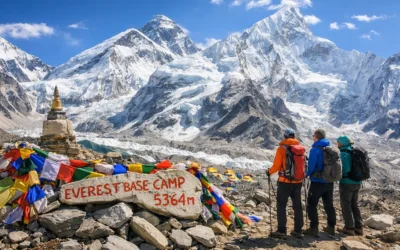
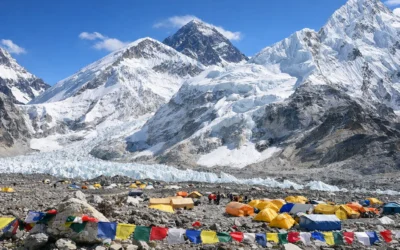
Everest Base Camp sits at 5,364m on the Khumbu Glacier at the foot of the Khumbu Icefall. Many travelers ask, where is Everest Base Camp located? It is situated in the Khumbu region of northeastern Nepal.
The trail from Lobuche reaches Gorak Shep at 5,164m , the last teahouse stop , before crossing 4 km of glacial moraine to reach Base Camp. Gorak Shep to EBC takes 2–3 hours over loose rock, ice, and glacier debris.
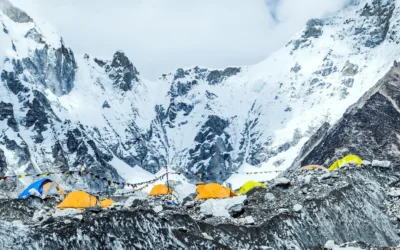
Why is Everest Base Camp famous? It is the starting point for climbers attempting the world’s highest peak. During the spring climbing season (April–May), 30–50 expedition tents from teams across 12+ countries occupy the site.
Day 11 , Kala Patthar Sunrise + Descent to Pheriche (16 km | 5–7 hrs | 5,545m)
Kala Patthar delivers the best panoramic view of Mount Everest available without climbing gear. The summit stands at 5,545m , 181m higher than Everest Base Camp itself. How high is Everest Base Camp? It sits at an impressive 5,364 meters.
Trekkers leave Gorak Shep at 4:30–5:00 AM to reach Kala Patthar for sunrise. The climb takes 1.5–2 hours in darkness at -10°C to -20°C. At the summit, Mount Everest (8,849m), Nuptse (7,861m), Changtse (7,583m), and the entire Khumbu Glacier appear in a single view.
This sunrise moment is the most photographed scene on the Everest Base Camp route. After sunrise, trekkers descend directly from Gorak Shep all the way to Pheriche at 4,371m , a 1,174m descent covering 16 km.
Read our complete Kala Patthar trek guide , best time, difficulty, and what you see
Days 12–13 , Descent: Pheriche → Namche Bazaar → Lukla
The descent from Pheriche to Lukla takes 2 days and covers 35 km. Trekkers walk the same trail in reverse at a faster pace. Day 12 descends from Pheriche to Namche Bazaar (16 km | 6–7 hrs). Day 13 continues from Namche to Lukla (19 km | 6 hrs).
The descent feels dramatically easier than the ascent. Oxygen levels increase with every kilometer downhill. Most trekkers celebrate with a final dinner in Lukla on the evening of Day 13.
Days 14–15 , Fly Kathmandu + Departure
The Lukla–Kathmandu morning flight on Day 14 completes the trek. Day 15 serves as a buffer for weather-related flight delays , a realistic occurrence on 30% of EBC trek departures during peak season.
Trekkers who complete the route spend a final night in Kathmandu before international departure.
Alternative Routes to Everest Base Camp
The classic Lukla route is not the only path to Everest Base Camp. How to get to Everest Base Camp can involve several different trails depending on your time and experience.
Jiri to Everest Base Camp , The Historic Route
The Jiri route starts 188 km east of Kathmandu and adds 7–10 days to the standard EBC trek. Sir Edmund Hillary and Tenzing Norgay used this approach route for the 1953 first ascent of Everest. The trail passes through Solu-Khumbu’s lower villages and sees 80% fewer trekkers than the Lukla route.
Gokyo Lakes + Everest Base Camp Combo
The Gokyo combo route adds Gokyo Lakes and Gokyo Ri (5,357m) to the standard EBC trek. Trekkers cross Cho La Pass at 5,420m to connect the two routes. Total duration is 18–20 days. Crampons and microspikes are required for Cho La Pass.
Everest Three High Passes Trek
The Three High Passes trek crosses Kongma La (5,535m), Cho La (5,420m), and Renjo La (5,360m) in a full Khumbu circuit. The total duration is 21 days. This route suits experienced trekkers only.
View the Everest Three High Passes Trek package
How Difficult is the Everest Base Camp Route?
Physical Challenge Level
The Everest Base Camp trek difficulty is rated as moderate to challenging. The trail requires no ropes, crampons, or technical climbing skills on the standard route. Altitude is the primary challenge , not terrain steepness.
Trekkers walk 5–8 hours daily on rocky, uneven paths. Cumulative elevation gain from Lukla to Kala Patthar is 2,705m. The body needs 10–14 days to acclimatize progressively to this gain.
Can Beginners Trek to Everest Base Camp?
Is Everest Base Camp trek hard for beginners? Beginners can complete the route successfully with 3–4 months of physical preparation. Training should include 4–5 days per week of cardio exercise, regular stair climbing, and weekend hikes carrying an 8–10 kg pack.
Read our detailed EBC trek difficulty guide
Age Range for the EBC Route
The youngest person to complete the EBC route was 13 years old. The oldest verified trekker was 76. Health and fitness determine success on the route, not age. Trekkers over 60 should complete a cardiac fitness test before departure.
Best Time to Trek the Everest Base Camp Route
Spring , March to May (Most Popular)
Spring delivers stable weather, warm daytime temperatures (5°C–15°C at lower elevations), and rhododendron blooms between 2,000m–4,000m. April is the peak Everest climbing season; trekkers see expedition teams at Base Camp during this window.
Autumn , September to November (Best Overall)
Autumn produces the clearest mountain views of any season. Post-monsoon air contains minimal dust and haze. October temperatures at Namche average 8°C daytime and -2°C at night. This season suits photography and first-time trekkers equally.
Winter , December to February
Winter trekking is possible on the EBC route but demands full cold-weather gear. Temperatures drop to -20°C at Gorak Shep at night. Teahouses above Dingboche may close between January and February. Fewer than 5% of annual EBC trekkers attempt the route in winter.
Monsoon , June to August (Not Recommended)
Monsoon season brings daily rainfall, leeches below 3,000m, and visibility below 1 km on most days. Trail conditions become slippery and dangerous. The route is technically open but not recommended for first-time trekkers.
Read our complete Best time to trek Everest Base Camp guide
Permits Required for the Everest Base Camp Route
Two permits are mandatory for every trekker on the Everest Base Camp route.
Sagarmatha National Park Entry Permit costs $30 USD per person. Rangers check this permit at the Monjo gate on Day 4. The permit funds conservation work inside the 1,148 sq km park.
Khumbu Pasang Lhamu Rural Municipality Fee costs $20 USD per person. Local government collects this fee at Lukla or Monjo. The fee supports community infrastructure in the Khumbu region.
TIMS Card (Trekkers’ Information Management System) costs $10–20 USD depending on whether trekkers travel independently or in a group. Registered trekking agencies handle TIMS cards in Kathmandu.
See our full Everest Base Camp permits guide , costs, where to buy, and checkpoints
How Much Does the Everest Base Camp Trek Cost?
The Everest Base Camp trek cost is between $1,200 and $4,000+ depending on the type of package, guide service, and duration chosen.
Budget independent trek: $1,200–$1,500 covers flights, permits, teahouse accommodation, and food for a solo trekker without a guide.
Mid-range guided trek: $1,800–$2,500 includes a licensed guide, porter, all teahouse stays, permits, and Kathmandu hotel nights.
Full guided package: $2,500–$4,000+ covers everything , international airport transfers, Kathmandu hotel, Lukla flights, guide, porter, all meals on trail, permits, and emergency insurance.
Gear rental in Thamel, Kathmandu costs $5–$15 per day for sleeping bags, down jackets, and trekking poles. Trekkers who rent instead of buy save $300–$500 on equipment.
See the complete Everest Base Camp trek cost breakdown , full budget guide for 2026
Quick Preparation Tips for the EBC Route
Physical Training , Start 3–4 Months Early
How to train for Everest Base Camp? Cardiovascular fitness determines success on the route more than any other factor. Trekkers should run or cycle 4–5 times per week for 12–16 weeks before departure. Stair climbing with a 8–10 kg backpack twice weekly builds the leg strength required for 1,000m elevation days.
Essential Gear for the EBC Route
The Khumbu region requires specific equipment. Waterproof trekking boots with ankle support handle rocky glacial terrain between Lobuche and Gorak Shep. A sleeping bag rated to -10°C keeps trekkers warm in teahouses above 4,000m. Trekking poles reduce knee impact on the 35 km descent from Gorak Shep to Lukla by 25%.
Read our complete Everest Base Camp packing list , gear checklist for 2026
Altitude Safety Rules
The Khumbu region follows a single universal rule, climb high, sleep low. Trekkers ascend no more than 500m in altitude per day above 3,000m. Drinking 3–4 litres of water daily reduces AMS risk. Alcohol consumption in the first 72 hours above 3,000m increases headache severity by measurable amounts.
AMS symptoms include persistent headache, nausea, dizziness, and loss of appetite. HACE (High Altitude Cerebral Edema) and HAPE (High Altitude Pulmonary Edema) are rare but life-threatening conditions requiring immediate descent and evacuation.
Ready to Trek Everest Base Camp?
Is Everest Base Camp worth visiting? The Everest Base Camp route is the most iconic trekking trail on Earth. The 130 km journey from Lukla through Namche Bazaar, Tengboche, Dingboche, and Lobuche to Base Camp at 5,364m delivers mountain views, Sherpa culture, and personal achievement that trekkers remember for life.
We offer fully guided Everest Base Camp trek packages with experienced, licensed Sherpa guides, all permits included, teahouse accommodation, and 24/7 trek support from Kathmandu to Base Camp and back.
Choose your EBC trek package:
- Everest Base Camp Trek 15 Days (Classic, fully guided)
- Everest Base Camp Trek 12 Days (Short, faster-paced)
- EBC Trek with Helicopter Return (Save 3–4 descent days)
- Everest Three High Passes Trek 21 Days (Advanced)
Contact our trek experts today and book your Everest Base Camp trek for 2026.
Frequently Asked Questions
How long is the Everest Base Camp route?
The Everest Base Camp route covers approximately 130 km round trip from Lukla. The full trek takes 12–15 days depending on the itinerary and acclimatization schedule.
Where does the Everest Base Camp trek start?
The trek starts in Lukla, reached by a 35-minute flight from Kathmandu’s Tribhuvan International Airport.
Is there a road to Everest Base Camp?
No paved road connects to Everest Base Camp. Access requires either trekking on foot or chartering a helicopter from Kathmandu or Lukla.
Can beginners trek to Everest Base Camp?
Beginners complete the EBC trek successfully with 3–4 months of physical preparation and a proper acclimatization schedule.
How many hours do you walk per day on the EBC route?
Trekkers walk an average of 5–7 hours per day, covering 8–16 km depending on the stage.
What is the highest point on the Everest Base Camp route?
Kala Patthar at 5,545m is the highest point most trekkers reach , 181m higher than Everest Base Camp itself.
What villages do you pass on the EBC route?
The main villages on the route include Phakding, Namche Bazaar, Tengboche, Dingboche, Lobuche, and Gorak Shep.
Do you need a guide for the Everest Base Camp route?
A guide is not legally mandatory but is strongly recommended. Licensed guides improve safety, manage permits, and provide cultural context throughout the trek.
How many people hike to Everest Base Camp?
Thousands of people from around the world take on the challenge. How many people hike to Everest Base Camp varies each year, but it remains one of the world’s most popular high-altitude adventures.
What permits do you need for the EBC route?
Trekkers need the Sagarmatha National Park permit ($30) and the Khumbu Pasang Lhamu Rural Municipality fee ($20). A TIMS card costs an additional $10–$20.