Standing at the foot of Mount Everest is a dream for many travellers. The journey takes you through beautiful Sherpa villages, high suspension bridges, ancient monasteries, rocky mountain trails, and incredible Himalayan landscapes. But before planning this adventure, most trekkers ask one important question: how long does it take to reach Everest Base Camp?
The standard Everest Base Camp Trek takes around 8 to 9 days to reach Base Camp from Lukla, including important acclimatisation days. The complete round-trip journey usually takes 12 to 14 days. If you include flights from Kathmandu, extra rest days, and possible weather delays, you should plan around 14 to 16 days or more.
However, reaching Everest Base Camp is not just about covering a certain distance. Your walking speed, fitness, altitude adjustment, and weather conditions all affect the journey. Taking enough time helps you enjoy the experience without putting unnecessary pressure on your body.
In this guide, we explain the distance, daily walking hours, route, trekking duration, and important planning tips to help you prepare for your Everest adventure.
How Long Does It Take to Reach Everest Base Camp?
It generally takes 8 to 9 trekking days to reach Everest Base Camp from Lukla. Most standard itineraries include two acclimatisation days to help your body adjust to the increasing altitude.
The journey begins in Lukla, a mountain town in Nepal’s Khumbu region. From there, you walk through several famous villages before reaching Everest Base Camp at approximately 5,364 metres.
Here is a simple breakdown of the journey:
| Part of the journey | Approximate time |
| Lukla to Everest Base Camp | 8–9 days |
| Return from the Base Camp area to Lukla | 3–4 days |
| Complete round-trip trek | 12–14 days |
| Kathmandu to Kathmandu, including travel | 14–16 days |
| Extra time for weather delays | 2–3 days recommended |
These durations are general estimates. Your actual schedule may change because of weather, health, walking speed, or trail conditions.
It is also important to understand that reaching Everest Base Camp and completing the entire trek are two different things. You need additional days to return to Lukla.
How Far Is Everest Base Camp from Lukla?
The Everest Base Camp Trek covers approximately 130 kilometres (80 miles) on a round trip from Lukla. The one-way distance is roughly 65 kilometres, although the exact distance depends on your route and side trips.
The trail passes through different mountain environments. At the beginning, you walk through green forests, riverside paths, and traditional villages. As you gain altitude, the landscape becomes more open and rocky.
Some of the main places along the route include:
- Lukla: The starting point of the classic Everest Base Camp Trek.
- Phakding: A peaceful riverside village surrounded by green hills.
- Namche Bazaar: A popular Sherpa town and an important acclimatisation stop.
- Tengboche: Famous for its Buddhist monastery and mountain views.
- Dingboche: A beautiful high-altitude settlement where trekkers take another rest day.
- Lobuche: A small mountain settlement before the final approach to Base Camp.
- Gorak Shep: The last overnight settlement before Everest Base Camp.
- Everest Base Camp: The main destination of the trekking journey.
The distance may not seem very long on a map, but the steep climbs, rocky paths, and high altitude make the journey more challenging than an ordinary hike.
Everest Base Camp Trek: Day-by-Day Walking Time
Understanding the daily route gives you a better idea of how long it takes to reach Everest Base Camp. Each day has different walking conditions, so some sections feel easier than others.
The following itinerary is an example of a standard route from Lukla to Everest Base Camp.
Day 1: Lukla to Phakding
Walking time: 3–4 hours
Your journey starts with a scenic flight to Lukla. After meeting your guide and trekking team, you begin walking towards Phakding.
The trail follows the Dudh Koshi River and passes through small villages, stone houses, and beautiful green landscapes. You also cross several suspension bridges decorated with colourful prayer flags.
This is a relatively short walking day, giving you time to settle into the mountain environment.
Day 2: Phakding to Namche Bazaar
Walking time: 5–7 hours
This section is more demanding because the trail includes several uphill climbs.
You walk through Monjo and enter Sagarmatha National Park before continuing towards Namche Bazaar. Along the way, you cross the famous Hillary Suspension Bridge.
The final climb to Namche is steep and requires patience. Once you arrive, you can enjoy beautiful views of the surrounding mountains.
Namche Bazaar sits at approximately 3,440 metres and is one of the most important stops on the Everest trail.
Day 3: Acclimatisation in Namche Bazaar
Walking activity: 2–4 hours
You spend another night in Namche Bazaar to help your body adjust to the altitude.
Many trekkers take a short walk towards the Everest View Hotel or nearby viewpoints. These places offer beautiful views of Everest, Ama Dablam, and other Himalayan peaks.
You can also explore local markets, visit the Sherpa Culture Museum, or relax at a teahouse.
Day 4: Namche Bazaar to Tengboche
Walking time: 5–6 hours
After breakfast, you follow a scenic trail with impressive mountain views.
The route includes a gradual walk before descending towards Phunki Tenga. From there, you climb through forested paths to Tengboche.
The village is well known for Tengboche Monastery, an important Buddhist centre in the Khumbu region. It is a wonderful place to enjoy the peaceful mountain atmosphere.
Day 5: Tengboche to Dingboche
Walking time: 5–6 hours
You continue through Pangboche and follow the trail towards Dingboche.
As you climb higher, the landscape begins to change. Thick forests gradually disappear, leaving open hillsides, stone walls, and wider mountain views.
Dingboche is located at approximately 4,410 metres. Because of the altitude, you may notice that walking requires more effort than it did during the first few days.
Day 6: Acclimatisation in Dingboche
Walking activity: 2–4 hours
Another rest day helps your body prepare for the higher sections of the trek.
You can take a gradual hike towards Nagarjun Hill or a nearby viewpoint before returning to Dingboche.
The purpose of this day is not to cover a long distance. It is to allow your body to adjust while remaining active at a comfortable level.
Day 7: Dingboche to Lobuche
Walking time: 5–6 hours
The trail gradually climbs towards Dughla and the Thukla Pass memorial area.
Here, you will see stone memorials dedicated to climbers and Sherpas who lost their lives in the Himalayas.
After taking a short break, you continue towards Lobuche, which sits at approximately 4,940 metres.
The air is thinner at this elevation, so walking slowly and taking regular breaks becomes especially important.
Day 8: Lobuche to Gorak Shep and Everest Base Camp
Walking time: 7–9 hours
This is the main highlight of your trekking adventure.
You leave Lobuche and follow a rocky trail towards Gorak Shep. After reaching the settlement, you can leave your main belongings at your accommodation before continuing towards Everest Base Camp.
The route passes through challenging glacial terrain, offering views of the Khumbu Glacier and surrounding mountains.
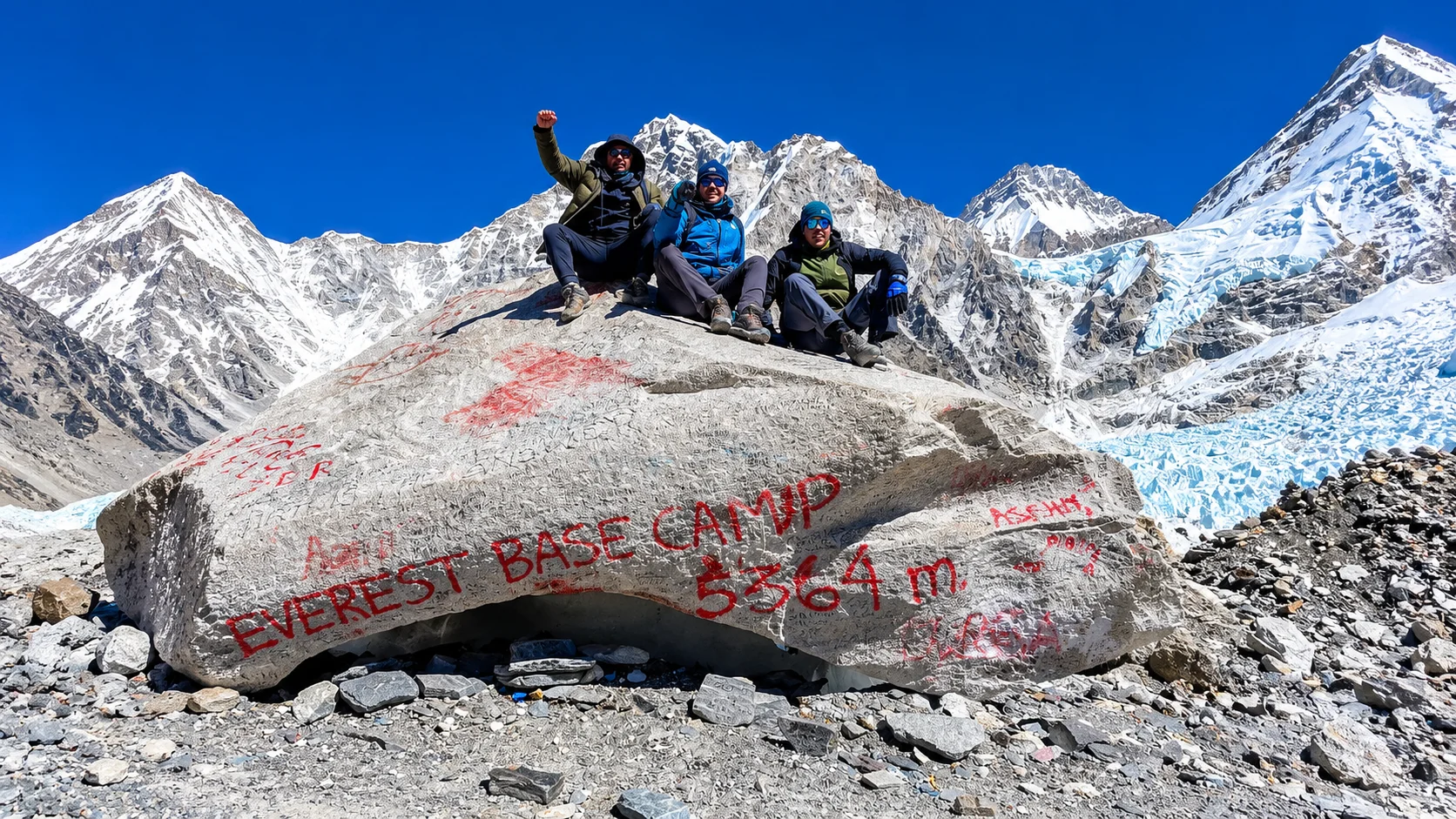
Finally, you arrive at Everest Base Camp, approximately 5,364 metres above sea level.
Take time to enjoy the achievement and photograph the incredible surroundings. After your visit, return to Gorak Shep for the night.
Day 9: Gorak Shep to Kala Patthar and the Return Journey
Walking time: 6–8 hours, depending on the descent destination
Many trekkers start early to climb Kala Patthar, which reaches approximately 5,545 metres.
It is one of the best viewpoints for seeing Mount Everest and the surrounding Himalayan peaks. The early morning light can make the mountain scenery especially impressive.
After the viewpoint visit, you descend towards Gorak Shep and continue your return journey, usually towards Pheriche or another scheduled overnight stop.
Your remaining return days take you through familiar villages before reaching Lukla.
How Many Hours Do You Walk Each Day to Everest Base Camp?
Most trekkers walk between 4 and 7 hours per day on the Everest Base Camp route. However, some sections take longer because of steep climbs, rocky trails, and high altitude.
Your walking time also depends on how often you stop for water, food, photographs, and rest.
Here is what you can generally expect:
| Type of trekking day | Average walking time |
| Short walking day | 3–4 hours |
| Regular trekking day | 4–6 hours |
| Long trekking day | 6–7 hours |
| Challenging high-altitude day | 7–9 hours |
The final approach from Lobuche to Everest Base Camp is one of the longest and most demanding sections.
You should not compare your walking speed with other trekkers. Some people move faster, while others need more time to adjust to the altitude. Both are normal.
The best approach is to maintain a steady pace, take regular breaks, and listen to your body.
What Factors Affect How Long It Takes to Reach Everest Base Camp?
Although most standard itineraries follow a similar route, the actual trekking time can vary. Several important factors influence how quickly you reach Base Camp.
1. Physical Fitness and Trekking Experience
Your physical fitness affects how comfortably you manage long walking days.
People who regularly hike, walk, cycle, or exercise may find it easier to handle the daily distance. However, you do not need to be a professional athlete to complete the trek.
Beginners can also reach Everest Base Camp if they prepare properly and follow a suitable itinerary.
2. Altitude and Acclimatisation
Altitude is one of the biggest factors affecting your trekking speed.
At higher elevations, there is less available oxygen, making physical activity feel harder. You may need more breaks and extra time to complete the same distance.
This is why standard itineraries include acclimatisation days rather than moving directly towards Base Camp.
3. Weather and Trail Conditions
Mountain weather can change quickly. Rain, snow, strong winds, and poor visibility may affect your walking schedule.
During some seasons, trails can become slippery or difficult to follow. You may need to walk more slowly and carefully.
Weather can also affect flights to and from Lukla, which may add unexpected days to your trip.
4. Walking Speed and Rest Breaks
Not everyone walks at the same speed. Some trekkers enjoy taking photographs, exploring villages, and spending more time at viewpoints.
Others prefer to reach their accommodation earlier.
There is no need to rush. A comfortable pace helps you save energy for the higher sections of the trail.
5. Extra Side Trips and Viewpoints
Some trekkers include additional destinations in their itinerary.
Popular options include:
- Kala Patthar for panoramic mountain views.
- Everest View Hotel for a scenic viewpoint.
- Gokyo Lakes for beautiful turquoise alpine lakes.
- Three Passes Trek for a more challenging Himalayan adventure.
These additional routes can increase your total trekking time.
Why Is Acclimatisation Important When Trekking to Everest Base Camp?
Acclimatisation is the process of allowing your body to adjust to higher elevations. It is one of the most important parts of the Everest Base Camp Trek.
As you move from Lukla towards Everest Base Camp, you gradually climb above 5,000 metres. Your body needs time to adapt to the lower oxygen levels.
Without proper acclimatisation, you may develop altitude sickness.
Some common symptoms include:
- Headaches.
- Nausea or vomiting.
- Dizziness.
- Loss of appetite.
- Unusual tiredness.
- Difficulty sleeping.
Two important acclimatisation stops are usually included in a standard EBC itinerary.
Namche Bazaar: At approximately 3,440 metres, this is the first major acclimatisation stop. You can take a short walk to a higher viewpoint before returning to sleep in Namche.
Dingboche: At approximately 4,410 metres, this is another important stop. A gradual walk towards Nagarjun Hill helps you stay active while adjusting to the altitude.
Many guides follow the climb-high, sleep-low approach. This means walking to a higher elevation during the day and returning to a lower elevation to sleep.
Remember that acclimatisation does not guarantee protection from altitude sickness. If symptoms become worse, inform your guide immediately. Severe symptoms require an immediate descent and medical attention.
Can You Reach Everest Base Camp Faster?
Yes, there are ways to shorten the overall Everest Base Camp journey, but they require careful planning.
Some trekking companies offer shorter itineraries with a helicopter return. This allows you to complete the main trekking route and avoid walking all the way back to Lukla.
However, reducing the number of days during the uphill journey is not always a good idea.
If you rush through the route, your body may not have enough time to adjust to the altitude.
Here are some options:
Standard trekking route: Usually takes 12–14 days for the round trip. This is a suitable choice for most trekkers.
Helicopter return: You walk to the Everest Base Camp area and return by helicopter, saving several days of walking.
Shorter trekking itinerary: Some packages reduce travel time, but they should still include suitable acclimatisation and a safe ascent.
Before choosing a shorter package, consider your fitness, trekking experience, altitude tolerance, and the time available for your Nepal holiday.
For first-time trekkers, a standard itinerary is generally the better option.
What Is the Best Time to Reach Everest Base Camp?
The season you choose can affect your walking conditions, mountain views, and overall trekking duration.
Spring and autumn are generally the most popular seasons for the Everest Base Camp Trek.
Spring: March to May
Spring is a beautiful time to explore the Everest region.
The weather gradually becomes warmer, and the lower trails become colourful with blooming rhododendrons.
You can enjoy:
- Pleasant daytime temperatures at lower elevations.
- Beautiful mountain scenery.
- Colourful forests and natural landscapes.
- A lively trekking atmosphere.
Spring is also a busy climbing season, so you may meet mountaineering teams preparing for Everest expeditions.
Autumn: September to November
Autumn is another excellent season for reaching Everest Base Camp.
After the monsoon season, the skies often become clearer, creating excellent mountain views.
October and November are especially popular because of their generally stable weather and comfortable trekking conditions.
Winter: December to February
Winter brings colder temperatures and possible snowfall to the higher sections of the route.
The trails are generally quieter, but cold nights and difficult weather can make the journey more challenging.
You need proper winter clothing, suitable equipment, and a flexible itinerary.
Monsoon: June to August
The monsoon season brings heavy rainfall to many parts of Nepal.
Clouds, rain, and poor visibility may affect flights and walking conditions. Some lower trails can also become muddy and slippery.
Although trekking is possible with careful planning, this is not usually the preferred season for the classic Everest Base Camp route.
How to Prepare for the Everest Base Camp Trek
Reaching Everest Base Camp requires more than booking a flight and packing a backpack. Proper preparation helps you manage long walking days and changing mountain conditions.
Here are some practical ways to prepare:
1. Improve your fitness: Start training at least 8–12 weeks before your trip. Walking, hiking, cycling, and stair climbing can help improve your stamina.
2. Wear comfortable hiking boots: Choose well-fitted trekking boots and use them during training. This helps reduce the risk of blisters.
3. Pack suitable clothing: Carry thermal layers, a warm jacket, waterproof clothing, gloves, and comfortable trekking trousers.
4. Drink enough water: Staying hydrated is important during high-altitude trekking. Drink regularly throughout the day.
5. Eat balanced meals: Your body needs enough energy for long walks. Eat regular meals and avoid skipping breakfast.
6. Follow your guide’s instructions: Local guides understand the mountain environment and can help you make safer decisions.
7. Prepare for unexpected delays: Keep extra days in your travel schedule, especially for possible Lukla flight changes.
Conclusion:
So, how long does it take to reach Everest Base Camp? For most trekkers, the journey takes approximately 8–9 days from Lukla to Base Camp, while the complete round-trip trek requires around 12–14 days.
However, the best trekking experience is not about reaching your destination as quickly as possible. It is about enjoying the mountain trails, meeting local Sherpa communities, exploring traditional villages, and taking in the incredible Himalayan scenery.
Proper acclimatisation, physical preparation, and a comfortable walking pace are essential. You should also allow extra days for possible weather changes and Lukla flight delays.
If you are planning this adventure, Himalaya Hub Adventure can help you organise your Everest Base Camp Trek with experienced local guides and a well-planned itinerary.
Give yourself enough time, enjoy every step, and make your journey to the foot of Mount Everest an experience worth remembering.
FAQ
How many days does it take to walk to Everest Base Camp?
It usually takes 8–9 days to reach Everest Base Camp from Lukla. This includes acclimatisation days in Namche Bazaar and Dingboche. The complete round-trip trek generally takes 12–14 days.
Can you reach Everest Base Camp in 7 days?
It may be possible to reach the Everest region through a shorter or helicopter-assisted itinerary, but completing the standard trek in seven days is not recommended for most people. A rushed ascent can increase the risk of altitude sickness.
How many kilometres do you walk to Everest Base Camp?
The classic round-trip route from Lukla covers approximately 130 kilometres (80 miles). The one-way journey is roughly 65 kilometres, depending on the exact route and additional viewpoints.
Is reaching Everest Base Camp difficult for beginners?
Yes, beginners can complete the trek with proper physical preparation and a suitable itinerary. However, the high altitude, long walking days, and steep trails make it physically challenging. Previous mountaineering experience is not required for the standard route.
How long does it take to return from Everest Base Camp to Lukla?
The return journey generally takes 3–4 days. You follow the familiar trail through Gorak Shep, Pheriche or Dingboche, Namche Bazaar, and Phakding before reaching Lukla.