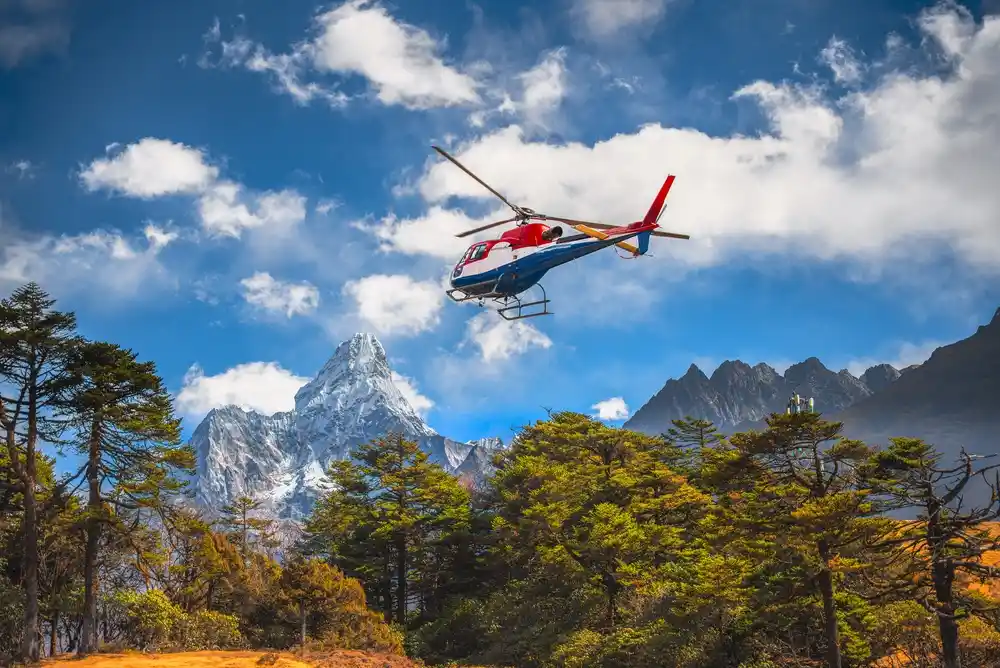
Want to see Mount Everest up close without spending two weeks walking uphill? A helicopter tour might be your answer.
I’ve spent years covering Himalaya travel, and this is one of the questions I get the most: “Can I really fly to Everest Base Camp?” The short answer is yes, sort of. You can fly into the Everest region and see the mountain from very close. But there are rules, costs, and safety facts you need to know first. If you’re still wondering where Everest Base Camp is actually located, it helps to understand the landing zones first.
This guide walks you through all of it. No fluff. Just what you need to plan the trip right.
Table of Contents
Who Is This Tour Really For?
Not everyone needs to trek for two weeks to see Everest. This tour is built for people who don’t have the time, the fitness, or the desire to hike for 12 to 15 days.
That includes:
- Busy travelers who only have a day or two in Nepal
- Families with kids (most companies accept children around age 5 and up)
- Seniors who want the view without the strain
- Anyone with health limits that make long treks risky
If you love the idea of walking through Sherpa villages and testing your limits, trekking is still the better choice. But if you just want to see Everest with your own eyes and get back to Kathmandu by lunch, the helicopter is built for you.
The Different Types of Helicopter Tours
Not all “Everest helicopter tours” are the same. Here are the three main types you’ll come across.
Scenic Flyover Tour
This is the most common tour, and honestly, the one most people end up booking. You fly from Kathmandu, pass over Lukla and Namche, and land only once , at Everest View Hotel for breakfast. You won’t set foot at Base Camp or Kala Patthar. You’ll just see them from the sky.
“Base Camp Landing” Tour
Some companies advertise a landing right at Everest Base Camp. Be careful with this wording. No helicopter actually lands on the Base Camp glacier , it’s not safe or allowed. What really happens is the pilot flies low and hovers so you can take photos from the cabin. A short touchdown may happen nearby at a stable spot like Gorak Shep, but that’s it.
Trek + Heli Return
This one’s popular with people who still want to trek, just not the whole way. You hike up to Base Camp or Gorak Shep the normal way over 10 to 12 days, then skip the tough descent by flying out instead. It saves you 3 to 4 days of hard walking on tired legs.
What a Typical Tour Day Looks Like
Here’s roughly how a one-day helicopter tour runs, start to finish:
- 4:30 AM , You leave Kathmandu. Yes, it’s early. This isn’t optional , mountain weather turns cloudy by afternoon, so pilots fly at dawn.
- 5:30 AM , Quick refuel stop in Lukla (2,840 meters).
- 6:00 AM , You fly over the Khumbu region, past peaks like Ama Dablam and Nuptse.
- 7:00 AM , Landing at Everest View Hotel (3,880 meters) for breakfast with a mountain view.
- 7:45 AM , The helicopter climbs higher, hovering near Kala Patthar and Everest Base Camp for photos.
- 11:00 AM , Back in Kathmandu. Tour done.
The whole trip usually takes 4 to 6 hours. Bring cash, bring a jacket, and bring your camera fully charged.
Where Can You Actually Land?
This is where a lot of confusion happens, so let’s clear it up with real numbers.
| Location | Altitude | Can you land here? |
| Kathmandu | 1,338 m | Yes, this is where you start |
| Lukla | 2,840 m | Yes, refuel stop |
| Namche Bazaar | 3,440 m | Flyover only |
| Everest View Hotel | 3,880 m | Yes, standard breakfast stop |
| Gorak Shep | 5,164 m | Sometimes, for trek returns |
| Kala Patthar | 5,545 m | No, landings banned since 2023 |
| Everest Base Camp | 5,364 m | No, never a real landing spot |
That’s the biggest thing most blogs won’t tell you clearly: you cannot land at Base Camp, and you can no longer land at Kala Patthar either. If a company promises otherwise, ask questions. Many trekkers don’t realize how Kala Patthar compares to Base Camp until they see it from the air.
Permits and Rules You Need to Know
Even on a helicopter, you still need paperwork. Here’s what’s required:
- Sagarmatha National Park Permit – NPR 3,000 (about $22)
- Khumbu Rural Municipality Fee – NPR 3,000 (about $22)
- Domestic airport tax – around NPR 500
- TIMS card – not needed if you’re only flying, not trekking
If you decide to trek instead, you’ll need to know how to get Everest Base Camp trek permits and the full permits, regulations, exact costs and TIMS rules.
The Rule Change That Matters Most (2023)
After a helicopter crash in July 2023, Nepal’s Civil Aviation Authority (CAAN) tightened the rules. Two big changes:
- Shared group flights to high altitude are banned. Tours above roughly 4,500 meters now run as private charters only, with a maximum of two passengers per shuttle.
- Landing at Kala Patthar is banned. Pilots can hover near it, but they can’t touch down there anymore.
This matters a lot for pricing and planning, and it’s something a lot of older blog posts still get wrong. Always ask your operator directly which rules apply to your specific route before you book.
There’s also a weight limit worth knowing: above about 4,200 to 4,500 meters, a helicopter can only carry around 220 to 250 kilograms per trip. If your group is bigger, expect to be split into two flights.
How Much Does It Actually Cost in 2026?
Prices depend heavily on group size and whether you book a shared seat or a private charter. Here’s a realistic range:
| Option | Estimated Cost |
| Shared seat (per person) | $450 – $550 |
| Private charter, 1–2 people | $1,600 – $2,500 total |
| Private charter, 3–5 people | $1,200 – $2,000 per person |
| Permits + airport tax | $50 – $60 total |
| Breakfast at Everest View Hotel | About NPR 4,000 (~$30) |
*A quick heads-up: since shared group flights above 4,500 meters were banned in 2023, “shared” pricing may only apply to lower-altitude, scenic-only routes now. Always confirm directly with the operator what altitude your shared seat actually reaches before you pay.
Prices shift with fuel costs and season, so treat these as starting points, not final quotes. Get 2 to 3 quotes before booking.
Best Time of Year to Fly
Weather makes or breaks this trip. Here’s how the seasons stack up:
- Autumn (September–November): The best visibility of the year. Also the busiest and most expensive time, so book early.
- Spring (March–May): Clear skies and warming temperatures. A close second to autumn.
- Winter (December–February): Skies are often clear, but it’s very cold and windy, which can ground flights.
- Monsoon (June–August): Skip this season. Rain and clouds cause frequent cancellations.
No matter the season, flights always leave early usually between 4 and 6 AM because afternoon clouds roll in fast. Always build one extra “buffer day” into your trip in case bad weather pushes your flight back.
Is It Safe? What About Altitude Sickness?
Going from 1,338 meters in Kathmandu to over 5,000 meters in about two hours sounds intense, and it is a real jump. But here’s the good news: your stop at that altitude is short, usually just 10 to 30 minutes. Most people feel nothing worse than a mild headache.
Still, take it seriously:
- Get travel insurance that covers high-altitude helicopter evacuation. Regular travel insurance often does not cover this. Check the fine print before you fly. See our Everest Base Camp insurance guide for what to look for.
- Talk to a doctor first if you have heart or lung conditions. The thin air at altitude puts extra strain on your body, even for a short visit.
- Trust your pilot. These are CAA-licensed professionals flying well-maintained aircraft, usually the Airbus H125, which is built for high-altitude flying. The real risk isn’t the equipment, it’s the weather.
What to Pack
Don’t overthink this, but don’t underpack either. Here’s your list:
- A warm jacket, gloves, and a hat (temperatures at altitude can drop to -15°C even in good weather)
- Sunglasses and sunscreen, the sun is intense at that height
- A small daypack, ideally under 5 kg
- Cash around NPR 10,000 to 15,000 for permits, breakfast, and tips
- Your passport and any permit receipts
- A fully charged camera or phone
Helicopter or Trek: Which One Should You Pick?
Here’s the honest breakdown:
| Factor | Helicopter | Trekking |
| Time needed | 1 day | 12–14 days |
| Cost | Higher upfront | Lower overall |
| Fitness required | Minimal | High |
| Experience | Aerial views, comfort | Culture, villages, personal challenge |
| Altitude risk | Low (short exposure) | Higher (multiple nights at altitude) |
If time and fitness aren’t a problem, trekking gives you a deeper experience for less money. If you’re short on either, the helicopter gets the job done in a single morning. Many people wonder if Everest Base Camp is worth visiting at all and whether to start from Lukla or trek longer from Jiri, if they do.
Cheaper Alternatives Worth Knowing
If the helicopter price tag is too much, you’ve still got options:
- Fixed-wing Mountain Flight: A one-hour flight from Kathmandu with no landing, for around $170 to $220. Great for photos, much easier on the wallet.
- Trek partway, then fly out: Hike to Namche or Tengboche, then take a shorter helicopter ride from there.
- Book directly with licensed operators. Agents in Kathmandu can add a 15–20% commission. Cutting them out saves real money. For the full trekking alternative, check how to get to Everest Base Camp overland.
One more tip: never schedule your helicopter tour right before your international flight home. Mountain weather is unpredictable, and a canceled tour can turn into a canceled flight home if you don’t leave a buffer day.
Frequently Asked Questions
Can a helicopter land at Everest Base Camp?
No. No commercial helicopter lands on the Base Camp glacier. Tours fly over it and hover nearby for photos instead.
How much does the tour cost in 2026?
Shared-seat tours typically run $450 to $550 per person. Private charters cost $1,200 to $2,500 total, depending on group size. Always get a current quote, since prices shift with fuel and season.
What permits do I need?
You’ll need the Sagarmatha National Park permit and the Khumbu Rural Municipality fee, both around NPR 3,000 each. A TIMS card is not required if you’re only flying, not trekking.
Is the tour safe?
Yes, generally. Pilots are CAA-licensed professionals, and aircraft are well maintained. The biggest risk is weather-related delays, not mechanical issues. Make sure your travel insurance covers high-altitude helicopter evacuation.
Can kids or seniors join?
Usually yes. Most operators accept children around age 5 and up, and there’s no strict upper age limit for seniors. Anyone with serious heart or lung conditions should check with a doctor first.
What’s the best time to go?
Autumn (September to November) and spring (March to May) offer the clearest skies. Always book a morning flight and keep a spare day in your schedule in case of weather delays.
What happens if my flight is canceled due to weather?
Most operators will reschedule you for the next available clear day, or issue a refund. This is exactly why a buffer day matters so much when planning this trip.