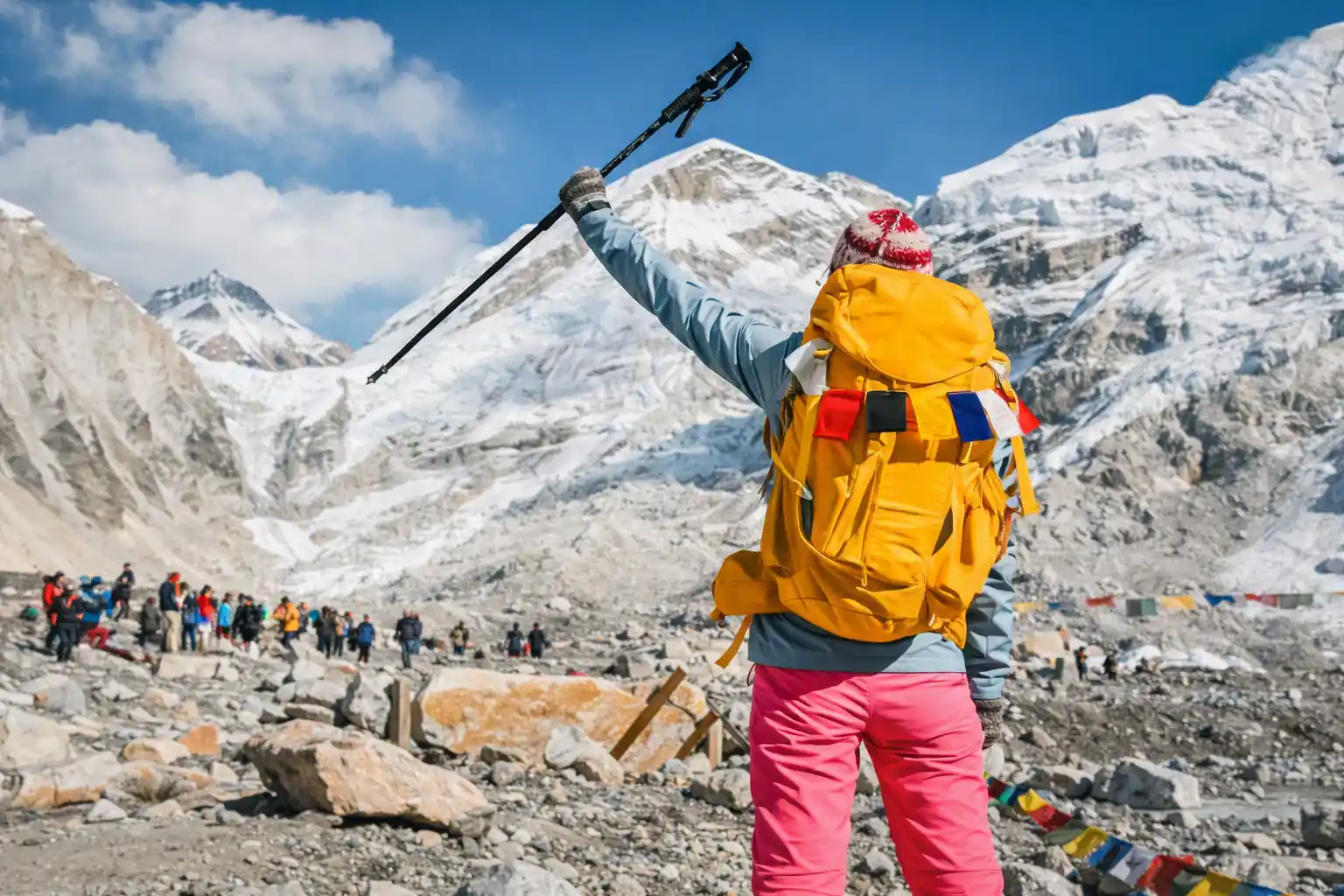
Planning a trek to Everest Base Camp (5,364m / 17,598 ft) is an exciting adventure. One of the very first questions every trekker asks is: What is the weather actually like up there?
To put it simply: Everest Base Camp has a harsh high-altitude climate. Daytime temperatures vary wildly depending on the season, ranging from a mild +15°C (59°F) on sunny spring and summer days down to -15°C (5°F) or lower in winter. At night, temperatures at Base Camp almost always drop below freezing plunging to -10°C (14°F) in peak trekking seasons and dropping to a brutal -25°C (-13°F) or lower in the winter months.
Sunlight, strong winds, and thin air change how you experience the temperature. A sunny afternoon can feel warm in a t-shirt, but the moment the sun dips behind a mountain ridge, the temperature drops instantly.
Table of Contents
Understanding Everest Base Camp’s Alpine Climate
Mountain weather is very different from city weather. At over 5,000 meters, you are in an alpine zone where the air is thin and the sun is extremely strong.
Why Altitude Changes Everything
For every 1,000 meters you climb, the air temperature drops significantly. As you hike higher from Lukla up to Base Camp, the air holds less heat and less oxygen.
The Power of the Sun and Wind
At Everest Base Camp, solar radiation is powerful. When the sky is clear, the sun feels intense, and sunburn happens very quickly. However, the air temperature itself may still be below freezing. Furthermore, afternoon winds often sweep up the Khumbu Valley, turning a pleasant day into a biting, cold wind chill.
How Quickly Weather Can Change
Himalayan weather is famous for turning on a dime. A bright, crystal-clear blue morning can turn into a cloudy, snowy afternoon in just an hour. This is why experienced mountain guides always start trekking early in the morning.
Elevation Weather Progression: From Kathmandu to EBC
Many trekkers make the mistake of packing for Kathmandu weather. The table below shows how drastically the climate changes as you gain elevation during your trek.
| Location | Elevation | Typical Daytime Temp | Typical Nighttime Temp | General Climate |
| Kathmandu | 1,400m (4,593ft) | 20°C to 30°C (68°F–86°F) | 10°C to 15°C (50°F–59°F) | Mild, urban, seasonal rain |
| Lukla | 2,840m (9,317ft) | 10°C to 20°C (50°F–68°F) | -2°C to 5°C (28°F–41°F) | Temperate mountain valley |
| Namche Bazaar | 3,440m (11,286ft) | 5°C to 15°C (41°F–59°F) | -5°C to 0°C (23°F–32°F) | Crisp, breezy, cool mountain air |
| Dingboche / Gorak Shep | 4,410m – 5,164m | -2°C to 8°C (28°F–46°F) | -12°C to -5°C (10°F–23°F) | Sub-alpine wind zone |
| Everest Base Camp | 5,364m (17,598ft) | -10°C to +10°C (14°F–50°F) | -20°C to -10°C (-4°F–14°F) | High alpine glacial tundra |
Everest Base Camp Weather by Season
Each season brings a completely different personality to the Khumbu region. Choosing the right season depends on what kind of weather and crowds you prefer.
Spring (March to May) – Pre-Monsoon & Expedition Season
Spring is one of the two main trekking seasons.
- March: Cold days start warming up. Lower valleys bloom with colorful rhododendrons, but high camps still experience freezing winds and occasional snow.
- April: Generally considered one of the best months. Days are mild, skies are mostly clear in the mornings, and mountaineering teams arrive at Base Camp.
- May: The warmest pre-monsoon month. Daytime temperatures at Base Camp can rise above freezing (+5°C to +15°C), but afternoon clouds and haziness begin to build up before the summer rains.
Summer / Monsoon (June to August) – Wet & Cloudy
The summer monsoon brings heavy moisture from the Bay of Bengal.
- June to August: While lower valleys and Kathmandu receive heavy rain and muddy trails, Everest Base Camp experiences wet snowfall and heavy cloud cover.
- Visibility: Mountain views are frequently blocked by thick clouds. However, the trails are extremely quiet, and nature lovers get to see lush, green landscapes below Namche Bazaar.
Autumn (September to November) – Peak Trekking Season
Autumn is widely known as the gold standard for trekking in Nepal.
- September: The monsoon clears out, leaving lush green hills, crisp mountain air, and rapidly improving skies.
- October: The most stable and popular month. Skies are crystal clear, daytime temperatures are comfortable, and visibility is at its absolute best. Expect busy trails.
- November: Days remain clear and sunny, but temperatures drop sharply. Nights at Base Camp become very cold as winter approaches.
Winter (December to February) – Extreme Cold & Solitude
Winter is harsh, freezing, and quiet.
- December & January: The coldest months of the year. Daytime temperatures at Base Camp struggle to rise above freezing, and nighttime lows routinely drop to -20°C (-4°F) or lower.
- Conditions: Skies are often brilliantly clear and blue, but bitter winds and deep snow make the trail suitable only for well-prepared, cold-tolerant trekkers.
Monthly Weather Quick-Reference
| Month | Season | Daytime Temp at EBC | Nighttime Temp at EBC | Main Weather Characteristic |
| January | Winter | -15°C to -5°C | -25°C to -20°C | Coldest month, clear skies, freezing winds |
| February | Winter | -12°C to 0°C | -20°C to -15°C | Winter fading, chilly nights, very quiet trails |
| March | Spring | -5°C to +5°C | -15°C to -10°C | Spring starts, blooming lower valleys, breezy |
| April | Spring | 0°C to +10°C | -10°C to -5°C | Ideal weather, clear mornings, peak climbing season |
| May | Spring | +5°C to +15°C | -5°C to 0°C | Warmest pre-monsoon month, afternoon clouds |
| June | Monsoon | +5°C to +15°C | 0°C to +5°C | Monsoon begins, rainy lower trails, cloudy |
| July | Monsoon | +8°C to +18°C | +2°C to +8°C | Peak wet season, lush green valleys, poor views |
| August | Monsoon | +8°C to +18°C | +2°C to +8°C | Continued rain, improving late in the month |
| September | Autumn | +5°C to +15°C | 0°C to -5°C | Post-monsoon clearing, crisp air, beautiful views |
| October | Autumn | 0°C to +10°C | -5°C to -10°C | Peak stable weather, crystal clear skies, busy |
| November | Autumn | -5°C to +5°C | -10°C to -15°C | Cold crisp days, clear views, fewer crowds |
| December | Winter | -10°C to 0°C | -15°C to -20°C | Onset of winter, freezing nights, very clear air |
How Weather Affects Your Daily Trek
Weather dictates every single hour of your trekking day in the Himalayas:
- The Morning Window: Mountain weather follows a reliable daily pattern. Mornings are usually crisp, calm, and crystal clear. Guides always urge trekkers to start hiking early (around 6:30 AM or 7:00 AM) to enjoy clear views before clouds roll in.
- Afternoon Winds & Clouds: By midday, valley winds pick up, and clouds often build around the peaks. Photography is best done in the early morning hours.
- Flight Disruptions at Lukla: Tenzing-Hillary Airport in Lukla is notoriously sensitive to weather. Low clouds, fog, or rain can delay or cancel flights for hours—or even days. Always build 2 to 3 contingency days into your itinerary.
What Weather Risks to Watch Out For
While trekking to EBC is safe when planned correctly, weather introduces specific risks:
- Hypothermia & Frostbite: Caused by underestimating nighttime cold or getting caught in sudden wind and snow without proper layers.
- Altitude Sickness (AMS): Cold air and dehydration can worsen altitude sickness symptoms. Drinking plenty of water is essential even when it is cold and you do not feel thirsty.
- Sudden Snowstorms: Even in spring and autumn, freak storms can drop heavy snow above 4,000 meters, making trails slippery and navigation tricky.
Practical Packing Advice for EBC Weather
Because temperatures swing from a comfortable t-shirt feel in the sun to freezing gale-force winds at night, layering is your best defense.
- Base Layers: Moisture-wicking thermal tops and bottoms (merino wool or synthetic).
- Insulating Layers: A warm fleece jacket and a high-quality down jacket rated for sub-zero alpine temperatures.
- Outer Shell: A windproof and waterproof breathable jacket and pants.
- Head and Hand Gear: A warm beanie, sun hat, UV-blocking sunglasses (essential for snow glare), lightweight liner gloves, and heavy insulated waterproof gloves.
- Sleeping Bag: A quality down sleeping bag rated to at least -15°C to -20°C (tea houses are unheated at higher elevations).
Conclusion
Understanding the weather at Everest Base Camp is the key to a safe, successful, and enjoyable Himalayan trek. While the days can be pleasantly warm under the intense alpine sun, nighttime temperatures consistently drop below freezing, and conditions can shift rapidly without warning. By choosing the right season such as April or October, packing a reliable layering system, and preparing for elevation changes, you will be well-equipped for whatever the Khumbu Valley brings your way.
If you’re still deciding whether this adventure is right for you, discover Why Is Everest Base Camp Famous? and what makes it one of the world’s most iconic trekking destinations.
More Everest Base Camp Trek Planning Guides
For more details to help you prepare for your Himalayan journey, explore our related resources:
- How Long to Walk Everest Base Camp: A Complete Guide
- How Long Is the Hike to Everest Base Camp?
- How Many Hours a Day Is the Everest Base Camp Trek?
- How Difficult Is the Everest Base Camp Trek?
- Is Everest Base Camp Trek Hard for Beginners?
- Everest Base Camp Trek Fitness Requirements
- Do You Need a Guide for Everest Base Camp Trek?
- Everest Base Camp on a Budget
- How to Get Everest Base Camp Trek Permits
- Everest Base Camp Trek Permits: Regulations, Costs & Rules
Frequently Asked Questions
Does it snow at Everest Base Camp?
Yes, snowfall can happen at any time of the year at Everest Base Camp, though it is heaviest and most frequent during winter (December to February) and during monsoon transition periods.
How cold is Everest Base Camp at night?
Nighttime temperatures at EBC stay below freezing year-round. During peak trekking seasons (April/May and October/November), night temperatures drop between -5°C and -10°C. In winter, they plunge to -25°C or lower.
Which months have the most stable weather?
October and April are widely regarded as the most stable months, offering the best combination of clear blue skies, manageable temperatures, and reliable trekking conditions.
Can I see Mount Everest clearly during the monsoon?
It is difficult. Summer monsoon months (June to August) bring heavy cloud cover and rain, frequently blocking mountain views, though the lower trails are remarkably green and quiet.